Guidelines for the use and interpretation of assays for monitoring autophagy. (opens in a new tab)
20122,860 citationsRCR 79.4899th percentileClinical

Metrics: Semantic Scholar · Updated 8 months ago
AI-generated biography
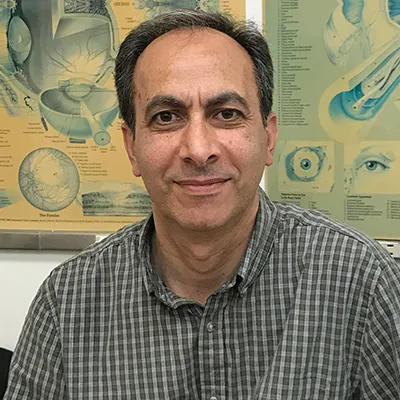
Natik Piri, Ph.D., is a Professor in Residence in the Department of Ophthalmology at the David Geffen School of Medicine, University of California, Los Angeles, and a member of the Jules Stein Eye Institute. Dr. Piri's research is dedicated to elucidating the molecular mechanisms driving retinal ganglion cell (RGC) degeneration, a critical process in glaucoma and other optic neuropathies. His laboratory employs advanced molecular biology, biochemistry, and genetic techniques to analyze altered gene expression patterns in glaucomatous retinas, seeking to uncover the precise pathways leading to RGC apoptosis.
A significant focus of Dr. Piri's work involves identifying novel genes and proteins that are exclusively or preferentially expressed in RGCs, investigating their roles in RGC differentiation, metabolism, and survival. His research has explored the neuroprotective effects of heat shock proteins, the role of crystallins in RGC survival after optic nerve injury, and the involvement of RNA-binding proteins in retinal function. Notable contributions include high-impact publications on autophagy, retinal degeneration, and RGC-specific markers, alongside substantial grant funding from the National Institutes of Health to investigate neuroprotective strategies in experimental glaucoma. Dr. Piri's ongoing investigations aim to identify molecular targets for developing novel therapeutic agents to prevent or delay RGC loss and preserve visual function.
Source: Gemini AI · Updated 8 months ago
Dr. Piri’s research is aimed toward understanding the molecular mechanisms leading to retinal ganglion cells (RGC) death in glaucoma. It has been established that RGCs die by apoptosis in glaucoma, but the exact pathway from death stimulus to cell death is not understood. As an initial step in identifying potential factors responsible for RGC apoptosis, Dr. Piri’s laboratory is analyzing gene expression patterns that are altered in glaucomatous retinas using DNA microarrays and proteomic technologies, as well as conventional molecular biology, biochemistry and genetic methods. Another area of interest is the identification of new genes that are expressed exclusively or preferentially in RGCs. Currently, Dr. Piri is investigating the roles of several RGC-expressed novel genes in RGC differentiation and metabolism, and their possible involvement in glaucomatous or other optic neuropathies. Gene and protein expression studies may lead to a better understanding of the regulatory events involved in RGC apoptosis, and provide molecular targets for the development of new therapeutic agents with neuroprotective effects in order to prevent or delay the loss of ganglion cells in glaucoma.
Natik Piri's research primarily investigates the molecular and cellular mechanisms underlying retinal ganglion cell (RGC) degeneration, a hallmark of optic neuropathies and glaucoma. Their work specifically focuses on identifying neuroprotective strategies to promote RGC survival, examining the roles of oxidative damage, inflammation, and key regulatory proteins like heat shock proteins and RNA-binding proteins. This research evaluates potential therapeutic agents, including celastrol and short chain fatty acids, for preserving visual function and preventing RGC loss.
Research topics extracted by AI (Google Gemini) from this member’s publications.
Papers by NIH iCite research category (1 of 51 papers classified) · trials from ClinicalTrials.gov · patents from USPTO.
51 publications · h-index 24 · PubMed, ORCID and the BRI profile
Showing 10 of 51
Akhmedov NB, Piriev NI, Chang B, et al.
Kwong JM, Caprioli J, Piri N.
Kao L, Kurtz LM, Shao X, et al.
Piri N, Kwong JM, Gu L, et al.
Kwong JM, Quan A, Kyung H, et al.
Kim SH, Munemasa Y, Kwong JM, et al.
Guillonneau X, Piriev NI, Danciger M, et al.
Munemasa Y, Kwong JM, Caprioli J, et al.
$1.3M total · 1 NIH grant
R01EY018644Contact PI2009–2014
R01EY018644Contact PIFY2009–2013
Institute members who share papers or grants with this researcher
AI-generated
Generated automatically from this profile's public data to suggest possibilities. Treat them as starting points rather than recommendations.
P01 (Program Project Grant)
Given their status as an established investigator with multiple R01s focused on a specific area (neuroprotection in glaucoma via HSP72), a P01 allows them to lead a larger, highly integrated, multi-project research program. This mechanism is designed for synergistic projects that share a common theme, enabling a more comprehensive and impactful investigation into various facets of HSP72-mediated neuroprotection, potentially involving multiple labs and experimental approaches under a single grant.
R21 (Exploratory/Developmental Research Grant)
Even established PIs can benefit from R21 grants to explore novel, high-risk, or highly innovative ideas that may not yet have extensive preliminary data for a full R01. This mechanism could be used to investigate entirely new avenues related to HSP72 (e.g., different mechanisms of action, application in other neurodegenerative diseases, novel delivery methods) or to test highly exploratory hypotheses without committing the scope and resources of an R01, allowing for strategic diversification of their research portfolio.
U01 (Research Project Cooperative Agreement)
If their research on 'The Neuroprotective Effect of HSP72 Induction in Experimental Glaucoma' is maturing towards larger-scale preclinical development, multi-site studies, or preparing for clinical translation, a U01 would be highly appropriate. These cooperative agreements involve substantial scientific and programmatic involvement from NIH staff, which can be beneficial for complex projects that require close collaboration with the NIH, especially for therapeutic development and translational research efforts.
Shared papers, topics or department