Hypovitaminosis D is associated with insulin resistance and beta cell dysfunction. (opens in a new tab)
Chiu KC, Chu A, Go VL, et al.
Metrics: Semantic Scholar · Updated 8 months ago
AI-generated biography
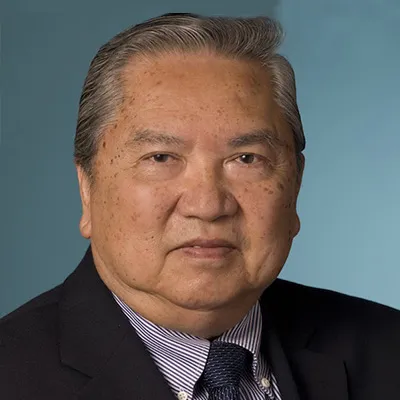
Vay Liang Go, M.D., is a distinguished member of the UCLA Brain Research Institute and a Professor in the Department of Medicine. Dr. Go's extensive research career has been dedicated to unraveling the complex mechanisms of pancreatic diseases, with a particular emphasis on cancer metabolism and the development of novel therapeutic strategies. His work has significantly advanced our understanding of how metabolic pathways contribute to the pathogenesis of pancreatic cancer and other pancreatic disorders.
Dr. Go's contributions are marked by a deep exploration into metabolic targeting in cancer therapy, drug discovery for metabolic cancer therapies, and the role of the tumor microenvironment. He has also investigated pancreatic cancer biomarkers, the influence of microRNAs on cancer prognosis, and mechanisms of drug resistance. His commitment to the field is further underscored by his co-organization of an international conference on cancer metabolism and therapeutics, and his involvement in fostering new research initiatives. Dr. Go's profound impact on pancreatic research has been recognized with a lifetime achievement award from the American Pancreatic Association.

Source: Gemini AI · Updated 8 months ago
This researcher demonstrates a profound and impactful commitment to pancreatic research, highlighted by a lifetime achievement award from the American Pancreatic Association. Their work specifically investigates cancer metabolism and novel therapeutic strategies, a focus so significant they co-organized an international conference on the topic. Furthermore, they are actively involved in fostering new research initiatives, as evidenced by their connection to a symposium celebrating a major seed grant program.
Research topics extracted by AI (Google Gemini) from this member’s publications.
Papers by NIH iCite research category (4 of 93 papers classified) · trials from ClinicalTrials.gov · patents from USPTO.
93 publications · h-index 74 · PubMed, ORCID and the BRI profile
Showing 10 of 91
Chiu KC, Chu A, Go VL, et al.
Heber D, Yip I, Ashley JM, et al.
Henning SM, Niu Y, Lee NH, et al.
Henning SM, Fajardo-Lira C, Lee HW, et al.
Kenner B, Chari ST, Kelsen D, et al.
Harris DM, Besselink E, Henning SM, et al.
Dawson DW, Hertzer K, Moro A, et al.
Henning SM, Aronson W, Niu Y, et al.
Chang HH, Moro A, Takakura K, et al.
Angst E, Park JL, Moro A, et al.
Institute members who share papers or grants with this researcher
AI-generated
Generated automatically from this profile's public data to suggest possibilities. Treat them as starting points rather than recommendations.
R03 (Small Research Grant)
Given the researcher's lack of current NIH grants, an R03 is an excellent initial mechanism to secure NIH funding. It supports small, focused research projects that can be completed in a short timeframe (1-2 years) with limited budgets. This would be ideal for generating strong preliminary data for a specific aspect of their work, such as testing the efficacy of a novel metabolic target in a pancreatic cancer model, or conducting a feasibility study for a new drug discovery approach. Success with an R03 can significantly strengthen future R01 applications and establish an NIH funding track record. Relevant institutes include NCI and NIDDK.
R21 (Exploratory/Developmental Research Grant)
This mechanism is perfectly suited for funding innovative, high-risk/high-reward research that may lack extensive preliminary data, aligning well with the researcher's interest in 'Novel Therapeutic Strategies for Pancreatic Cancer' and 'Metabolic Targeting in Cancer Therapy.' An R21 would allow them to explore groundbreaking ideas in cancer metabolism or drug discovery that could open entirely new avenues for pancreatic cancer treatment. It encourages exploratory research and can be a vital stepping stone to larger, more comprehensive grants if the initial findings are promising. Relevant institutes include NCI and NIDDK.
R01 (Research Project Grant)
As the primary mechanism for investigator-initiated research, an R01 is the long-term goal for establishing a sustained, independently funded research program. While often challenging without prior NIH funding, a well-developed proposal with compelling preliminary data (perhaps generated through R03/R21 or other grants) addressing their core research areas—Cancer Metabolism, Pancreatic Cancer Therapeutics, and Drug Discovery for Metabolic Cancer Therapies—would be highly appropriate. It allows for in-depth investigation into the mechanisms of pancreatic disease pathogenesis and the development of novel cancer therapies, forming the backbone of an independent research program. Relevant institutes include NCI and NIDDK.
Shared papers, topics or department