Neuroprotective effects of curcumin. (opens in a new tab)
Cole GM, Teter B, Frautschy SA.
Springer eBooks2007531 citationsRCR 9.2397th percentileOpen access full text (opens in a new tab)PubMed record (opens in a new tab)

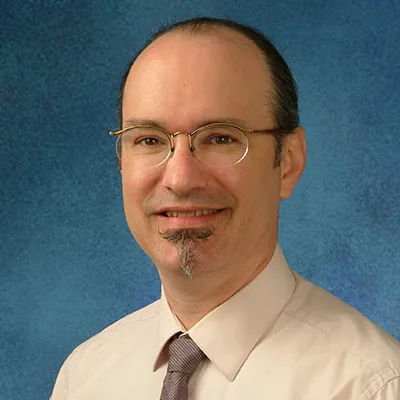
Adjunct Associate Professor
David Geffen School of Medicine
AI-generated biography
Bruce Teter, Ph.D., is an Adjunct Associate Professor in the Department of Medicine at UCLA's David Geffen School of Medicine, with a research affiliation in the Department of Neurology. His scholarly pursuits are deeply rooted in understanding neural development, degeneration, and repair, with a particular emphasis on glial biology and neuroscience. Dr. Teter's research program is dedicated to unraveling the complex pathogenesis of Alzheimer's disease, with a significant focus on the detrimental effects of the apolipoprotein E4 (ApoE4) isotype.
His investigations explore how ApoE4 contributes to neurodegeneration through a "gain-of-negative function" mechanism, impacting neuronal plasticity and CNS function. Dr. Teter's work also delves into the activation of microglia in Alzheimer's disease and the potential neuroprotective roles of compounds such as curcumin and omega-3 fatty acids. He is actively involved in developing therapeutic strategies, including the identification and testing of novel small molecules and natural compounds to mitigate Alzheimer's progression and modulate immune responses in ApoE4-specific contexts. His contributions have been recognized through multiple NIH grants, including those focused on ApoE genotype in CNS trauma and recovery.
Source: Gemini AI · Updated 8 months ago
Bruce Teter's research primarily investigates the central role of apolipoprotein E4 (ApoE4) in the pathogenesis of Alzheimer's disease, exploring how it influences CNS function, neuronal plasticity, and contributes to disease pathology as a "gain-of-negative function." His work further extends to developing therapeutic strategies, particularly identifying and testing novel small molecules and natural compounds like curcumin, to ameliorate AD progression and modulate innate immune responses within ApoE4-specific contexts.
Research topics extracted by AI (Google Gemini) from this member’s publications.
17 publications · h-index 34 · PubMed, ORCID and the BRI profile
Showing 10 of 13
Cole GM, Teter B, Frautschy SA.
Cole GM, Lim GP, Yang F, et al.
Yang F, Sun X, Beech W, et al.
Teter B, Morihara T, Lim GP, et al.
Teter B, Xu PT, Gilbert JR, et al.
Teter B.
Harris-White ME, Chu T, Miller SA, et al.
Teter B, Raber J, Nathan B, et al.
Ma QL, Teng E, Zuo X, et al.
Yoon AJ, Wu H, Pan RD, et al.
$582K total · 1 NIH grant
Apoe Gentoype in CNS Trauma and Recovery (NIH RePORTER, opens in a new tab)
K01AG000962Contact PI2001–2007
Apoe Gentoype in CNS Trauma and Recovery (NIH RePORTER, opens in a new tab)
K01AG000962Contact PIFY2001–2005
Institute members who share papers or grants with this researcher
AI-generated
Generated automatically from this profile's public data to suggest possibilities. Treat them as starting points rather than recommendations.
R01 (Research Project Grant)
Having successfully secured multiple K01 (Mentored Research Scientist Development) awards, this researcher is well-positioned to transition to a fully independent research program. The R01 is the cornerstone mechanism for established investigators seeking substantial funding to pursue specific research questions, such as the intricate role of APOE genotype in CNS trauma and recovery, with the necessary resources and personnel.
U01 (Research Project Cooperative Agreement)
Given the translational and clinical implications of 'CNS Trauma and Recovery,' a U01 would be highly appropriate. This mechanism supports research projects where there is substantial programmatic involvement from NIH staff, often for multi-site studies, complex clinical trials, or participation in larger NIH initiatives focused on conditions like traumatic brain injury. Studying APOE genotype effects on recovery often benefits from larger cohorts and collaborative efforts, making the U01 a strong fit for expanding beyond single-lab studies.
R21 (Exploratory/Developmental Research Grant Award)
While the researcher has a strong established area, the R21 mechanism offers flexibility to explore new, high-risk/high-reward ideas related to APOE in CNS trauma and recovery. This could include testing novel hypotheses, developing innovative methodologies (e.g., new imaging techniques, biomarkers), or piloting preliminary studies that might not yet have sufficient data for a full R01. It allows for strategic diversification and generation of preliminary data for future, larger grant applications.
Shared papers, topics or department