Biology of human sodium glucose transporters. (opens in a new tab)
Wright EM, Loo DD, Hirayama BA.
20111,056 citationsRCR 29.7199th percentile

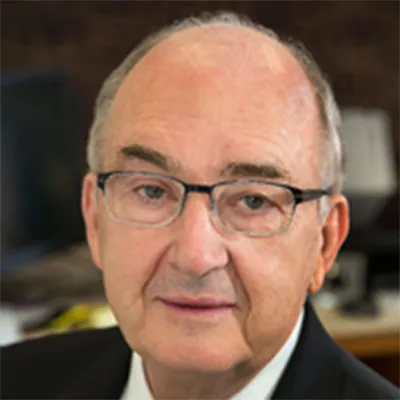
Distinguished Professor, Emeritus
David Geffen School of Medicine
Wright was born and educated in Ireland. He earned his B.Sc. in Physiology and Chemistry from the University of London and his Ph.D. in Physiology at the University of Sheffield under the tutelage of Professor David Smyth FRS. He was a member of the faculty at Sheffield for two years prior to a Fellowship at Harvard where he studied with Jared Diamond, Peter Curran and Stanley Schultz in the Biophysics Laboratory headed by Arthur K. Solomon. In 1978 he was awarded a D.Sc. in Physiology from the University of London. In 1967 he joined the faculty of the Department of Physiology at UCLA School of Medicine headed by Wilfred Mommaerts. Wright served as Chair of Physiology between 1987 and 2000 and was awarded the Sherman M. Mellinkoff Distinguished Professorship in Medicine 1999. He was Visiting Professor at the Center for Advanced Studies at the National Polytechnic Institute in Mexico City in 1973, at the Max Planck Institute for Biophysics in Frankfurt in 1974-1975, and Queen Elizabeth College, London in 1977. He has served as Chair and member of the Physiology Study Section at the NIH, a member of the Eli Broiad Medical Foundation, and an advisor to the Swiss National Science Foundation, Boehringer Inglheim, Xenoport, and UCSF Center for the Structure of Membrane proteins.
Source: BRI Website · Updated 8 months ago
Research topics extracted by AI (Google Gemini) from this member’s publications.
68 publications · h-index 95 · PubMed, ORCID and the BRI profile
Showing 10 of 68
Wright EM, Loo DD, Hirayama BA.
Wright EM, Hirayama BA, Loo DF.
Wright EM.
Faham S, Watanabe A, Besserer GM, et al.
Wright EM, Turk E.
Gallo LA, Wright EM, Vallon V.
Scafoglio C, Hirayama BA, Kepe V, et al.
Ghezzi C, Loo DDF, Wright EM.
Bakris GL, Fonseca VA, Sharma K, et al.
Diez-Sampedro A, Hirayama BA, Osswald C, et al.
$16.5M total · 10 NIH grants
Dynamics of the Lactose Permease of Escherichia Coli (NIH RePORTER, opens in a new tab)
R01GM120043Contact PI2016–2020
Molecular Mechanisms of Intestinal Transport (NIH RePORTER, opens in a new tab)
R01DK019567Contact PI1976–2014
Role of SGLTs in Glucose Homeostasis and Tissue Metabolism (NIH RePORTER, opens in a new tab)
R01DK077133Contact PI2008–2013
Dynamics of the Lactose Permease of Escherichia Coli (NIH RePORTER, opens in a new tab)
R01GM120043Contact PIFY2016–2019
Molecular Mechanisms of Intestinal Transport (NIH RePORTER, opens in a new tab)
R01DK019567Contact PIFY1976–2013
Role of SGLTs in Glucose Homeostasis and Tissue Metabolism (NIH RePORTER, opens in a new tab)
R01DK077133Contact PIFY2008–2011
Molecular Architecture of the Na+/Glucose Cotransporter (NIH RePORTER, opens in a new tab)
R01DK044602Contact PIFY1992–2005
Familial Glucose Galactose Malabsorption (NIH RePORTER, opens in a new tab)
R01DK044582Contact PIFY1992–2001
Molecular Cloning of Blood/Brain Barrier Nutrient Transporters (NIH RePORTER, opens in a new tab)
P01NS025554Contact PIFY1995–1999
The Secretion of Cerebrospinal Fluid (NIH RePORTER, opens in a new tab)
R01NS009666Contact PIFY1979–1991
Structure and Functions of Na/Glucose Cotransporters (NIH RePORTER, opens in a new tab)
R01DK036700Contact PIFY1986–1990
Barrier and Transport Properties of Duodenum (NIH RePORTER, opens in a new tab)
P01AM017328Contact PIFY1985
Molecular Mechanisms of Intestinal Transport (NIH RePORTER, opens in a new tab)
R01AM019567Contact PIFY1976–1985
Institute members who share papers or grants with this researcher






AI-generated
Generated automatically from this profile's public data to suggest possibilities. Treat them as starting points rather than recommendations.
R01 (Research Project Grant)
The R01 is the primary and most common mechanism for investigator-initiated research projects. The researcher's extensive expertise in physiology, biophysics, membrane transport mechanisms, protein structure/function, molecular biology, and pharmacology of transporters perfectly aligns with the scope and depth expected for an R01. This grant would allow them to pursue a substantial, well-developed research program on fundamental mechanisms. Relevant institutes could include NIGMS (for fundamental biological processes), NINDS (given their neuroscience affiliation), or even NIDDK/NHLBI depending on the specific disease context of the transport mechanisms.
R21 (Exploratory/Developmental Research Grant Award)
Given the absence of current NIH grants, an R21 could be a strategic entry point or a mechanism for pursuing innovative, high-risk/high-reward ideas that may lack the extensive preliminary data typically required for an R01. This mechanism is suitable for exploratory studies in new areas of membrane protein research, novel approaches to studying transport mechanisms, or pilot projects to gather significant preliminary data for a future R01 application. It offers a shorter duration and smaller budget, making it accessible for testing feasibility or generating crucial proof-of-concept.
R03 (Small Research Grant Program)
For very focused, short-term projects, an R03 could be highly beneficial. This mechanism is ideal for developing novel methodologies to study membrane proteins (e.g., advanced biophysical techniques), validating new tools for measuring transport kinetics or pharmacology, or testing a critical, specific hypothesis related to the biophysics or molecular mechanisms of a particular transporter. It requires minimal preliminary data and can be a stepping stone to generating the strong foundation needed for larger grants like an R01.
Shared papers, topics or department