Neoadjuvant anti-PD-1 immunotherapy promotes a survival benefit with intratumoral and systemic immune responses in recurrent glioblastoma. (opens in a new tab)
Cloughesy TF, Mochizuki AY, Orpilla JR, et al.
Professor
David Geffen School of Medicine
Metrics: Manual · Updated 1 month ago
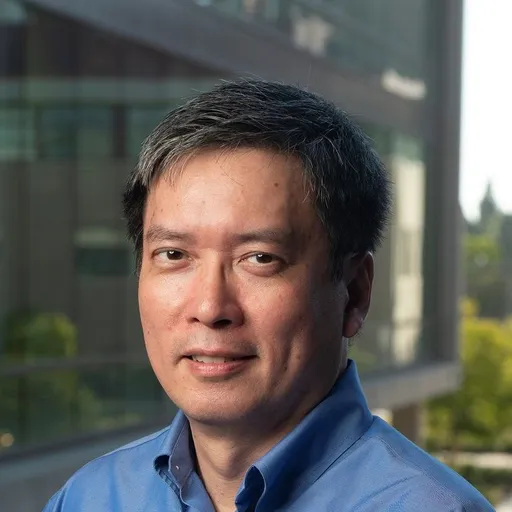
Dr. Yong obtained a bachelors degree in molecular biology at UC Berkeley and a masters degree in biology (cellular and molecular) at San Francisco State University. For the masters degree, he studied the AIDS retrovirus while in the laboratory of Professor Jay Levy at UCSF. He attended medical school at UCLA where he completed his Honors thesis research with Professor Harry Vinters and graduated as a Deans Scholar. He trained in Pathology and Laboratory Medicine at Massachusetts General Hospital, Harvard Medical School, where he worked in the molecular neuro-oncology laboratory of Dr. David Louis. For his work there, Dr. Yong was awarded the American Association of Neuropathologists Lucien J. Rubinstein Award in Neuro-oncology. He completed his neuropathology fellowship at UCLA. Subsequently, he was the Director of Neuropathology at Cedars-Sinai Medical Center for eight years before returning to the UCLA Medical Center. He is currently Chief of Neuropathology, Director of the UCLA Brain Tumor Translational Resource and Director of the UCLA Neuropathology Fellowship Program. He is a recipient of a Golden Apple Award for teaching and the Johnny Mercer Foundation Research Award for Brain Cancer among others. Dr. Yong is Professor of Pathology and Laboratory Medicine and serves on editorial boards and grant review panels. He teaches UCLA medical and dental students as well as residents and fellows in pathology, neuropathology, neurosurgery, and neurology. He is an adviser and mentor for junior faculty. As an attending neuropathologist at the UCLA Medical Center, his clinical expertise includes brain and pituitary tumors as well as neuromuscular pathology. He provide international telepathology consultations for complex brain cases. He works closely with UCLA Neurosurgery and Neuro-oncology physicians in determining diagnoses and molecular testing of brain tumor samples. Current main research interests include biobanking methods and end-stage immunopathology and neuropathology in brain cancer patients. He consults for the National Neurologic AIDS Brain Bank. His team has also conducted or collaboarated on studies in bioinformatics, nanotechnology, non-invasive imaging, neuroradiology, and targeted therapies. Collaborations have spanned AIDS, stroke, dementia, and epilepsy.

Source: BRI Website · Updated 8 months ago
Research topics extracted by AI (Google Gemini) from this member’s publications.
Papers by NIH iCite research category (8 of 115 papers classified) · trials from ClinicalTrials.gov · patents from USPTO.
115 publications · h-index 4 · PubMed, ORCID and the BRI profile
Showing 10 of 112
Cloughesy TF, Mochizuki AY, Orpilla JR, et al.
Liebeskind DS, Sanossian N, Yong WH, et al.
Lai A, Tran A, Nghiemphu PL, et al.
Prins RM, Soto H, Konkankit V, et al.
Im K, Mareninov S, Diaz MFP, et al.
Magaki S, Hojat SA, Wei B, et al.
Pope WB, Prins RM, Albert Thomas M, et al.
Carrillo JA, Lai A, Nghiemphu PL, et al.
$539K total · 1 NIH grant
Core 1: Biospecimen and Pathology Core (NIH RePORTER, opens in a new tab)
P50CA211015Contact PIFY2017–2019
Core 1: Biospecimen and Pathology Core (NIH RePORTER, opens in a new tab)
P50CA211015Contact PIFY2017–2019
Institute members who share papers or grants with this researcher
AI-generated
Generated automatically from this profile's public data to suggest possibilities. Treat them as starting points rather than recommendations.
R01 - Research Project Grant
The R01 is the standard mechanism for investigator-initiated, hypothesis-driven research. This researcher's broad interests in clinical presentation, diagnostic neuroimaging, pathological characterization, cognitive outcomes, and prognostic factors of frontal lobe tumors provide ample scope for multiple R01 applications. An R01 can also support a clinical trial if designed appropriately, directly addressing their interest in 'Surgical Management Strategies' and 'Treatment Efficacy for Frontal Lobe Neoplasms'.
U01 - Research Project Cooperative Agreement
The U01 mechanism is suitable for projects that require substantial collaboration and coordination, often involving multiple sites or programmatic involvement from NIH staff. Given the researcher's interest in 'Epidemiology of Brain Tumors in Young Adult Males' and 'Surgical Management Strategies for Frontal Lobe Lesions,' a U01 could support a multi-institutional study, a patient registry, or a large-scale observational cohort study. Their existing involvement in a P50 core suggests familiarity with collaborative, structured research environments.
Clinical Trial Grant Mechanisms (e.g., R34, UG3/UH3)
Given the researcher's strong focus on 'Surgical Management Strategies for Frontal Lobe Lesions' and 'Prognostic Factors and Treatment Efficacy for Frontal Lobe Neoplasms,' dedicated clinical trial funding mechanisms are highly relevant. An R34 (Clinical Trial Planning Grant) could support the development of a detailed clinical trial protocol, while UG3/UH3 (Exploratory/Developmental Clinical Trial Planning Grant & Clinical Trial Implementation Grant) could fund the planning and subsequent execution of a new interventional study to test novel surgical approaches or therapeutic regimens.
Shared papers, topics or department