SLC18: Vesicular neurotransmitter transporters for monoamines and acetylcholine. (opens in a new tab)
Lawal HO, Krantz DE.
Molecular Aspects of Medicine201381 citationsRCR 2.4880th percentilePubMed record (opens in a new tab)

AI-generated biography
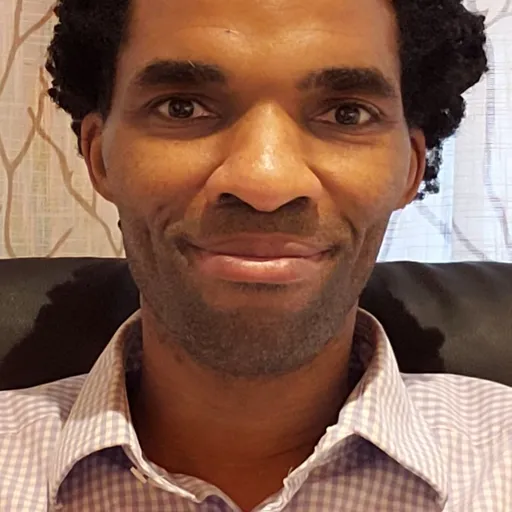
Hakeem O. Lawal, Ph.D., is a faculty member in the Department of Neurobiology at UCLA, affiliated with the Brain Research Institute. His research program is dedicated to understanding the fundamental mechanisms governing synaptic function and dysfunction, with a particular focus on vesicular neurotransmitter transporters. Dr. Lawal employs Drosophila melanogaster as a powerful model system to investigate how these critical transporters, including those for monoamines and acetylcholine, are regulated and how their malfunction contributes to neurotoxicity and neurodegenerative diseases.
His laboratory's work delves into the intricate processes of neurotransmitter vesicle trafficking and the impact of genetic alterations, such as those introduced via CRISPR-Cas9 gene editing, and environmental toxins on neuronal health and behavior. Dr. Lawal's contributions are significant in elucidating genetic risk factors for conditions like Parkinson's disease and exploring potential therapeutic avenues for neuropsychiatric disorders. His research has led to a deeper understanding of dopamine cell death and the development of novel strategies for drug discovery targeting neurotransmitter systems.
Source: Gemini AI · Updated 8 months ago
Hakeem O. Lawal's research primarily investigates the function and dysfunction of vesicular neurotransmitter transporters (VNTs), especially those for monoamines and acetylcholine, predominantly using Drosophila melanogaster as a model system. His work explores how genetic mutations (e.g., via CRISPR-Cas9) or environmental toxins affecting these transporters lead to altered lifespan, behavioral deficits, and neurotoxicity, often in the context of neurodegenerative conditions like Parkinson's disease and other neuropsychiatric disorders, with an emphasis on drug discovery.
Research topics extracted by AI (Google Gemini) from this member’s publications.
8 publications · PubMed, ORCID and the BRI profile
Showing 8 of 8
Lawal HO, Krantz DE.
Sanders LH, Paul KC, Howlett EH, et al.
Grygoruk A, Chen A, Martin CA, et al.
Deshpande SA, Freyberg Z, Lawal HO, et al.
Martin CA, Barajas A, Lawless G, et al.
White D, de Sousa Abreu RP, Blake A, et al.
Asuncion JD, Eamani A, Rohrbach EW, et al.
Institute members who share papers or grants with this researcher

AI-generated
Generated automatically from this profile's public data to suggest possibilities. Treat them as starting points rather than recommendations.
R01 from NINDS
The researcher's consistent focus on precise genetic manipulation (CRISPR-Cas9) of vesicular neurotransmitter transporters in Drosophila to study fundamental neurobiological processes like membrane trafficking, behavior, and neuronal function aligns directly with NINDS's mission to understand the basic mechanisms of brain function and nervous system disorders.
R01 from NIMH
With research on vesicular monoamine and acetylcholine transporters, which are crucial for neural circuit function and implicated in the pathophysiology of mental health conditions, and the investigation into behavioral alterations in Drosophila, an R01 from NIMH would be highly appropriate for proposals linking transporter dysfunction to the neural basis of behavior or mechanisms relevant to psychiatric disorders.
R01 from NIA
The publication demonstrating that 'deficits in the vesicular acetylcholine transporter alter lifespan' indicates a direct relevance to aging research. An R01 from NIA would be an excellent fit for proposals that expand on how these neurotransmitter transporters influence the basic biology of aging, age-related neurological changes, or healthy brain aging using their established Drosophila model.
 Ahmet AracNeurologyFit 3/10
Ahmet's focus on motor control and neurorehabilitation using machine learning, and Hakeem's expertise in neurotransmitter systems and neurobiology, have a weak complementary connection. While both are in neuroscience, their direct research areas don't immediately align for a highly synergistic project without significant bridging.
Project idea: They could potentially collaborate on a project investigating how specific neurotransmitter system dysfunctions (Hakeem's expertise) impact motor control recovery and rehabilitation outcomes in stroke patients (Ahmet's expertise), using machine learning to analyze the resulting motor patterns.
Shared papers, topics or department