OEG implantation and step training enhance hindlimb-stepping ability in adult spinal transected rats. (opens in a new tab)
Kubasak MD, Jindrich DL, Zhong H, et al.
Professor
David Geffen School of Medicine
AI-generated biography
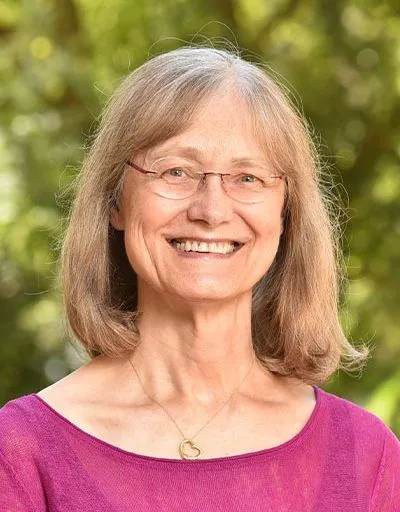
Patricia Phelps, Ph.D., is a Professor and Vice Chair in the Department of Integrative Biology and Physiology at the David Geffen School of Medicine, University of California, Los Angeles. She earned her Ph.D. from UCLA. Dr. Phelps' research program is dedicated to understanding and treating intellectual and developmental disabilities, with a significant focus on spinal cord injury repair and neurodevelopmental disorders.
Her laboratory investigates the potential of olfactory ensheathing cell transplantation to promote axon regeneration and functional recovery after spinal cord injury. Concurrently, her work delves into the critical role of the Reelin/Disabled-1 signaling pathway in neurodevelopment, particularly its impact on neuronal migration and the subsequent development of nociception and pain processing. Dr. Phelps has been a recipient of substantial funding from the National Institutes of Health and the National Science Foundation to support these investigations. Her contributions to the field are marked by a high h-index and extensive citations, reflecting the impact of her research on spinal cord repair mechanisms and neuronal development.

Source: Gemini AI · Updated 8 months ago
This research investigates mechanisms of spinal cord repair and neuronal development. A primary focus is on the therapeutic application of olfactory ensheathing cells to promote axon regeneration and functional recovery following spinal cord injury. Additionally, the work explores the Reelin/Disabled-1 signaling pathway, demonstrating how its disruption leads to mispositioned spinal cord neurons and subsequent alterations in nociceptive processing and pain.
Research topics extracted by AI (Google Gemini) from this member’s publications.
37 publications · h-index 31 · PubMed, ORCID and the BRI profile
Showing 10 of 25
Kubasak MD, Jindrich DL, Zhong H, et al.
Khankan RR, Griffis KG, Haggerty-Skeans JR, et al.
Takeoka A, Jindrich DL, Muñoz-Quiles C, et al.
Phelps PE, Rich R, Dupuy-Davies S, et al.
Runyan SA, Phelps PE.
Villeda SA, Akopians AL, Babayan AH, et al.
Thornton MA, Mehta MD, Morad TT, et al.
Phelps PE, Alijani A, Tran TS.
Khankan RR, Wanner IB, Phelps PE.
Kubasak MD, Hedlund E, Roy RR, et al.
$3.4M total · 4 NIH + NSF grants
R01NS076976Co-PI2012–2017
0518714PI08/01/2005–07/31/2009
Re-expression of L1 CAM Following Spinal Cord Injury (NIH RePORTER, opens in a new tab)
R21NS042000Contact PI2001–2005
R01NS076976Co-PIFY2012–2015
Re-expression of L1 CAM Following Spinal Cord Injury (NIH RePORTER, opens in a new tab)
R21NS042000Contact PIFY2001–2003
0518714PI08/01/2005–07/31/2009
9734550PI04/15/1998–12/31/2004
Institute members who share papers or grants with this researcher
AI-generated
Generated automatically from this profile's public data to suggest possibilities. Treat them as starting points rather than recommendations.
P01 (Research Program Project Grant)
With five R01 grants all focused on 'Activity-dependent functional regeneration after SCI and OEC transplantation,' this researcher has clearly established a highly successful and robust research program. A P01 would be a natural progression, allowing them to integrate multiple interrelated projects and core facilities under a single grant. This mechanism supports a broader, more comprehensive, and collaborative attack on a central scientific theme, leveraging their established expertise and infrastructure to address complex questions in SCI regeneration with greater scope and resources than individual R01s.
UH2/UH3 (Exploratory/Developmental Phased Innovation Awards)
The focus on 'functional regeneration' and 'OEC transplantation' strongly implies a goal of translating research findings into clinical applications for spinal cord injury. A UH2/UH3 mechanism is ideal for high-risk, milestone-driven translational research. The UH2 phase could support early-stage development, optimization, and validation of their therapeutic strategies, potentially leading to a UH3 for more advanced preclinical development, pilot clinical studies, or the refinement of protocols for human trials to restore function after SCI.
R24 (Support for Resource-Related Research Projects)
Given their deep and sustained expertise in SCI, OEC transplantation, and activity-dependent regeneration, this researcher likely possesses or has developed unique resources, models, or methodologies (e.g., specialized animal models, refined OEC processing techniques, advanced imaging, or functional assessment tools) that would be highly valuable to the broader scientific community. An R24 would fund the development, maintenance, or dissemination of such shared research tools or infrastructure, enhancing research in the field of spinal cord injury and neuroscience more broadly.
Shared papers, topics or department