Loading profile…

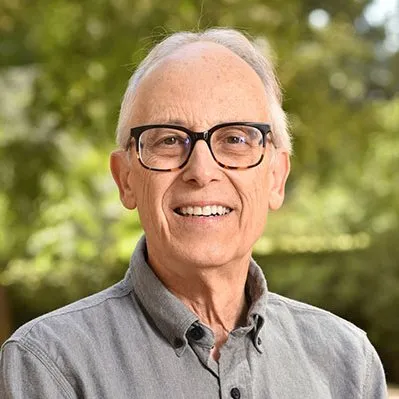
Professor of Neuroscience
AI-generated biography
Scott Chandler, Ph.D., is a distinguished member of the UCLA Brain Research Institute and a faculty member in the Department of Integrative Biology & Physiology. Dr. Chandler's research program is dedicated to understanding the fundamental principles governing neural development, degeneration, and repair, with a particular focus on synapses, cells, and circuits. His laboratory investigates the intricate mechanisms underlying neuronal function and dysfunction, employing innovative approaches to unravel complex neural processes.
Dr. Chandler has made significant contributions to the field through his work on the membrane properties of neurons critical for jaw function, particularly in the context of Amyotrophic Lateral Sclerosis (ALS). His research has been supported by substantial funding from the National Institutes of Health (NIH), including multiple grants focused on brainstem mechanisms controlling jaw movements and the impact of neurodegenerative diseases. With a h-index of 35 and over 3,600 citations, Dr. Chandler's impactful research has significantly advanced our understanding of neural circuit dynamics and their implications for neurological disorders.
Source: Gemini AI · Updated 8 months ago
8 publications · h-index 36 · PubMed, ORCID and the BRI profile
$5.3M total · 4 NIH grants
R21NS071348Contact PI2011–2014
Brainstem mechanisms controlling jaw movements (NIH RePORTER, opens in a new tab)
R01DE006193Contact PI1983–2010
Studies in Oral Pharyngeal Reflexes (NIH RePORTER, opens in a new tab)
R01DE004166Contact PI1978–1995
R21NS071348Contact PIFY2011–2012
Brainstem mechanisms controlling jaw movements (NIH RePORTER, opens in a new tab)
R01DE006193Contact PIFY1983–2007
Studies in Oral Pharyngeal Reflexes (NIH RePORTER, opens in a new tab)
R01DE004166Contact PIFY1978–1993
Brainstem Preparation for Study of Oral-Motor Activity (NIH RePORTER, opens in a new tab)
R03DE009032Contact PIFY1989
Institute members who share papers or grants with this researcher
AI-generated
Generated automatically from this profile's public data to suggest possibilities. Treat them as starting points rather than recommendations.
P01 (Program Project Grant)
This mechanism supports broadly based, multidisciplinary, and often long-term research programs. Given this researcher's success with multiple R01s and R21s, they have demonstrated the capacity to lead significant research endeavors. A P01 would allow them to integrate several interdependent research projects (e.g., further dissecting membrane properties, brainstem circuits, and ALS pathology from multiple angles) under a unified theme, pooling resources and expertise across several labs to tackle complex questions in a comprehensive manner. This is a logical progression for a highly productive, established investigator looking to expand their program.
U01 (Research Project Cooperative Agreement)
A U01 is similar to an R01 in scope but involves substantial programmatic involvement from NIH staff in the planning and execution of the research. This would be an excellent choice if their future research aligns with specific NIH initiatives or consortia (e.g., from NINDS or NIDCR related to ALS, motor control, or craniofacial disorders) where the NIH seeks to standardize methodologies, share resources, or facilitate multi-site collaborations. Their focus on an ALS mouse model and fundamental brainstem mechanisms positions them well to contribute to or lead larger, coordinated efforts addressing significant public health challenges.
DP1 (NIH Director's Pioneer Award)
This award supports individual investigators proposing highly innovative, high-risk, high-impact research that may be outside the scope of traditional funding mechanisms. With multiple R01s and R21s, this researcher is clearly established and successful. The DP1 offers an opportunity to pursue a truly transformative and paradigm-shifting idea in neuroscience—perhaps a radical new approach to understanding or treating ALS, or a completely novel conceptual framework for brainstem motor control—without the constraints of incremental progress often associated with R01s. It’s for researchers ready to push the boundaries of their field.
 Laura DeNardoPhysiologyFit 7/10
Both researchers focus on neuroscience within a physiological context, suggesting a strong potential for complementary expertise. Their combined knowledge could address complex questions in neural systems and function.
Project idea: They could collaborate on a project investigating the physiological mechanisms underlying specific neural processes, perhaps focusing on cellular or system-level responses.
 Greg FieldOphthalmologyFit 7/10
While Scott Chandler's broad neuroscience research may not directly align with Greg Field's specific retinal focus, the mechanisms of retinal degeneration and ganglion cell function are core components of broader neurological processes. Chandler's expertise could offer a more systemic or theoretical neuroscience perspective to Field's detailed cellular work.
Project idea: They could collaborate on a project investigating how broader neurological principles or system-level disruptions observed in general neuroscience might manifest or influence the specific mechanisms of retinal degeneration or ganglion cell function.
 Ranmal SamarasingheNeurologyFit 7/10
Researcher B has a highly specialized and multi-faceted research program in epilepsy, neurogenesis, and brain organoid modeling, which could significantly benefit from Researcher A's broader expertise in neuroscience research. Combining their knowledge could lead to novel insights into neurological disorders.
Project idea: They could collaborate on developing and studying human brain organoid models to investigate the neural circuit disruptions underlying sudden unexpected death in epilepsy.
 William ZeigerNeurologyFit 7/10
Dr. Zeiger's extensive work on specific neurological disorders and circuit mechanisms, coupled with Dr. Chandler's general neuroscience research focus, offers strong potential for complementary expertise. Their combined knowledge could lead to novel insights into the underlying brain circuit dysfunctions in various neurological conditions.
Project idea: They could collaborate on a project investigating how specific neuronal circuit adaptations or plasticities, potentially influenced by factors like insecticide neurotoxicity or early metabolic disorders, contribute to the progression or manifestation of conditions like autism spectrum disorder or Parkinson's disease.
 Ahmet AracNeurologyFit 7/10
Ahmet's expertise in motor control, neurorehabilitation, and machine learning directly complements Scott's broad neuroscience research, offering a pathway to apply computational methods to understand and improve neurological function.
Project idea: They could collaborate on a project using machine learning to analyze complex neurophysiological data from Scott's neuroscience studies, aiming to identify novel biomarkers for motor recovery in conditions studied by Ahmet.
 Samantha ButlerNeurobiologyFit 5/10
While their specific research topics differ (cell differentiation vs. broader neuroscience), Butler's expertise in neural progenitor cell differentiation could provide a cellular and developmental foundation for Chandler's broader neuroscience investigations.
Project idea: Chandler could investigate the functional roles of specific interneurons, whose development and patterning are studied by Butler, in relevant neural circuits.
Shared papers, topics or department