
Analysis of shared heritability in common disorders of the brain. (opens in a new tab)
Science20181,989 citationsRCR 59.1299th percentileOpen access full text (opens in a new tab)PubMed record (opens in a new tab)


Professor In-Residence
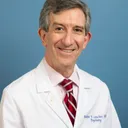
Dr. Sandra Loo is a professor-in-residence in the Division of Child Psychiatry and the Center for Neurobehavioral Genetics.s Dr. Loo has been the principal investigator of numerous NIH grants examining neural mechanisms underlying pediatric psychiatric disorders such as attention-deficit/hyperactivity disorder (ADHD), Tourette’s Disorder, Autism Spectrum Disorder, Obsessive Compulsive Disorder, and Duchenne Muscular Dystrophy. Dr. Loo’s lab is also studying cognitive and electrophysiological measures as biomarkers for treatment response among several pediatric disorders. Dr. Loo is a clinical psychologist and is the director of Pediatric Neuropsychology in the Medical Psychology Assessment Center. She specializes in neuropsychological assessment of childhood psychiatric disorders, such as ADHD and dyslexia.
Source: Manual · Updated 1 month ago
Sandra Loo's research primarily investigates the neurobiological underpinnings of Attention-Deficit/Hyperactivity Disorder (ADHD) and related neurodevelopmental conditions, particularly in pediatric populations. She extensively employs electrophysiological (EEG/ERP) and neuroimaging methods to identify diagnostic and treatment biomarkers, aiming to predict treatment response and understand the cognitive, genetic, and environmental factors contributing to these disorders.
Research topics extracted by AI (Google Gemini) from this member’s publications.
Papers by NIH iCite research category (9 of 74 papers classified) · trials from ClinicalTrials.gov · patents from USPTO.
74 publications · h-index 64 · PubMed, ORCID and the BRI profile
Showing 10 of 65
McGough JJ, Smalley SL, McCracken JT, et al.
Lenartowicz A, Loo SK.
Loo SK, Makeig S.
Lee H, Huang AY, Wang LK, et al.
Smalley SL, McGough JJ, Moilanen IK, et al.
Jeste SS, Frohlich J, Loo SK.
Loo SK, Specter E, Smolen A, et al.
Mohammad-Rezazadeh I, Frohlich J, Loo SK, et al.
$13.2M total · 10 NIH grants · 1 active
R01MH126041Contact PI2022–2027
R01MH126041Contact PIFY2022–2025
R01MH116268Co-PIFY2018–2023
Linking Brain and Behavior in Chronic Tic Disorders (NIH RePORTER, opens in a new tab)
R01NS097484Contact PIFY2016–2020
Real-time attention tracking in the classroom (NIH RePORTER, opens in a new tab)
R21MH119448Co-PIFY2019–2020
R34MH101282Co-PIFY2014–2016
Linking Brain and Behavior in Chronic Tic Disorder (NIH RePORTER, opens in a new tab)
R21NS080160Contact PIFY2013–2014
Brain Source Analysis of Existing EEG Data in Childhood ADHD (NIH RePORTER, opens in a new tab)
R03MH092829Contact PIFY2011–2012
Neuroimaging and Neurochemical Biomarkers in ADHD (NIH RePORTER, opens in a new tab)
RC1MH088507Co-PIFY2009–2010
Genetics of EEG Patterns in ADHD (NIH RePORTER, opens in a new tab)
R01NS054124Contact PIFY2006–2010
Genetic Underpinnings of EEG Patterns in ADHD (NIH RePORTER, opens in a new tab)
K23HD040275Contact PIFY2002–2006
3 trials on ClinicalTrials.gov
Trigeminal Nerve Stimulation for ADHD
Conditions: Attention Deficit Hyperactivity Disorder (ADHD)
NCT02155608 on ClinicalTrials.gov (opens in a new tab)62 enrolledSponsor: University of California, Los Angeles2015–2018
12 Month Open Extension of TNS for ADHD.
Conditions: Attention Deficit Hyperactivity Disorder (ADHD)
NCT03888391 on ClinicalTrials.gov (opens in a new tab)18 enrolledSponsor: James McGough2014–2018
Four-week Open-trial Extension TNS for ADHD
Conditions: Attention Deficit Hyperactivity Disorder (ADHD)
NCT03870737 on ClinicalTrials.gov (opens in a new tab)22 enrolledSponsor: University of California, Los Angeles2014–2018
Institute members who share papers or grants with this researcher







AI-generated
Generated automatically from this profile's public data to suggest possibilities. Treat them as starting points rather than recommendations.
U01 (Research Project Cooperative Agreement)
The researcher has multiple R01s focused on the *efficacy* of External Trigeminal Nerve Stimulation (TNS) for ADHD. A U01 would be ideal for scaling up these efforts to a larger, potentially multi-site clinical trial, a comparative effectiveness study, or a more complex interventional study where substantial collaboration with NIH staff is anticipated, which is common for large clinical trials.
P01 (Research Program Project Grant)
With multiple R01s exploring both TNS efficacy and the underlying neurobiology (alpha oscillations, working memory, multimodal imaging) in ADHD, the researcher is well-positioned to lead or participate in a P01. This grant supports highly integrated, multidisciplinary research programs consisting of several interdependent projects that share a common theme, allowing for a synergistic approach to understanding and treating ADHD.
R34 (Clinical Trial Planning Grant)
Building on successful R01 efficacy studies for TNS in ADHD, the researcher might be planning a more complex, larger-scale clinical trial (e.g., a multi-site trial or a trial with novel methodologies). An R34 provides dedicated funding for the planning phase, allowing for the development of detailed protocols, pilot recruitment, data management plans, and identification of sites, de-risking the subsequent application for a full-scale clinical trial (e.g., a large R01 clinical trial or U01).
Shared papers, topics or department