The autism brain imaging data exchange: towards a large-scale evaluation of the intrinsic brain architecture in autism. (opens in a new tab)
Di Martino A, Yan CG, Li Q, et al.
Metrics: Semantic Scholar · Updated 8 months ago
AI-generated biography
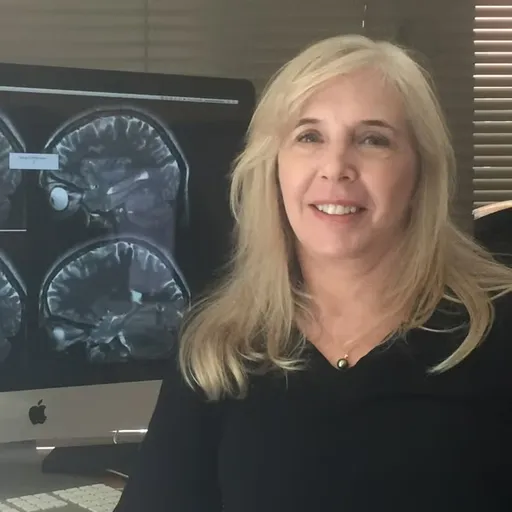
Susan Bookheimer, Ph.D., is a distinguished faculty member in the Department of Psychiatry & Biobehavioral Sciences at UCLA. She earned her Ph.D. from Wayne State University in 1989 and has been a Professor at UCLA since 2004. Dr. Bookheimer's research program is dedicated to understanding the neural underpinnings of neurodevelopmental and neurodegenerative disorders, with a strong emphasis on neuroimaging. Her significant contributions include pioneering work on identifying early neural markers and salience network connectivity in infants at risk for autism spectrum disorder, as well as developing neuroimaging-based metrics for tracking Alzheimer's disease progression.
Dr. Bookheimer is also at the forefront of investigating novel therapeutic applications, including transcranial focused ultrasound for neurodevelopmental and neurodegenerative conditions, and the impact of multi-modal lifestyle interventions. Her research has led to high-impact publications, such as "Patterns of brain activation in people at risk for Alzheimer's disease," and she has secured substantial funding from the National Institutes of Health for her groundbreaking studies. Her extensive work has garnered over 43,000 citations, reflecting her profound influence on the field.

Source: Gemini AI · Updated 8 months ago
Susan Bookheimer's research primarily utilizes neuroimaging to identify early neural markers and progression patterns in neurodevelopmental disorders like autism (e.g., atypical language processing, altered salience network connectivity) and neurodegenerative diseases such as Alzheimer's (e.g., cerebral blood flow, neurodegeneration metrics). Her work also investigates therapeutic interventions, including transcranial focused ultrasound and multi-modal lifestyle changes, alongside the influence of early life adversity and social support on brain function and mental health.
Research topics extracted by AI (Google Gemini) from this member’s publications.
Papers by NIH iCite research category (13 of 318 papers classified) · trials from ClinicalTrials.gov · patents from USPTO.
318 publications · h-index 103 · PubMed, ORCID and the BRI profile
Showing 10 of 318
Di Martino A, Yan CG, Li Q, et al.
Dapretto M, Davies MS, Pfeifer JH, et al.
Bookheimer S.
Hariri AR, Bookheimer SY, Mazziotta JC.
Bookheimer SY, Strojwas MH, Cohen MS, et al.
Hagler DJ, Hatton S, Cornejo MD, et al.
Small GW, Ercoli LM, Silverman DH, et al.
Di Martino A, O'Connor D, Chen B, et al.
Small GW, Kepe V, Ercoli LM, et al.
Dapretto M, Bookheimer SY.
$38.5M total · 12 NIH grants · 2 active
17/21 Abcd-USA Consortium: Research Project Site at UCLA (NIH RePORTER, opens in a new tab)
U01DA050987Co-PI2020–2027
UCLA IDDRC: Administrative Core (NIH RePORTER, opens in a new tab)
P50HD103557Contact PI2020–2027
17/21 Abcd-USA Consortium: Research Project Site at UCLA (NIH RePORTER, opens in a new tab)
U01DA050987Co-PIFY2020–2026
UCLA IDDRC: Administrative Core (NIH RePORTER, opens in a new tab)
P50HD103557Contact PIFY2020–2026
R01AG073480Contact PIFY2021–2025
Administrative Core (NIH RePORTER, opens in a new tab)
P50HD055784Contact PIFY2007–2021
U54HD087101Contact PIFY2015–2020
Symptom Dimension of Threat- and Reward-Related Neurocircuitry (NIH RePORTER, opens in a new tab)
R01MH100117Co-PIFY2014–2018
Intellectual and Developmental Disabilities Research Centers (NIH RePORTER, opens in a new tab)
P30HD004612Contact PIFY1997–2014
P41RR013642Contact PIFY1998–2011
R01AG013308Contact PIFY1995–2011
Neural and Phenotypic Correlates of Autism Risk Genes (NIH RePORTER, opens in a new tab)
R01HD065280Contact PIFY2009–2010
Multi-Modal Brain Imaging in Aging and Dementia (NIH RePORTER, opens in a new tab)
P01AG025831Contact PIFY2005–2009
Functional Imaging of Social Communication in Autism (NIH RePORTER, opens in a new tab)
P01HD035470Contact PIFY1997–2001
1 trial on ClinicalTrials.gov
Low Intensity Focused Ultrasound for Mild Cognitive Impairment and Mild Alzheimer's Disease
Conditions: Mild Cognitive Impairment, Amnestic Mild Cognitive Disorder, Deep Brain Stimulation, Mild Alzheimer's Disease
NCT05417555 on ClinicalTrials.gov (opens in a new tab)144 enrolledSponsor: University of California, Los Angeles2022–2026
Institute members who share papers or grants with this researcher
AI-generated
Generated automatically from this profile's public data to suggest possibilities. Treat them as starting points rather than recommendations.
P01 (Program Project Grant)
The researcher has demonstrated a strong capacity for collaborative and multi-component research through their involvement in two U01 consortia (ABCD study site) and an Administrative Core for a P50 center. A P01 would allow them to integrate multiple, complementary research projects (perhaps building on their R01 work in memory/MCI or their IDD interests) under a single overarching theme, leading a team of investigators and establishing a cohesive program of research. This is a logical progression from contributing to centers/consortia to directing a multi-project grant.
UH2/UH3 or UG3/UH3 (Exploratory/Developmental Clinical Trial Planning and Implementation Cooperative Agreement)
Their R01 focuses on 'Modulation of Hippocampal Circuitry and Memory Function with Focused Ultrasound in Amnestic MCI.' This research has a strong translational potential towards a therapeutic intervention. The UH2/UH3 or UG3/UH3 mechanism is specifically designed to support early-phase clinical trials, often with a milestone-driven structure, which would be ideal for advancing their focused ultrasound research from basic discovery or proof-of-concept into a structured clinical trial for MCI patients. The cooperative agreement format also aligns with their existing experience with U01s.
U24 (Resource-Related Research Project - Cooperative Agreement)
Given the researcher's extensive involvement in large consortia (two U01s as a site for ABCD) and an administrative role within a P50 center, they likely have significant experience with managing data, resources, and coordinating multi-site efforts. A U24 could be used to establish or lead a major resource, core facility, data coordinating center, or repository (e.g., related to focused ultrasound methodologies, neuroimaging data processing, or large-scale neurodevelopmental datasets) that serves a broader research community. This leverages their collaborative and administrative expertise to provide a valuable community resource.
Shared papers, topics or department