
Report of findings in a DSM-5 field trial for hypersexual disorder. (opens in a new tab)
Reid RC, Carpenter BN, Hook JN, et al.
The Journal of Sexual Medicine2012451 citationsRCR 7.9096th percentilePubMed record (opens in a new tab)

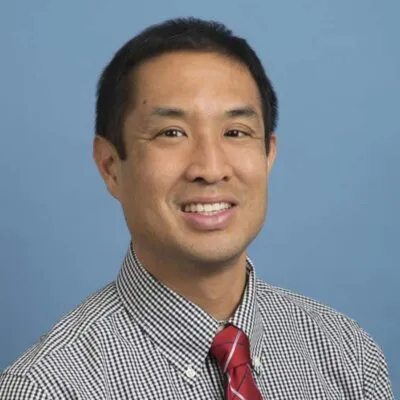
Professor of Psychiatry
Dr. Fong is a Professor of Psychiatry, board-certified in Addiction Psychiatry, at the Semel Institute for Neuroscience and Human Behavior at UCLA.
Source: BRI Website (AI extract) · Updated 8 months ago
Timothy Fong's research primarily investigates problem gambling and related behavioral addictions, exploring their underlying psychological mechanisms, such as altered learning from losses, and associated comorbidities like depression and impulsivity. His work also examines these conditions within diverse cultural populations, assessing attitudes towards treatment and developing interventions for disordered gamblers, reflecting a comprehensive focus on understanding and addressing complex addictive behaviors.
Research topics extracted by AI (Google Gemini) from this member’s publications.
Papers by NIH iCite research category (4 of 39 papers classified) · trials from ClinicalTrials.gov · patents from USPTO.
39 publications · PubMed, ORCID and the BRI profile
Showing 10 of 35
Reid RC, Carpenter BN, Hook JN, et al.
Reid RC, Li DS, Gilliland R, et al.
Newton TF, Roache JD, De La Garza R 2nd, et al.
Fong T, Kalechstein A, Bernhard B, et al.
Reid RC, Dhuffar MK, Parhami I, et al.
Fong TW, Reid RC, Parhami I.
de Castro V, Fong T, Rosenthal RJ, et al.
Irwin MR, Olmos L, Wang M, et al.
Fong TW, Tsuang J.
$1.1M total · 2 NIH grants · 1 active
R25DA035692Contact PI2013–2031
R25DA035692Contact PIFY2013–2026
Impulsivity In Pathological Gambling (NIH RePORTER, opens in a new tab)
K23DA019522Contact PIFY2006–2010
1 trial on ClinicalTrials.gov
Impulsivity in Pathological Gambling
Conditions: Pathological Gambling
NCT00580567 on ClinicalTrials.gov (opens in a new tab)120 enrolledSponsor: University of California, Los Angeles2007–2009
Institute members who share papers or grants with this researcher
AI-generated
Generated automatically from this profile's public data to suggest possibilities. Treat them as starting points rather than recommendations.
R01 (Research Project Grant)
The R01 is the cornerstone of NIH funding for independent investigators. Having successfully completed K23 awards (which are career development awards designed to transition investigators to independence) indicates that this researcher has a strong foundation in patient-oriented research on impulsivity in pathological gambling. An R01 would allow them to significantly expand their research program, test comprehensive hypotheses, and establish themselves as a fully independent investigator with substantial funding and project duration, building directly on the expertise and preliminary data generated during their K23 work.
R21 (Exploratory/Developmental Research Grant)
The R21 mechanism is ideal for high-risk, high-reward, or innovative pilot studies that may not yet have extensive preliminary data to support a full R01. This researcher could leverage their deep knowledge in impulsivity and pathological gambling to explore novel biomarkers, develop new therapeutic targets, or test innovative methodological approaches (e.g., new neuroimaging paradigms, computational models) that could lead to groundbreaking discoveries and eventually pave the way for a larger R01 application. It allows for testing feasibility and generating critical preliminary data.
R34 (Clinical Trial Planning Grant)
Given the focus on 'pathological gambling,' it is highly probable that this researcher's work could progress towards developing and testing interventions. The R34 specifically supports the planning phase of clinical trials, allowing for activities such as protocol development, pilot testing of recruitment strategies, establishing data management procedures, and collecting preliminary feasibility and safety data. This would be a crucial step if the researcher aims to translate their understanding of impulsivity into tangible treatments or prevention strategies for pathological gambling.
Shared papers, topics or department