
Neural Circuit Mechanisms of Social Behavior. (opens in a new tab)
Chen P, Hong W.
Neuron2018550 citationsRCR 13.9598th percentileOpen access full text (opens in a new tab)PubMed record (opens in a new tab)

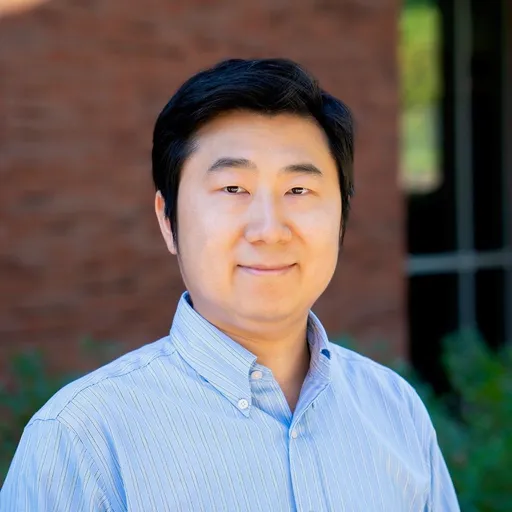
Professor
The Hong Lab employs a multidisciplinary approach to identify the molecular and neural circuit mechanisms underlying normal social behaviors as well as their dysregulations in neuropsychiatric disorders. Social behaviors are essential for the survival and reproduction of animals. The control of social behavior is of particular importance in social species such as humans. Abnormalities in social behaviors are associated with several neuropsychiatric disorders, such as autism spectrum disorders and schizophrenia. Despite its importance, many fundamental questions regarding social behavior and its disorders still remain unanswered. We aim to understand how social behavior is regulated at the molecular and circuit level and how social behavior and social experience lead to molecular and circuit level changes in the brain. We study these questions across molecular, circuit, and behavioral levels, by linking genes to circuits to behaviors. To do that, we take a multi-disciplinary approach and utilize a variety of experimental and computational technologies, including but not limited to optogenetics/chemogenetics, in vivo/vitro calcium imaging and electrophysiology, various genetic and molecular biology techniques, systems approaches such as next-generation sequencing and bioinformatics, and engineering and computational approaches such as machine learning and computer vision.
Source: BRI Website · Updated 8 months ago
Weizhe Hong's research primarily focuses on elucidating the neural mechanisms underlying prosocial behaviors and complex social dynamics. Their work specifically investigates how cortical regions regulate cooperative, helping, and parenting actions, particularly in response to others experiencing negative states or environmental challenges, often exploring shared neural substrates and inter-brain dynamics.
Research topics extracted by AI (Google Gemini) from this member’s publications.
40 publications · h-index 28 · PubMed, ORCID and the BRI profile
Showing 10 of 40
Chen P, Hong W.
Wu YE, Pan L, Zuo Y, et al.
Kingsbury L, Huang S, Wang J, et al.
Hong W, Kim DW, Anderson DJ.
Chen PB, Hu RK, Wu YE, et al.
Hong W, Mosca TJ, Luo L.
Hu RK, Zuo Y, Ly T, et al.
Mosca TJ, Hong W, Dani VS, et al.
Hong W, Kennedy A, Burgos-Artizzu XP, et al.
Wu YE, Dang J, Kingsbury L, et al.
$21.3M total · 8 NIH grants · 4 active
Neural Circuit Mechanisms of Allogrooming Behavior (NIH RePORTER, opens in a new tab)
R01MH130941Contact PI2022–2027
Dissecting the role of astrocytes in affiliative social behavior (NIH RePORTER, opens in a new tab)
R01MH142446Contact PI2026–2031
R01NS132912Contact PI2023–2028
R01MH132736Co-PI2023–2028
Neural Circuit Mechanisms of Allogrooming Behavior (NIH RePORTER, opens in a new tab)
R01MH130941Contact PIFY2022–2026
Dissecting the role of astrocytes in affiliative social behavior (NIH RePORTER, opens in a new tab)
R01MH142446Contact PIFY2026
R01NS132912Contact PIFY2023–2026
R01MH132736Co-PIFY2023–2026
R01NS113124Contact PIFY2019–2023
RF1NS132912Contact PIFY2023
Hippocampal neural dynamics driving affiliation and attachment (NIH RePORTER, opens in a new tab)
UF1NS122124Co-PIFY2021
RF1DA048811Contact PIFY2019
Institute members who share papers or grants with this researcher








AI-generated
Generated automatically from this profile's public data to suggest possibilities. Treat them as starting points rather than recommendations.
Program Project Grant (P01)
The researcher currently holds multiple R01 grants focused on highly related aspects of social behavior (allogrooming, nucleus accumbens, social dysfunction). A P01 would allow them to integrate these individual projects into a larger, synergistic research program, fostering collaboration among sub-projects within their lab or with other labs. This mechanism is ideal for established investigators with a strong track record who can demonstrate a cohesive theme and greater impact through a team science approach that goes beyond the scope of individual R01s.
Institutional Training Grant (T32)
As a well-funded, established neuroscience researcher at a major institution like UCLA, they are in an excellent position to lead and direct a predoctoral or postdoctoral training program. A T32 would enable them to train the next generation of scientists in their specialized areas of neural circuits, social behavior, and neuropsychiatric models, solidifying their role as a leader in the field and enhancing their institution's research capacity.
BRAIN Initiative Funding Opportunities (e.g., targeted R01s, U01s, or U19s)
The researcher's focus on 'Neural Circuit Mechanisms' and 'social representations' is highly aligned with the goals of the NIH BRAIN Initiative, which seeks to revolutionize our understanding of the brain by accelerating the development and application of innovative neurotechnologies. They should look for specific BRAIN Initiative Requests for Applications (RFAs) or Program Announcements (PARs) that align with their work on circuit mapping, monitoring, or manipulating neural activity underlying complex behaviors. Mechanisms like targeted R01s for foundational research, U01s for cooperative agreement projects (often involving technology development or large-scale data generation), or even U19s for integrated, multi-component research programs, could be excellent fits for leveraging cutting-edge tools to dissect social neural circuits.
Shared papers, topics or department