
Norepinephrine ignites local hotspots of neuronal excitation: How arousal amplifies selectivity in perception and memory. (opens in a new tab)
Mather M, Clewett D, Sakaki M, et al.
2015443 citationsRCR 18.4399th percentile

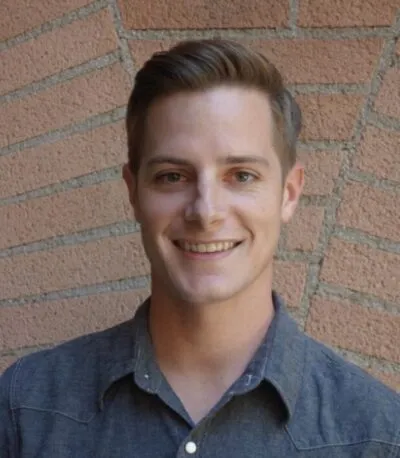
Assistant Professor
David Clewett will join UCLA as an Assistant Professor of Psychology in July 2020. He received his PhD in Neuroscience from the University of Southern California in 2016, where he worked with Dr. Mara Mather to study emotion-cognition interactions. He then conducted a postdoctoral fellowship with Dr. Lila Davachi at NYU and Columbia University, where he studied how episodic memories are constructed from continuous experience. Before attending graduate school, he received a B.S. degree in Biopsychology with a minor in English from the University of California, Santa Barbara.
Source: BRI Website · Updated 8 months ago
David Clewett investigates the neurobiological mechanisms through which emotional arousal and neuromodulatory systems, especially the locus coeruleus-norepinephrine system, shape episodic memory. Their research specifically examines how these factors influence the temporal organization of memories, determining what information is prioritized, how discrete events are segmented or bound across time, and how memories are formed and retrieved in the brain.
Research topics extracted by AI (Google Gemini) from this member’s publications.
Papers by NIH iCite research category (1 of 39 papers classified) · trials from ClinicalTrials.gov · patents from USPTO.
39 publications · h-index 25 · PubMed, ORCID and the BRI profile
Showing 10 of 38
Mather M, Clewett D, Sakaki M, et al.
Hermundstad AM, Bassett DS, Brown KS, et al.
Clewett DV, Lee TH, Greening S, et al.
Clewett D, DuBrow S, Davachi L.
Clewett DV, Huang R, Velasco R, et al.
Clewett D, Gasser C, Davachi L.
Lee TH, Greening SG, Ueno T, et al.
Clewett D, Davachi L.
Clewett D, Murty VP.
Mather M, Joo Yoo H, Clewett DV, et al.
AI-generated
Generated automatically from this profile's public data to suggest possibilities. Treat them as starting points rather than recommendations.
R01 from NIMH
The researcher's strong publication record demonstrates expertise in the neural mechanisms of memory formation, the role of neuromodulators (e.g., locus coeruleus-norepinephrine system), and the influence of emotion on memory. This aligns directly with NIMH's mission to understand the brain's mental processes and their dysfunction, providing foundational knowledge relevant to mental health disorders involving memory and emotional dysregulation.
R01 from NIA
The researcher's work on memory systems (hippocampus), neuromodulation, and arousal's impact on memory is highly relevant to NIA's goals of understanding healthy cognitive aging and the mechanisms contributing to age-related memory decline and neurodegenerative diseases like Alzheimer's. A proposal could investigate how these systems change with age or contribute to resilience/vulnerability.
R21 from NIMH or NIA
This exploratory/developmental grant would be suitable for pursuing a high-risk/high-reward project, testing novel hypotheses derived from their existing work (e.g., exploring new neuromodulators, developing advanced methodologies for studying neuromodulatory influences, or piloting studies in new populations like aging cohorts or specific patient groups), thereby generating preliminary data for a subsequent R01 application.
Their research areas strongly complement each other, bridging the molecular/systemic underpinnings of arousal and sleep with the cognitive and behavioral aspects of memory, offering a comprehensive approach to memory consolidation.
Project idea: They could investigate how arousal states and sleep dynamics, modulated by the locus coeruleus norepinephrine system, differentially impact the consolidation of salient versus non-salient memories.
 Peyman GolshaniNeurologyFit 7/10
Their research areas complement each other significantly, with Clewett's focus on arousal and episodic memory linking directly to Golshani's expertise in hippocampal memory encoding and neural dynamics.
Project idea: They could investigate how norepinephrine-modulated arousal (Clewett's expertise) influences the precise hippocampal encoding sequences (Golshani's expertise) of salient stimuli, potentially using Golshani's voltage imaging techniques.
 Ausaf BariNeurosurgeryFit 7/10
Researcher A's broad neuroscience expertise, particularly in neurosurgery, could provide a critical translational and anatomical framework for Researcher B's investigations into memory and the locus coeruleus, potentially leading to new insights into how the brain's physical structure influences mnemonic processes.
Project idea: Investigating the structural and functional neural correlates of arousal-modulated memory consolidation in the context of neurosurgical interventions or conditions affecting the locus coeruleus system.
 Dean BuonomanoNeurobiologyFit 7/10
Their research on temporal patterns in neural circuits and arousal's impact on memory formation, particularly involving the hippocampus, presents a strong opportunity to explore how timing mechanisms are influenced by emotional states.
Project idea: They could investigate how the neural encoding of temporal sequences in the hippocampus is modulated by arousal elicited by threat, potentially revealing mechanisms for survival-relevant memory prioritization.
 Daniel Benjamin AharoniNeurologyFit 7/10
Researcher A's expertise in in vivo neural circuit imaging of freely behaving animals is highly complementary to Researcher B's work on arousal effects on episodic memory and the locus coeruleus. Combining their methods could directly investigate the neural mechanisms underlying arousal's impact on memory formation and retrieval.
Project idea: Investigate the role of locus coeruleus activity, visualized with miniaturized microscopy in freely behaving animals, during tasks designed to elicit different levels of arousal and measure subsequent memory performance.
 Paul MathewsNeurologyFit 6/10
Clewett's work on arousal, memory, and the locus coeruleus could complement Mathews' research on cerebellar circuits and temporal processing, potentially informing how the cerebellum contributes to memory formation under varying arousal states.
Project idea: Investigate the role of cerebellar-forebrain connectivity and locus coeruleus activity in the temporal encoding of arousing or salient memories.
Shared papers, topics or department