State-dependent computations: spatiotemporal processing in cortical networks. (opens in a new tab)
Buonomano DV, Maass W.
Nature reviews. Neuroscience2009962 citationsRCR 12.0798th percentilePubMed record (opens in a new tab)

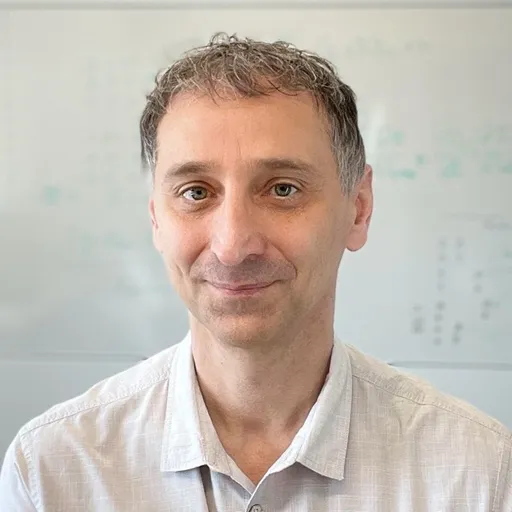
Professor
Behavior and cognition are not the product of isolated neurons, but rather emerge from the dynamics of interconnected neurons embedded in complex recurrent networks. Significant progress has been made towards understanding cellular and synaptic properties in isolation, as well as in establishing which areas of the brain are active during specific tasks. However, elucidating how the activity of hundreds of thousands of neurons within local cortical circuits underlie computations remains an elusive and fundamental goal in neuroscience. The primary goal of my laboratory is to understand how functional computations emerge from networks of neurons. One computation we are particularly interested in is how the brain tells time. Temporal processing refers to your ability to distinguish the interval and duration of sensory stimuli, and is a fundamental component of speech and music perception. To answer these questions the main approaches in my laboratory involve: (1) In Vitro Electrophysiology: Using acute and chronic brain slices we study the spatio-temporal dynamics of cortical circuits, as well as the learning rules that allow networks to develop, organize and perform computations ??? that is, to learn. (2) Computer Simulations: Computer models are used to simulate how networks perform computations, as well as test and generate predictions in parallel with our experimental research. (3) Human Psychophysics: We also use human pyschophysical experiments to characterize learning and generalization of temporal tasks, such as interval discrimination.
Source: BRI Website (AI extract) · Updated 8 months ago
Dean Buonomano's research investigates the neural mechanisms underlying the brain's ability to encode and process time, often linking it to working memory and learning. His work highlights how dynamic neural sequences within cortical and hippocampal circuits, along with specific interneuron activity and synaptic plasticity, are fundamental for representing temporal patterns. This research also explores how these timekeeping mechanisms are shaped by experience and can be compromised in conditions like Fragile X syndrome.
Research topics extracted by AI (Google Gemini) from this member’s publications.
55 publications · h-index 47 · PubMed, ORCID and the BRI profile
Showing 10 of 31
Buonomano DV, Maass W.
Buonomano DV.
Buonomano DV, Laje R.
Bakhurin KI, Goudar V, Shobe JL, et al.
Buonomano DV, Bramen J, Khodadadifar M.
Zhou S, Masmanidis SC, Buonomano DV.
Buonomano DV.
$15.0M total · 13 NIH + NSF grants · 1 active
R01DA060229Co-PI2025–2030
R01DA060229Co-PIFY2025–2026
R01NS125877Co-PIFY2021–2025
R01NS116589Contact PIFY2020–2024
R01NS100050Contact PIFY2016–2020
RF1NS116589Contact PIFY2020
Timing and Learning in in Vitro Cortical Networks (NIH RePORTER, opens in a new tab)
R01MH060163Contact PIFY2001–2019
R03NS077340Contact PIFY2012–2013
R21MH097093Contact PIFY2012–2013
R03MH076888Contact PIFY2007–2008
2008741PI10/01/2020–09/30/2023
1420897PI10/01/2014–09/30/2017
1114833PI09/01/2011–08/31/2014
Temporal Processing And Short- And Long-Term Plasticity (NSF award, opens in a new tab)
9983122PI08/15/2000–07/31/2003
Institute members who share papers or grants with this researcher

AI-generated
Generated automatically from this profile's public data to suggest possibilities. Treat them as starting points rather than recommendations.
P01 (Program Project Grant)
The researcher has multiple R01s focusing on interconnected themes: timing, working memory, reinforcement learning, corticostriatal circuits, and dopaminergic mechanisms. A P01 would allow them to integrate these distinct but synergistic lines of inquiry into a comprehensive, multi-project program. This mechanism is ideal for established investigators to lead a larger, collaborative effort, leveraging shared resources and expertise to achieve a common, ambitious research objective beyond what individual R01s can accomplish.
U01 (Research Project Cooperative Agreement)
Given the fundamental nature of their work on timing and cognition, the researcher is well-positioned to contribute to larger, often multi-site or highly collaborative NIH initiatives. U01s are frequently used in response to specific Requests for Applications (RFAs) or Program Announcements (PAs) that target particular research gaps, such as large-scale data generation, clinical translation, or consortium-based studies. This allows them to apply their expertise to broader, agency-defined priorities with substantial programmatic involvement from NIH.
R21 (Exploratory/Developmental Research Grant Award)
Even for established R01 investigators, the R21 mechanism is valuable for pursuing high-risk, high-reward ideas or developing novel methodologies that lack the extensive preliminary data required for an R01. This could involve testing a radically new hypothesis about time encoding, exploring an innovative computational model, or applying a cutting-edge technique to their research area. An R21 provides the flexibility and resources for proof-of-concept studies that could open entirely new, transformative avenues for future R01 applications.
 Alicia IzquierdoPsychologyFit 8/10
Their research areas have significant complementary potential, bridging fundamental neural mechanisms of temporal processing with the neural basis of flexible learning, decision-making under uncertainty, and cognitive control, all of which heavily rely on temporal dynamics.
Project idea: Investigating how the temporal encoding of predictive information by neural circuits (Buonomano) contributes to flexible adaptation of learned choices and effort allocation in situations of uncertainty and risk, mediated by the amygdala and prefrontal cortex (Izquier).
Their research on temporal pattern encoding and sleep-dependent memory consolidation offers a strong complementary link to understand how time-based information is learned and reinforced during sleep.
Project idea: Investigate how sleep-dependent consolidation of temporal sequences learned during wakefulness impacts neural representations of time in the hippocampus and neocortex.
 Andrew WikenheiserPsychologyFit 8/10
Their research complements each other significantly, bridging neural mechanisms of temporal processing with decision-making under uncertainty and reward. Combining their expertise could illuminate how the brain integrates temporal information into effort-based choices.
Project idea: Investigate how the neural representation of temporal patterns in cortical circuits (Buonomano) influences effort-delay trade-offs and the coding of uncertainty in decision-making (Wikenheiser), potentially using tasks that require predicting reward timing.
 Kate WassumPsychologyFit 7/10
Their research areas are highly complementary: Buonomano's expertise in temporal pattern encoding in neural circuits could inform Wassum's work on how dopamine and neural circuits drive goal-directed behavior and addiction, particularly in understanding the temporal dynamics of reward expectation and habit formation. Combining their knowledge could elucidate how the brain learns and predicts sequences of events in reward-seeking and decision-making contexts.
Project idea: They could investigate how neural circuits learn to predict temporal sequences of reward availability and cue presentation, and how these temporal predictions influence dopamine signaling and subsequent goal-directed actions or habitual responses.
 Laura DeNardoPhysiologyFit 7/10
Dean Buonomano's focus on temporal pattern encoding in neural circuits and Laura DeNardo's broader neuroscience research could complement each other by applying his specific mechanistic insights to her more general physiological investigations.
Project idea: They could investigate how specific physiological states or modulations influence the brain's ability to learn and replay temporal patterns, as studied by Buonomano.
 Paul MathewsNeurologyFit 7/10
Both researchers investigate temporal processing and neural circuits, with Buonomano focusing on cortical representations of time and Mathews on cerebellar mechanisms underlying temporal aspects of motor control and sensory processing, suggesting complementary approaches to understanding temporal coding.
Project idea: They could collaborate on a project investigating how cerebellar circuits (Mathews) contribute to the predictive temporal coding and replay of learned patterns observed in cortical circuits (Buonomano).
 Keith HolyoakPsychologyFit 7/10
Buonomano's work on neural encoding of temporal patterns could provide a biological substrate for the cognitive processes of relational learning and inference that Holyoak investigates, creating a bridge between neural mechanisms and higher-level cognition.
Project idea: They could collaborate on a project investigating how the brain's temporal processing mechanisms (Buonomano) support analogical reasoning and causal inference (Holyoak) by examining neural activity during relational learning tasks.
 Barbara KnowltonPsychologyFit 7/10
Their research on neural encoding of temporal patterns (Buonomano) and value-directed memory, decision-making, and habit formation (Knowlton) could be powerfully integrated to understand how temporal predictions influence value-based choices and habit formation, especially across the lifespan and under different cognitive conditions.
Project idea: Investigate how temporal predictions of reward timing and predictability, as encoded by neural circuits, influence value-based decision-making and habit learning in aging and in individuals with early life stress.
 David ClewettPsychologyFit 7/10
Their research on temporal patterns in neural circuits and arousal's impact on memory formation, particularly involving the hippocampus, presents a strong opportunity to explore how timing mechanisms are influenced by emotional states.
Project idea: They could investigate how the neural encoding of temporal sequences in the hippocampus is modulated by arousal elicited by threat, potentially revealing mechanisms for survival-relevant memory prioritization.
Dean Buonomano's expertise in neural encoding of temporal patterns, particularly in ex vivo circuits, could provide a fundamental mechanistic understanding of timing and sequence generation, which can then be investigated in the context of prefrontal cortex circuit dysfunction and psychiatric disorders by Gil Hoftman.
Project idea: They could investigate how disruptions in prefrontal cortex circuit development and neurotransmission (Hoftman's focus) affect the ability of neural circuits to learn, predict, and replay temporal patterns (Buonomano's focus), with potential implications for understanding temporal processing deficits in schizophrenia and autism spectrum disorders.
Their research areas complement each other well, with Buonomano focusing on temporal encoding in neural circuits and Huk on visual processing and decision-making, creating opportunities to study how temporal information influences perception.
Project idea: They could investigate how the brain encodes and utilizes temporal patterns in visual motion stimuli to inform perceptual decisions.
Dean Buonomano's expertise in neural encoding of temporal patterns, particularly within cortical circuits, could provide a mechanistic understanding of the temporal dynamics of memory processes that Stephanie Leal investigates, especially in the context of emotion regulation and interference.
Project idea: They could investigate how the temporal encoding of information within neural circuits influences the susceptibility to interference and the regulation of emotional memories.
 Zili LiuPsychologyFit 7/10
Their research areas complement each other by combining neural mechanisms of temporal pattern encoding with the study of visual perceptual learning and plasticity, offering a unique perspective on how the brain learns and adapts to temporal aspects of visual information.
Project idea: They could investigate how the neural circuits for temporal pattern encoding, as studied by Buonomano, contribute to the acquisition and retention of temporal aspects in visual perceptual learning tasks, such as those involving motion discrimination or orientation timing.
 Thomas O’DellPhysiologyFit 7/10
Their research areas are highly complementary, with Buonomano's work on temporal encoding in neural circuits directly aligning with O'Dell's expertise in synaptic plasticity and NMDA receptor signaling in the hippocampus, a key region for memory and timing.
Project idea: They could investigate how specific NMDA receptor-dependent synaptic plasticity mechanisms in hippocampal CA1 neurons contribute to the precise neural encoding and replay of temporal patterns observed in Buonomano's studies.
Buonomano's work on neural encoding of temporal patterns could be significantly enhanced by Rissman's expertise in individual differences in cognitive task performance and computational modeling, allowing for a more nuanced understanding of how these neural mechanisms manifest behaviorally across individuals.
Project idea: They could investigate how individual differences in cognitive abilities, as modeled by Rissman, relate to the neural mechanisms of temporal pattern encoding and prediction identified by Buonomano.
 Ausaf BariNeurosurgeryFit 7/10
Researcher A's broad neuroscience background, particularly in neurosurgery, could provide valuable clinical insights and potentially access to patient populations or surgical models, while Researcher B has highly specific expertise in temporal pattern encoding. Their fields are complementary rather than directly overlapping, suggesting potential for novel research.
Project idea: They could collaborate on a project investigating how the brain's temporal processing mechanisms (Researcher B's expertise) are affected by neurological conditions or surgical interventions (Researcher A's expertise), potentially exploring how to restore or improve temporal perception after injury.
 Ahmet AracNeurologyFit 7/10
Ahmet's work on motor control and neurorehabilitation, particularly with machine learning for kinematic analysis, strongly complements Dean's research on neural encoding of temporal patterns. Combining their expertise could lead to a deeper understanding of how temporal neural codes underpin motor learning and recovery after stroke.
Project idea: They could investigate how disruptions in neural encoding of temporal patterns, as studied by Buonomano, contribute to motor control deficits in stroke patients, and how Arac's machine learning approaches can be used to decode and potentially restore these temporal dynamics for improved neurorehabilitation.
Researcher A's expertise in wireless neurostimulation, particularly the vagus nerve, could provide a powerful tool to modulate neural activity, while Researcher B's focus on neural encoding of temporal patterns could leverage this modulation to investigate how the brain represents and learns time-dependent information.
Project idea: They could develop a closed-loop system to investigate how vagus nerve stimulation influences the brain's ability to predict and replay temporal sequences in neural circuits.
 Greg FieldOphthalmologyFit 6/10
While seemingly disparate, Buonomano's work on temporal encoding in neural circuits and Field's research on retinal ganglion cell function could be combined to investigate how temporal information is processed early in the visual pathway and how its disruption impacts perception.
Project idea: They could investigate how retinal ganglion cells encode temporal patterns in visual stimuli and whether disruptions in these temporal codes contribute to the perceptual deficits seen in retinal degeneration.
 Neil HarrisNeurosurgeryFit 6/10
Their research areas are complementary, with Buonomano's expertise in neural timing potentially offering insights into the temporal dynamics of brain injury and recovery, and Harris's focus on TBI pathogenesis and biomarkers providing a clinical context and data source.
Project idea: They could investigate how disrupted temporal encoding in neural circuits after TBI contributes to cognitive deficits and explore whether temporal pattern deficits can serve as novel biomarkers for epilepsy development.
 Avishek AdhikariPsychologyFit 6/10
Researcher A focuses on the neural circuits of defensive behaviors and fear, while Researcher B investigates neural encoding of temporal patterns. Combining these could elucidate how the timing and sequence of neural activity within fear circuits contribute to learned defensive behaviors and extinction.
Project idea: They could investigate how the temporal dynamics of amygdala or periaqueductal gray activity influence the acquisition and extinction of learned flight responses, potentially uncovering temporal codes for threat perception and avoidance.
 Steve CannonPhysiologyFit 2/10
Their research areas are largely disparate, focusing on neural timing mechanisms versus skeletal muscle physiology and ion channels, with no immediate overlap or obvious complementary aspects.
Project idea: Given the lack of direct synergy, a collaborative project between these two researchers is not readily apparent.
While both researchers study neural mechanisms, their specific areas are highly divergent (temporal patterns in mammals vs. vocal learning/diverse topics in birds and humans) with little overlap to foster collaboration.
Project idea: There isn't a readily apparent project that leverages the unique expertise of both researchers.
Shared papers, topics or department