Prolonged seizures and cellular injury: understanding the connection. (opens in a new tab)
Fujikawa DG.
2005194 citationsRCR 4.8192nd percentile

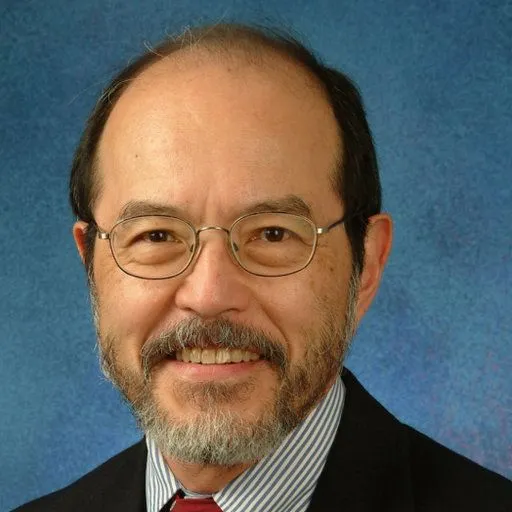
Adjunct Professor
Denson G. Fujikawa is a neurologist and neuroscientist who has been a member of the UCLA faculty since he joined the Department of Neurology in as a clinical instructor in 1981. Dr. Fujikawa is at the Sepulveda VA Ambulatory Care Center. He became an Adjunct Professor in 1996, and has been a Staff Neurologist at Sepulveda since 1983. Dr. Fujikawa earned his A.B. degree magna cum laude in psychology at Harvard University, and his M.D. degree at the University of Southern California School of Medicine. He did two years of general surgery residency at Columbia-Presbyterian Medical Center in New York, two years of of neurosurgery residency at UCLA Medical Center, then switched to neurology, completing his residency at Harbor-UCLA Medical Center in 1981. He then spent two years as a research fellow in Dr. Claude Wasterlain’s Epilepsy Research Laboratory at Sepulveda. He spends half his time in clinical neurology, training UCLA neurology residents, with a subspecialty interest in epilepsy, and half his time doing basic research on in vivo mechanisms of naturally occurring apoptotic and pathologically induced necrotic neuronal death.
Source: BRI Website · Updated 8 months ago
Denson Fujikawa's research primarily investigates the mechanisms of neuronal injury and death, particularly focusing on status epilepticus and other acute brain insults. Their work extensively demonstrates that prolonged seizures and similar neurological challenges induce programmed neuronal necrosis, rather than apoptosis, by activating specific biochemical pathways. This fundamental understanding aims to inform the development of earlier neuroprotective strategies and therapeutic interventions to mitigate brain damage.
Research topics extracted by AI (Google Gemini) from this member’s publications.
16 publications · h-index 26 · PubMed, ORCID and the BRI profile
Showing 10 of 16
Fujikawa DG.
Walker M, Cross H, Smith S, et al.
Niquet J, Baldwin RA, Allen SG, et al.
Fujikawa DG.
Fujikawa DG.
Zhao S, Aviles ER, Fujikawa DG.
Fujikawa DG, Shinmei SS, Zhao S, et al.
Fujikawa DG.
Fujikawa DG, Zhao S, Ke X, et al.
Licht EA, Jacobsen RH, Fujikawa DG.
Institute members who share papers or grants with this researcher



AI-generated
Generated automatically from this profile's public data to suggest possibilities. Treat them as starting points rather than recommendations.
R01 from NINDS
The researcher's core work on status epilepticus, neuronal injury, programmed necrosis, and neuroprotective strategies (like ketamine) aligns perfectly with the National Institute of Neurological Disorders and Stroke's (NINDS) mission to understand and treat neurological disorders. An R01 would be ideal for continuing their in-depth mechanistic studies or for conducting comprehensive preclinical validation of therapeutic interventions.
R21 from NINDS
Given the researcher's focus on identifying 'programmed mechanisms of status epilepticus-induced neuronal necrosis,' an R21 (Exploratory/Developmental Research Grant) could be suitable for exploring novel, high-risk, or early-stage hypotheses related to these mechanisms, or for piloting innovative neuroprotective strategies that require initial data before a larger R01 application.
R34 from NINDS
Considering the researcher's explicit interest in 'Starting ketamine for neuroprotection earlier' and the emphasis on 'therapies' in their recent work, an R34 (Clinical Trial Planning Grant) would be appropriate if they are looking to translate their preclinical findings on neuroprotective interventions into a human clinical trial. This mechanism supports the essential planning activities required before conducting a full-scale clinical trial.
Shared papers, topics or department