Loading profile…

Metrics: Manual · Updated 2 months ago
AI-generated biography
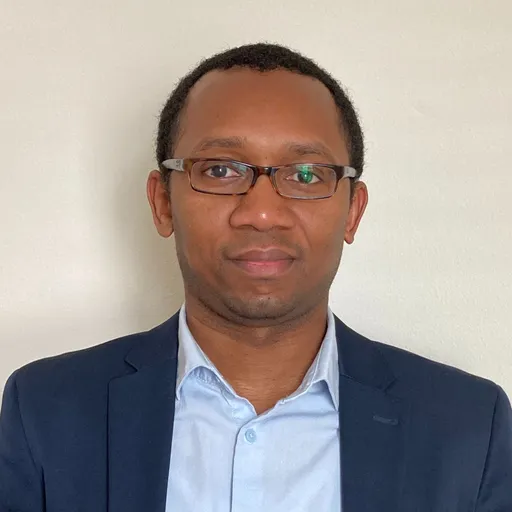
Fayal Abderemane-Ali, Ph.D., is an Assistant Professor in the Department of Physiology at the David Geffen School of Medicine, University of California, Los Angeles. Dr. Abderemane-Ali's research program is dedicated to the structural and mechanistic investigation of ion channels, focusing on their intricate roles in cellular and circuit function. Her work employs cutting-edge structural biology techniques to unravel fundamental mechanisms governing ion channel operation.
Dr. Abderemane-Ali's laboratory investigates key aspects of ion channel biology, including the pore restrictions and lipid cofactor sites of potassium channels like human K(2P)13.1, and the molecular mechanisms of ion channel assembly and maturation mediated by chaperones. Her research also delves into the structural and functional characterization of voltage-gated sodium and calcium channels, examining their gating mechanisms, inactivation processes, and interactions with toxins. Notably, her group has explored toxin resistance mechanisms and the critical role of lipid cofactors such as phosphatidylinositol (4,5)-bisphosphate (PIP2) and cholesterol in modulating ion channel structure and function. Her impactful publications have shed light on the regulation of KCNQ1 channels by lipids and the control of calcium channel inactivation.
Source: Gemini AI · Updated 8 months ago
Fayal Abderemane-Ali's research focuses on elucidating the detailed molecular structures of critical ion channels and their associated complexes. Their work uses structural biology to uncover fundamental mechanisms governing channel function, including how specific channels like human K(2P)13.1 operate via pore restrictions and lipid cofactor sites, and the chaperone-mediated processes involved in ion channel assembly and maturation.
Research topics extracted by AI (Google Gemini) from this member’s publications.
16 publications · h-index 13 · PubMed, ORCID and the BRI profile
Showing 10 of 16
Chen Z, Mondal A, Abderemane-Ali F, et al.
AI-generated
Generated automatically from this profile's public data to suggest possibilities. Treat them as starting points rather than recommendations.
R01 from NIGMS
The researcher's publications focus on fundamental mechanisms of ion channel structure (K2P13.1, CaV), assembly (EMC chaperone), and lipid interactions. This aligns directly with the National Institute of General Medical Sciences' (NIGMS) mission to support basic research in molecular and cellular biology, biophysics, and protein structure and function, which provides a foundation for understanding human health and disease.
R01 from NINDS
Ion channels (potassium and calcium channels) are critical determinants of neuronal excitability, synaptic transmission, and overall nervous system function. While the researcher's work is fundamental, understanding the structure, assembly, and regulatory mechanisms of these channels directly contributes to the molecular basis of neurological processes and potential channelopathies, which is a core area of interest for the National Institute of Neurological Disorders and Stroke (NINDS). A proposal could effectively bridge their structural insights to neuronal physiology or dysfunction.