Mutations in voltage-gated potassium channel KCNC3 cause degenerative and developmental central nervous system phenotypes. (opens in a new tab)
Waters MF, Minassian NA, Stevanin G, et al.
2006228 citationsRCR 4.4891st percentile


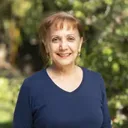
Professor Papazian received her B.S. in Chemistry from the University of Michigan in 1977. She received her Ph.D. in Biological Chemistry from Harvard University in 1983. She was a postdoctoral fellow in Dr. Lily Jan’s laboratory at the University of California at San Francisco from 1983-1989. She joined the UCLA faculty in 1989 and now holds the rank of Professor in the Department of Physiology
Source: BRI Website · Updated 8 months ago
Diane Papazian's research investigates the molecular mechanisms and biophysical properties of voltage-gated potassium channels, focusing on their gating, assembly, and trafficking. Her work extensively characterizes how mutations in these channels lead to various neurological disorders, including developmental and epileptic encephalopathies, autism, seizures, and spinocerebellar ataxias, by altering neuronal excitability and viability.
Research topics extracted by AI (Google Gemini) from this member’s publications.
39 publications · h-index 40 · PubMed, ORCID and the BRI profile
Showing 10 of 39
Waters MF, Minassian NA, Stevanin G, et al.
Bezanilla F, Perozo E, Papazian DM, et al.
Jen J, Wan J, Graves M, et al.
Lainé M, Lin MC, Bannister JP, et al.
Perozo E, Santacruz-Toloza L, Stefani E, et al.
Lee H, Lin MC, Kornblum HI, et al.
Papazian DM.
Khanna R, Myers MP, Lainé M, et al.
Silverman WR, Roux B, Papazian DM.
Schulteis CT, Nagaya N, Papazian DM.
$8.7M total · 4 NIH grants
R03NS082735Contact PI2013–2017
Voltage-Dependent Activation in K+ Channels (NIH RePORTER, opens in a new tab)
R01GM043459Contact PI1989–2015
R01NS058500Contact PI2007–2012
R03NS082735Contact PIFY2013–2014
Voltage-Dependent Activation in K+ Channels (NIH RePORTER, opens in a new tab)
R01GM043459Contact PIFY1989–2014
R01NS058500Contact PIFY2007–2011
Quality Control of K+ Channel Biogenesis (NIH RePORTER, opens in a new tab)
R01GM066686Contact PIFY2002–2005
Institute members who share papers or grants with this researcher
AI-generated
Generated automatically from this profile's public data to suggest possibilities. Treat them as starting points rather than recommendations.
R01 (Research Project Grant)
The researcher has a strong track record of securing and managing R01 grants, indicating established expertise and productivity. They can continue to pursue their fundamental research on voltage-dependent activation in K+ channels, or mature their R03 work on Spinocerebellar Ataxia Type 13 (SCA13) knock-in mice into a more comprehensive R01 project exploring disease mechanisms, therapeutic targets, or novel interventions. This is a foundational grant mechanism for established investigators.
P01 (Program Project Grant)
Given the researcher's dual expertise in fundamental ion channel biophysics (K+ channels) and a specific neurological disorder (SCA13 involving the Kcnc3 gene), they are well-positioned to lead or participate in a multi-component program project. A P01 would allow for an integrated, collaborative approach to a complex problem, bringing together different investigative angles (e.g., genetic, electrophysiological, behavioral, therapeutic) to understand and combat SCA13, leveraging multiple established labs and maximizing synergy.
R21 (Exploratory/Developmental Research Grant)
While the researcher has R01s, R21 grants are ideal for exploring highly innovative, high-risk/high-reward research ideas that may lack extensive preliminary data. This mechanism could be used to pilot novel technologies, pursue groundbreaking hypotheses related to K+ channel function or SCA13 pathology, or venture into entirely new but related scientific directions not yet ready for a full R01, building on their experience with R03s for exploratory work.
Shared papers, topics or department