Loading profile…

AI-generated biography
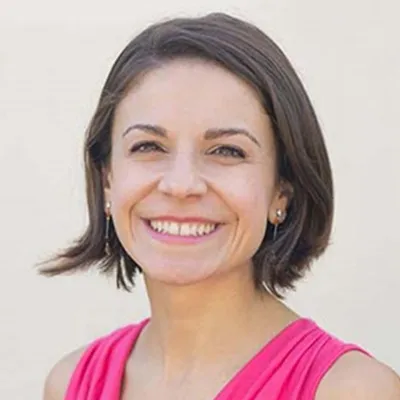
Laura DeNar, DO, PhD, is a faculty member in the Department of Physiology at UCLA. She earned her PhD from UCLA, where she developed a strong foundation in neuroscience research. Dr. DeNar’s research program is dedicated to understanding the fundamental mechanisms of neural development, degeneration, and repair, with a particular focus on synapses, cells, and circuits. Her work investigates how these neural components contribute to critical cognitive functions such as learning and memory, and how they are affected during adolescent development and in the context of neurodegenerative processes.
A significant area of her research explores the role of prefrontal dopamine circuits in decision-making, specifically in the context of threat avoidance learning. Dr. DeNar has been instrumental in securing substantial funding from the National Institutes of Health (NIH) to support these investigations. Her notable achievements include multiple NIH grants that have propelled forward our understanding of how prefrontal circuits mature and govern learned avoidance behaviors, particularly during adolescence. Her contributions are advancing the field’s knowledge of neural plasticity and its implications for both healthy brain function and the development of therapeutic strategies.
Source: Gemini AI · Updated 8 months ago
9 publications · PubMed, ORCID and the BRI profile
$5.0M total · 3 NIH grants · 2 active
Role of prefrontal dopamine circuits in threat avoidance learning (NIH RePORTER, opens in a new tab)
R01MH137461Co-PI2024–2029
R01MH127214Contact PI2022–2027
Role of prefrontal dopamine circuits in threat avoidance learning (NIH RePORTER, opens in a new tab)
R01MH137461Co-PIFY2024–2026
R01MH127214Contact PIFY2022–2026
K01MH116264Co-PIFY2019–2021
Institute members who share papers or grants with this researcher







AI-generated
Generated automatically from this profile's public data to suggest possibilities. Treat them as starting points rather than recommendations.
P01 (Program Project Grant)
The researcher has a strong track record with multiple R01s focused on a cohesive theme (prefrontal dopamine, threat avoidance learning, and maturation). A P01 would enable them to integrate these distinct but interconnected lines of inquiry into a comprehensive, multidisciplinary program. This mechanism is ideal for established investigators who can lead multiple, interdependent projects and shared core facilities to address a complex scientific problem more holistically than individual R01s, showcasing leadership and fostering team science.
R21 (Exploratory/Developmental Research Grant)
While highly successful with R01s, an R21 offers a mechanism for the researcher to pursue high-risk, high-reward, or truly novel exploratory ideas that may emerge from their current work but are not yet mature enough for a full R01. This could involve testing a radically new hypothesis about circuit interactions, developing an innovative methodology for studying prefrontal dopamine circuits, or piloting a new therapeutic strategy based on their basic findings, without the extensive preliminary data often required for an R01.
R01 (with a clinical trial or significant translational component)
The researcher's focus on 'prefrontal dopamine circuits in threat avoidance learning' and 'maturation of learned avoidance' has profound translational implications for anxiety disorders, PTSD, and developmental neuropsychiatric conditions. An R01 specifically designed to bridge their basic science expertise to human studies (e.g., neuroimaging in patient populations, testing novel interventions in animal models with clear human relevance, or a pilot clinical trial) would be a logical and impactful next step, moving from mechanistic understanding to potential therapeutic solutions.
 Kate WassumPsychologyFit 8/10
Laura's broad interest in neuroscience research can be significantly informed and advanced by Kate's specific expertise in dopamine signaling, reward circuits, and addiction, creating a strong complementary relationship.
Project idea: They could collaborate on a project investigating the neural underpinnings of reward-seeking behavior in the context of addiction, using Laura's physiological approaches to complement Kate's detailed circuit and signaling studies.
 Alicia IzquierdoPsychologyFit 7/10
Laura's broad neuroscience research, especially if it involves systems-level or cellular mechanisms relevant to learning and decision-making, could significantly complement Alicia's more focused computational and neurobiological investigations of specific brain regions and cognitive processes.
Project idea: They could collaborate on a project investigating the physiological mechanisms (potential focus for Laura) underlying the neural oscillations (Alicia) observed during learning under uncertainty and risk, potentially using advanced physiological recording techniques alongside Alicia's computational modeling.
 Mario DipoppaNeurobiologyFit 7/10
Laura DeNar's general neuroscience research likely encompasses broad physiological mechanisms, which could complement Mario Dipoppa's specific focus on neural adaptation in the visual cortex by providing a deeper understanding of the underlying cellular and molecular processes driving these adaptations.
Project idea: They could investigate the physiological underpinnings of neural adaptation in the visual cortex, exploring how specific ion channels, neurotransmitter systems, or cellular excitability dynamics contribute to the power law observed in adaptation magnitude.
 David GlanzmanNeurobiologyFit 7/10
Laura DeNar's broad neuroscience research, while not detailed, likely involves physiological mechanisms that could be experimentally tested using the specific molecular and cellular models of learning and memory that David Glanzman excels in. Glanzman's expertise in synaptic plasticity, nuclear mechanisms, and protein synthesis in memory offers a fertile ground for DeNar to investigate the underlying physiological correlates.
Project idea: They could collaborate on a project investigating the physiological underpinnings of long-term memory consolidation in invertebrates, utilizing Glanzman's molecular expertise and DeNar's potential physiological measurement capabilities.
 Carlos Portera-CailliauNeurologyFit 7/10
Carlos's detailed work on cortical circuit development, plasticity, and specific neurological disorders strongly complements Laura's broader neuroscience research focus, offering a direct pathway to investigate the physiological underpinnings of complex neural phenomena.
Project idea: They could collaborate to investigate the physiological mechanisms of altered cortical circuit development and plasticity in models of autism spectrum disorder or fragile X syndrome, using Laura's expertise in physiological measurements within Carlos's established research framework.
 Felix SchweizerNeurobiologyFit 7/10
Laura DeNar's broad neuroscience research could benefit from Felix Schweizer's deep expertise in specific molecular mechanisms of synaptic function, while Schweizer's detailed work could be enriched by DeNar's broader physiological context and potential insights into circuit-level implications.
Project idea: They could investigate how environmental toxicants (Schweizer's area) impact neuronal excitability and circuit imbalances (DeNar's potential focus) at the level of synaptic vesicle release and recycling.
Laura DeNar's broad interest in neuroscience research, coupled with S. Lawrence Zipursky's highly specific expertise in neuronal wiring and circuit assembly, offers a strong potential for complementarity, allowing for a deeper investigation into the physiological underpinnings of these complex processes.
Project idea: They could investigate how specific physiological states or interventions (studied by DeNar) influence the molecular mechanisms of neuronal wiring and circuit assembly (studied by Zipursky) in a developing or mature nervous system.
 Jeffrey DonleaNeurobiologyFit 7/10
Laura's broad neuroscience research in Physiology could provide a foundational understanding of neural mechanisms that complement Jeffrey's focused work on sleep homeostasis and memory consolidation in Drosophila, enabling a more comprehensive investigation of sleep's role in broader neurological functions.
Project idea: They could investigate how general physiological states, studied by Laura, influence sleep homeostasis and memory consolidation processes at a cellular and molecular level in Jeffrey's Drosophila models.
Laura's broad neuroscience research could be highly complemented by Gil's specific expertise in prefrontal cortex circuits and neurotransmission, offering a strong foundation for investigating complex neurological mechanisms.
Project idea: They could collaborate on a study investigating the neurophysiological underpinnings of cognitive deficits in conditions like schizophrenia or autism by examining prefrontal cortex activity and neurotransmitter systems.
 Sotiris MasmanidisNeurobiologyFit 7/10
Laura DeNar's broad neuroscience research in physiology can provide foundational understanding and methodological expertise that complements Sotiris Masmanidis's highly specific investigations into neural circuits of social behavior and related functions. Their combined expertise could lead to a deeper mechanistic understanding of these complex behaviors.
Project idea: They could collaborate on a project investigating the physiological underpinnings of the neural circuit dynamics Masmanidis studies in social behavior, potentially using advanced physiological recording techniques developed or refined by DeNar.
 Paul MathewsNeurologyFit 7/10
Laura DeNar's general neuroscience research could benefit from Paul Mathews' specific expertise in cerebellar circuit mechanisms and Purkinje neuron dynamics, potentially offering a concrete system to investigate broader neuroscience questions.
Project idea: They could collaborate to investigate the physiological mechanisms underlying motor memory formation by examining Purkinje neuron activity and cerebellar forebrain connectivity in response to specific motor learning paradigms.
 Greg FieldOphthalmologyFit 7/10
Laura DeNar's broad neuroscience research and Greg Field's specific expertise in retinal ganglion cell function in retinal degeneration offer a strong complementarity.
Project idea: They could investigate how broader neurophysiological mechanisms influence retinal ganglion cell dysfunction and degeneration in disease models.
 Ranmal SamarasingheNeurologyFit 7/10
Laura's broad neuroscience research background could benefit from Ranmal's specific expertise in human brain organoids and epilepsy models, while Ranmal could gain from a more general physiological perspective on neural function.
Project idea: They could collaborate on studying the physiological underpinnings of network dysfunction in Ranmal's human brain assembloid models of epilepsy.
 Andrew WikenheiserPsychologyFit 7/10
Laura's broad neuroscience research could be significantly enriched by Andrew's specific expertise in decision-making circuits and neural coding. Andrew's detailed findings on areas like the orbitofrontal cortex and anterior cingulate cortex could provide concrete neural mechanisms for the physiological processes Laura investigates.
Project idea: They could collaborate on a project investigating the physiological underpinnings of effort-delay trade-offs in decision-making, using Laura's physiological techniques to measure neural activity in the areas Andrew studies during challenging choices.
Laura's broad neuroscience research could benefit from Xiangdong's specific expertise in autism genetics, TBI mechanisms, and stem cell-based neural repair, particularly his advanced imaging and AI segmentation techniques.
Project idea: They could investigate the cellular and genetic underpinnings of neuronal glial network dysfunction in autism spectrum disorder or traumatic brain injury using stem cell models and advanced imaging analysis developed by Dr. Yang.
 William ZeigerNeurologyFit 7/10
Laura DeNar's broad neuroscience research interests could benefit from William Zeiger's specific expertise in various neurological disorders and circuit mechanisms, offering potential for applying physiological principles to complex neurological problems.
Project idea: They could collaborate on a project investigating the physiological underpinnings of circuit dysfunction in a specific neurological disorder like autism or Parkinson's, potentially using imaging techniques to study neuronal activity and adaptation.
 Ahmet AracNeurologyFit 7/10
Ahmet's expertise in motor control and machine learning for neurorehabilitation can be significantly enhanced by Laura's foundational neuroscience research, allowing for a deeper understanding of the underlying physiological mechanisms of motor deficits and recovery.
Project idea: They could investigate the neurophysiological underpinnings of motor learning in stroke patients using machine learning to analyze neural signals correlated with kinematic improvements.
 Dean BuonomanoNeurobiologyFit 7/10
Dean Buonomano's focus on temporal pattern encoding in neural circuits and Laura DeNardo's broader neuroscience research could complement each other by applying his specific mechanistic insights to her more general physiological investigations.
Project idea: They could investigate how specific physiological states or modulations influence the brain's ability to learn and replay temporal patterns, as studied by Buonomano.
 Avishek AdhikariPsychologyFit 7/10
Avishek's focus on specific brain regions and learned defensive behaviors in rodents, combined with Laura's broader neuroscience expertise, creates a strong opportunity for detailed mechanistic investigations.
Project idea: They could investigate the hypothalamic and amygdala mechanisms underlying the extinction of conditioned fear responses in rodents, potentially revealing novel therapeutic targets for anxiety disorders.
 Ausaf BariNeurosurgeryFit 7/10
Both researchers focus on neuroscience, indicating a shared fundamental interest. Bari's neurosurgical background offers a clinical and anatomical perspective that could complement DeNar's physiological expertise, potentially leading to novel insights.
Project idea: They could collaborate on a project investigating the neural mechanisms underlying a specific neurological condition, with Bari providing clinical insights and tissue samples (ethically sourced and anonymized) and DeNar conducting in-depth physiological studies.
 Samantha ButlerNeurobiologyFit 7/10
While their direct research topics appear broad, Butler's expertise in neural progenitor cell differentiation and Netrin1 patterning provides a specific cellular and molecular focus that could be investigated from a physiological perspective by DeNar.
Project idea: They could collaborate on a study investigating the physiological consequences of specific Netrin1-mediated dorsal spinal interneuron differentiation patterns on neuronal function and circuit activity.
 Bridget CallaghanPsychologyFit 7/10
Bridget's expertise in the gut-brain axis and maternal adversity, combined with Laura's general neuroscience research, creates a strong foundation for investigating the physiological mechanisms underlying these maternal experiences.
Project idea: They could investigate how maternal adversity impacts the gut microbiome and subsequently influences neural pathways related to interoception and stress response in pregnant individuals.
 S. Thomas CarmichaelNeurologyFit 7/10
Dr. Carmichael's focus on neural repair mechanisms and the elemental biology of neural function directly complements Dr. DeNar's broad neuroscience research, offering a pathway to investigate the physiological underpinnings of regenerative processes.
Project idea: They could collaborate on a project investigating the physiological mechanisms by which specific neural repair strategies, identified by Dr. Carmichael, are enacted at the cellular and molecular level, a key area for Dr. DeNar's expertise.
Both researchers focus on neuroscience within a physiological context, suggesting a strong potential for complementary expertise. Their combined knowledge could address complex questions in neural systems and function.
Project idea: They could collaborate on a project investigating the physiological mechanisms underlying specific neural processes, perhaps focusing on cellular or system-level responses.
Both researchers focus on neuroscience, and their distinct departmental affiliations (Psychiatry & Biobehavioral Sciences and Physiology) suggest complementary approaches. Combining Colwell's expertise in behavioral aspects of neuroscience with DeNar's likely focus on the underlying physiological mechanisms could lead to a more comprehensive understanding of neural circuits.
Project idea: They could investigate the physiological underpinnings of behavioral phenomena in neurological disorders, potentially exploring how specific physiological changes in neuronal function contribute to observable behavioral deficits.
Laura DeNar's broad neuroscience research interests could align well with Gina Poe's specific focus on sleep and memory, creating opportunities for interdisciplinary projects.
Project idea: They could investigate the physiological mechanisms by which specific neural circuits, studied by Poe, influence memory consolidation in various neuroscience contexts explored by DeNar.
 Carrie BeardenPsychologyFit 6/10
Carrie Bearden's focus on neurodevelopmental disorders and psychosis risk, particularly in vulnerable populations, aligns well with Laura DeNardo's broader neuroscience research. Bearden's expertise in clinical and neuroimaging aspects could be complemented by DeNardo's physiological research methods to investigate the underlying biological mechanisms of these conditions.
Project idea: They could collaborate on a study investigating the physiological correlates of psychotic symptom severity and cannabis exposure in Latinx youth using neuroimaging and physiological measures.
 Austin ColeyNeurobiologyFit 6/10
Austin's focus on specific neurotransmitter systems in schizophrenia provides a mechanistic angle that Laura's broader neuroscience expertise could help contextualize and explore through various physiological approaches.
Project idea: They could collaborate on a study investigating how dysregulation of glutamate and GABA in schizophrenia impacts specific physiological functions or behaviors, using Laura's expertise to design and execute these physiological measurements.
 Anne ChurchlandNeurobiologyFit 4/10
Anne's focus on perceptual decision-making mechanisms in neurobiology and Laura's broader neuroscience research in physiology present a potential, albeit weak, connection.
Project idea: They could collaborate to investigate the physiological underpinnings of evidence accumulation in perceptual decision-making, bridging Anne's computational models with Laura's physiological measurements.
 William GrishamPsychologyFit 3/10
While both researchers are in neuroscience, Laura's broad focus on 'neuroscience research' and William's specific expertise in neuroendocrinology and computational neuroscience lack a clear point of intersection for complementary research. William's publications are heavily focused on educational tools and neuroanatomy/neuroendocrinology, which don't directly suggest a synergy with Laura's unstated physiological research topics.
Project idea: Without more specific information on Laura DeNar's research, it's difficult to propose a concrete project, but a potential area could involve exploring physiological correlates of sex chromosome or steroid hormone effects on neural organization if Laura's work touches upon these areas.
While Suraj Bhat's work on gene expression in ocular development and Laura DeNar's neuroscience research don't directly overlap, there's a weak potential for complementarity if their work can be linked through the neurobiology of the eye.
Project idea: Investigate the molecular mechanisms by which gene expression changes in the ocular lens during development impact visual processing or neuronal function in the retina.
Researcher A has a highly specific focus on gene co-expression networks and neuronal diversity evolution, while Researcher B's area is broadly defined as neuroscience. There's a potential for complementarity if Researcher B's work aligns with the molecular or evolutionary aspects of neuronal diversity.
Project idea: If Researcher B's neuroscience research involves detailed characterization of neuronal subtypes, they could collaborate on analyzing gene expression patterns within those subtypes to identify evolutionary or regulatory underpinnings.
Researcher A's broad interest in neuroscience research lacks specific detail to identify complementary areas with Researcher B's diverse, but also somewhat disparate, research topics.
Project idea: Given the lack of clear overlap, it is difficult to suggest a specific project without further information on Researcher A's specific neuroscience focus.
Shared papers, topics or department