Is reporting of rape on the rise? A comparison of women with reported versus unreported rape experiences in the National Women's Study-Replication. (opens in a new tab)
Wolitzky-Taylor KB, Resnick HS, McCauley JL, et al.
Professor
David Geffen School of Medicine
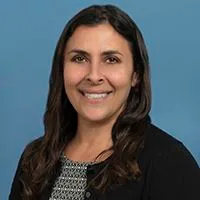
Dr. Kate Wolitzky-Taylor is an Associate Director of the Anxiety and Depression Research Center (ADRC). Her primary appointment is as a Professor in the UCLA Department of Psychiatry and Biobehavioral Sciences. Dr. Wolitzky-Taylor obtained her B.A. summa cum laude in psychology from Emory University, where she completed her undergraduate research assistantship in the Trauma and Anxiety Recovery Program. She received her Ph.D. in clinical psychology at the University of Texas at Austin, obtaining clinical and research training in the Laboratory for the Study of Anxiety Disorders. Dr. Wolitzky-Taylor received a predoctoral National Research Service Award (NRSA, NIMH-funded F31) in order to examine self-administered behavioral treatments for pathological worry. Dr. Wolitzky-Taylor completed her predoctoral internship at the Medical University of South Carolina in the Traumatic Stress Track, where she was on an NIMH-funded trauma-related training grant (T32). She completed a 3-year postdoctoral research fellowship at UCLA in the ADRC (2009-2012) where she was the Project Director of the Youth Emotion Project, an NIMH-funded R01 examining common and specific risk factors for anxiety and depression. Dr. Wolitzky-Taylor completed a Career Development Award in Patient-Oriented Research (K23; funded by NIDA), the focus of which was to develop and evaluate the effectiveness of a brief CBT program to be delivered in community substance use disorder (SUD) specialty care clinics for individuals with comorbid anxiety disorders and SUDs. She has been the Principal Investigator for several NIH-funded studies that focus on the development and evaluation of treatments for comorbid emotional disorders and substance use disorders. She is the Director of Clinical Services for the Depression Grand Challenge Innovative Treatment Network, is a PI (along with Dr. Craske) for the UCLA STAND NIMH ALACRITY Center (P50), and she treats patients with anxiety and related disorders in the UCLA Faculty Practice Outpatient Clinic and in the Behavioral Health Services, where she also directs a CBT rotation for psychiatry residents. She has extensive experience in training and supervising clinical psychology doctoral students and psychiatry residents in delivering CBT and in research methods. Dr. Wolitzky-Taylor provides clinical supervision, statistical consultation, and research mentorship to the ADRC’s doctoral students and research staff. Her research interests include investigating mechanisms of change during behavioral treatment for anxiety disorders, increasing access to CBT for anxiety disorders in community settings, and understanding and treating comorbid anxiety and SUDs.

Source: BRI Website · Updated 8 months ago
Research topics extracted by AI (Google Gemini) from this member’s publications.
Papers by NIH iCite research category (12 of 27 papers classified) · trials from ClinicalTrials.gov · patents from USPTO.
27 publications · h-index 47 · PubMed, ORCID and the BRI profile
Showing 10 of 27
Wolitzky-Taylor KB, Resnick HS, McCauley JL, et al.
Zbozinek TD, Rose RD, Wolitzky-Taylor KB, et al.
Wolitzky-Taylor K, Bobova L, Zinbarg RE, et al.
Wolitzky-Taylor KB, Arch JJ, Rosenfield D, et al.
Wolitzky-Taylor KB, Resnick HS, Amstadter AB, et al.
Craske MG, Wolitzky-Taylor KB, Mineka S, et al.
Wolitzky-Taylor K, Craske MG, Labus JS, et al.
Wolitzky-Taylor K, Fenwick K, Lengnick-Hall R, et al.
Wolitzky-Taylor K, Sewart A, Vrshek-Schallhorn S, et al.
Wolitzky-Taylor K, Operskalski JT, Ries R, et al.
$15.1M total · 7 NIH grants · 3 active
P50MH126337Co-PI2022–2027
R34HL180396Co-PI2026–2029
R34DA064618Contact PI2026–2029
P50MH126337Co-PIFY2022–2026
R34HL180396Co-PIFY2026
R34DA064618Contact PIFY2026
R21DA053394Contact PIFY2022–2023
R34AA025364Contact PIFY2017–2020
R34DA044350Contact PIFY2017–2019
K23DA031677Contact PIFY2012–2016
Institute members who share papers or grants with this researcher
AI-generated
Generated automatically from this profile's public data to suggest possibilities. Treat them as starting points rather than recommendations.
R01 (Research Project Grant)
The R01 is the standard mechanism for investigator-initiated research projects and would allow this researcher to expand upon exploratory findings (e.g., from their R21 on telehealth CBT for opioid users) into larger, definitive efficacy or effectiveness trials. It is also highly suitable for in-depth investigations into 'mechanisms of change' during behavioral treatments, robust evaluation of 'strategies for increasing access to CBT for anxiety disorders in community settings' as full-scale implementation studies, or developing and testing new risk factor models. Their P50 experience demonstrates the capacity to manage complex projects typical of R01s.
P01 (Program Project Grant)
Given their extensive experience leading multiple P50 Center grants focused on 'Screening, Tracking and Treatment for Anxiety and Depression in Community Colleges,' a P01 is an excellent fit. This mechanism supports integrated, multi-project programs sharing a common theme. It would allow them to combine their diverse interests—such as (1) developing self-administered/brief CBT programs, (2) investigating mechanisms of change, and (3) evaluating innovative delivery and access strategies in community settings—into a cohesive, synergistic research program, leveraging their proven programmatic leadership and multidisciplinary approach.
R34 (Clinical Trial Planning Grant)
This mechanism is specifically designed to support the planning activities necessary to prepare for a future definitive clinical trial. Given the researcher's interests in 'Development and evaluation of brief CBT programs' and 'Innovative treatment delivery models for depression and anxiety disorders,' an R34 would be ideal for conducting pilot work, feasibility studies, intervention refinement, and developing detailed protocols for a novel intervention (e.g., a new self-administered treatment or a telehealth adaptation for a complex comorbid population) before seeking funding for a full-scale R01 clinical trial. This aligns with the developmental stage of much of their intervention-focused work.
Shared papers, topics or department