Analysis of shared heritability in common disorders of the brain. (opens in a new tab)
Science20181,989 citationsRCR 59.1299th percentileOpen access full text (opens in a new tab)PubMed record (opens in a new tab)

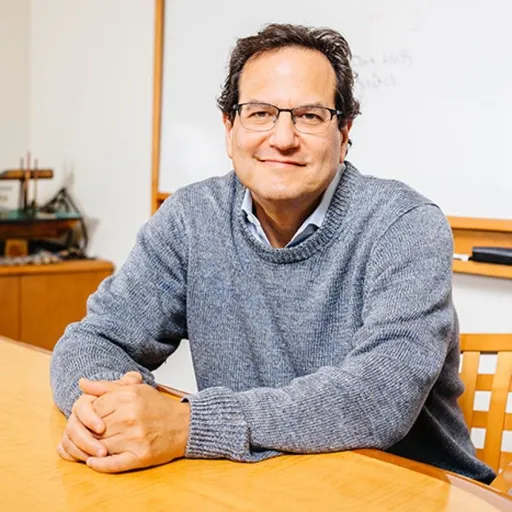
Dr. Nelson Freimer is Director of UCLA’s Depression Grand Challenge, a campuswide initiative that aims to cut the burden of depression in half by 2050. He is Maggie G. Gilbert Endowed Chair, Distinguished Professor of Psychiatry and Human Genetics, and Director of the Center for Neurobehavioral Genetics. He also directs the UCLA Neuroscience Genomics Core, Dr. Freimer received an M.D. degree from the Ohio State University, and completed residency training in psychiatry (at UC San Francisco) and a postdoctoral fellowship in human genetics (at Columbia University). He joined the UCLA faculty in 2000 after 10 years on the faculty at UC San Francisco. The research in Dr. Freimer’s laboratory aims to use large scale genomics methods to identify the genetic basis of complex traits, particularly neurobehavioral disorders including bipolar disorder, schizophrenia, depression, and Tourette Syndrome. He has also conducted large-scale genomics studies of metabolic phenotypes and cardiovascular disorders. His research group has pioneered in whole genome sequencing studies of such disorders as well as the application of large-scale genomics to our understanding of non-human primates. A current focus of his work is the exploration of digital approaches to phenotyping human behavior.
Source: Manual · Updated 1 month ago
Nelson Freimer's research primarily investigates the complex genetic and environmental determinants of severe mental illnesses, mood disorders, and anxiety across diverse global populations. His work specifically examines how genetic predispositions, neurobiological factors like brain structure and cognitive performance, and socioeconomic disparities such as income and inequality interact to influence mental health outcomes. Furthermore, Freimer's research explores innovative approaches, including digital sensing technologies for personalized mood prediction and scalable interventions.
Research topics extracted by AI (Google Gemini) from this member’s publications.
Papers by NIH iCite research category (2 of 66 papers classified) · trials from ClinicalTrials.gov · patents from USPTO.
66 publications · h-index 93 · PubMed, ORCID and the BRI profile
Showing 10 of 58
Savage JE, Jansen PR, Stringer S, et al.
Singh T, Kurki MI, Curtis D, et al.
Bilder RM, Sabb FW, Cannon TD, et al.
Bearden CE, Freimer NB.
Huang AY, Yu D, Davis LK, et al.
Stoll G, Pietiläinen OPH, Linder B, et al.
Sabatti C, Service S, Freimer N.
Freimer N, Sabatti C.
$70.8M total · 20 NIH grants
R01MH123157Contact PI2020–2026
The Impact of the COVID-19 Pandemic on Severe Mental Illness (NIH RePORTER, opens in a new tab)
RF1MH133426Contact PI2023–2026
U01MH125042Contact PI2020–2025
R01MH123157Contact PIFY2020–2025
U01MH125042Contact PIFY2020–2024
The Impact of the COVID-19 Pandemic on Severe Mental Illness (NIH RePORTER, opens in a new tab)
RF1MH133426Contact PIFY2023
Genetics of Severe Mental Illness (NIH RePORTER, opens in a new tab)
R01MH113078Contact PIFY2017–2021
Undergraduate Research Experience in Neuropsychiatric Genomics (NIH RePORTER, opens in a new tab)
R25MH109172Contact PIFY2016–2020
Training Grant in Neurobehavioral Genetics (NIH RePORTER, opens in a new tab)
T32NS048004Contact PIFY2004–2019
U01MH105578Contact PIFY2014–2018
Integrative Center for Neurogenetics and Neurogenomics - Overall (NIH RePORTER, opens in a new tab)
P30NS062691Contact PIFY2009–2018
R01HL113315Contact PIFY2012–2016
R56DA035938Contact PIFY2015
Genome Sequencing in Extended Bipolar Pedigrees (NIH RePORTER, opens in a new tab)
R01MH095454Contact PIFY2012–2014
Integrated Genetic and Genomic Resources for a Model System (NIH RePORTER, opens in a new tab)
R01OD010980Contact PIFY2001–2012
Bipolar Endophenotypes in Population Isolates (NIH RePORTER, opens in a new tab)
R01MH075007Contact PIFY2007–2011
Bipolar Endophenotypes in Population Isolates (NIH RePORTER, opens in a new tab)
P41RR013642Contact PIFY2007–2011
Whole Genome Assoc. Analysis Strategies for Multi. Phenotypes (NIH RePORTER, opens in a new tab)
RL1MH083268Contact PIFY2007–2011
Integrated Genetic and Genomic Resources for a Model System (NIH RePORTER, opens in a new tab)
R01RR016300Contact PIFY2002–2011
Population Genetic Mapping of Tourette Syndrome (NIH RePORTER, opens in a new tab)
R01NS037484Contact PIFY1998–2009
Genetic and Epidemiology Studies of Bipolar Disorder (NIH RePORTER, opens in a new tab)
R01MH049499Contact PIFY1992–2006
Molecular and Population Genetics of Bipolar Disorder (NIH RePORTER, opens in a new tab)
K02MH001375Contact PIFY1996–2005
The Southern California Genotyping Consortium (NIH RePORTER, opens in a new tab)
S10RR019361Contact PIFY2004
1 trial on ClinicalTrials.gov
Health And Response: Digital Markers for Outcomes in Perinatal Depression Treatment Study
Conditions: Depression, Perinatal Depression
NCT07577947 on ClinicalTrials.gov (opens in a new tab)250 enrolledSponsor: University of California, Los Angeles2026–2027
Institute members who share papers or grants with this researcher










AI-generated
Generated automatically from this profile's public data to suggest possibilities. Treat them as starting points rather than recommendations.
U24 (Resource-Related Research Project - Cooperative Agreement)
The researcher's current portfolio includes multiple R01s for 'Latin American biobanks' and U01s for 'Powering Genetic Discovery.' A U24 mechanism is ideal for creating, maintaining, or enhancing a shared research resource, infrastructure, or data coordinating center. This would directly support the continued development and sustainment of their large-scale biobanking and genomic data platforms, especially given their multi-site and international focus on diverse ancestries, facilitating broader access and utilization for the scientific community.
D43 (International Research Training Grant)
The consistent emphasis on 'Latin American and African Ancestries' across several grants highlights a deep commitment to global health and research capacity building in these regions. D43s are specifically designed to support the development of research training programs for scientists in low- and middle-income countries. This would enable the researcher to foster sustainable research infrastructure, train local experts, and strengthen long-term collaborations in the very populations central to their genetic discovery efforts for severe mental illness.
RF1 (Research Project Grant - Multi-year Funded)
The researcher has already successfully secured an RF1, demonstrating their capability to manage multi-year, milestone-driven projects. This mechanism is well-suited for ambitious, large-scale, and potentially high-risk research projects that require sustained funding over several years, often with specific phased objectives. Given their focus on 'large-scale genetics research' and 'powering genetic discovery' for severe mental illness across diverse populations, an RF1 would allow them to pursue more innovative or complex next-generation studies that might extend beyond the scope or timeframe typically suited for a standard R01.
Freimer's focus on the genetics and digital sensing of psychiatric disorders, particularly anxiety and depression, could be powerfully informed by Poe's expertise in sleep, arousal regulation, and memory consolidation, as sleep disturbances are a hallmark of these conditions.
Project idea: They could investigate how genetic predispositions for anxiety and depression influence sleep architecture and memory consolidation, using digital sensing data to correlate sleep patterns with symptom severity and treatment outcomes.
Amjad's expertise in cellular signaling dynamics could provide a mechanistic understanding of how genetic predispositions identified by Nelson manifest at the cellular level in psychiatric disorders, bridging molecular processes with clinical outcomes.
Project idea: They could investigate how epigenetic modifications influenced by environmental factors (relevant to Nelson's work) alter single-cell signaling dynamics (Amjad's focus) in the context of anxiety and depression.
Shared papers, topics or department