A review of low-intensity focused ultrasound pulsation. (opens in a new tab)
Bystritsky A, Korb AS, Douglas PK, et al.
2011270 citationsRCR 8.2096th percentile

Professor
Metrics: Semantic Scholar · Updated 8 months ago
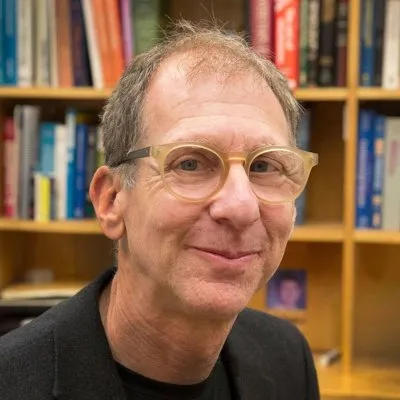
Dr. Cohen received his undergraduate training in both engineering at MIT and biology at Stanford. His graduate work at the Rockefeller University concerned hormonally-modulated electrical signaling. He worked in the private sector from 1985 to 1990 developing applications and technology of magnetic resonance imaging, before accepting a faculty appointment at Harvard, where he directed the high-speed MR imaging laboratory, and ultimately contributing to the development of functional MRI performing seminal experiments in this field. Since arriving at UCLA in 1993 he has focused his work on applications and technologies of neuroimaging, and more recently, has been working toward the development of low-cost high performance MRI devices based on novel technologies adopted from low temperature physics.
Source: BRI Website (AI extract) · Updated 8 months ago
Mark Cohen's research extensively employs advanced neuroimaging techniques, such as fMRI and simultaneous EEG-fMRI, combined with sophisticated data analysis methods like machine learning and graph theory. His work primarily focuses on elucidating the neural mechanisms and functional connectivity underlying a range of psychiatric and neurological disorders, including schizophrenia, bipolar disorder, and various seizure types, often with the goal of developing objective diagnostic approaches and identifying neurobiological markers.
Research topics extracted by AI (Google Gemini) from this member’s publications.
No papers classified by NIH iCite yet · trials from ClinicalTrials.gov · patents from USPTO.
25 publications · h-index 28 · PubMed, ORCID and the BRI profile
Showing 10 of 25
Bystritsky A, Korb AS, Douglas PK, et al.
Brody AL, Mandelkern MA, Olmstead RE, et al.
Harris S, Sheth SA, Cohen MS.
Anderson A, Cohen MS.
Bhidayasiri R, Bronstein JM, Sinha S, et al.
Green MF, Lee J, Cohen MS, et al.
Lenartowicz A, Lu S, Rodriguez C, et al.
Harvey PO, Lee J, Cohen MS, et al.
Kerr WT, Janio EA, Braesch CT, et al.
Kerr WT, Janio EA, Chau AM, et al.
$8.2M total · 11 NIH grants
R90DA023422Contact PI2006–2016
T90DA022768Contact PI2006–2016
R21MH096239Contact PI2012–2015
R90DA023422Contact PIFY2006–2015
T90DA022768Contact PIFY2006–2015
R21MH096239Contact PIFY2012–2013
Real-Time Automated Detection of Craving States with fMRI and EEG (NIH RePORTER, opens in a new tab)
R33DA026109Contact PIFY2008–2012
Real Time Detection of Cognitive States (NIH RePORTER, opens in a new tab)
P41RR013642Contact PIFY2010
Real-Time Automated Detection of Craving States with fMRI and EEG (NIH RePORTER, opens in a new tab)
R21DA026109Contact PIFY2008–2009
FMRI of Inverted Vision: Plasticity of Visuospatial Maps (NIH RePORTER, opens in a new tab)
M01RR000865Contact PIFY2007
Simultaneous Electrophysiology and functional MRI (NIH RePORTER, opens in a new tab)
R21DA015549Contact PIFY2002–2003
Enabling Technologies in FMRI and Cigarette Smoking (NIH RePORTER, opens in a new tab)
R21DA013627Contact PIFY2001–2002
FMRI of Inverted Vision--Plasticity of Visuospatial Maps (NIH RePORTER, opens in a new tab)
R01EY012722Contact PIFY2000–2002
Real Time Imaging of Mental Activity (NIH RePORTER, opens in a new tab)
R01DA013054Contact PIFY1999–2001
2 trials on ClinicalTrials.gov
Training Attentional Awareness and Control in ADHD
Conditions: Attention Deficit Hyperactivity Disorder
NCT02489279 on ClinicalTrials.gov (opens in a new tab)107 enrolledSponsor: Think Now Incorporated2015–2017
Neurophysiological Attention Test (NAT) for Objective Assessment of Attention Deficit Hyperactivity Disorder (ADHD)
Conditions: Attention Deficit Hyperactivity Disorder (ADHD)
NCT02407496 on ClinicalTrials.gov (opens in a new tab)80 enrolledSponsor: Think Now Incorporated2014–2015
Institute members who share papers or grants with this researcher
AI-generated
Generated automatically from this profile's public data to suggest possibilities. Treat them as starting points rather than recommendations.
R01 Research Project Grant
As a principal investigator leading multiple comprehensive training programs in neuroimaging, this researcher undoubtedly has a robust individual research program. The R01 is the cornerstone mechanism for funding specific, investigator-initiated research projects, allowing them to advance their own scientific discoveries utilizing their expertise in neuroimaging fundamentals and applications.
P01 Program Project Grant
The researcher's success in directing multiple R90/T90 training grants indicates strong leadership and program management capabilities, likely within a substantial research enterprise. A P01 would enable them to assemble and direct a highly collaborative, multi-investigator research program focused on a cohesive theme within neuroimaging, potentially integrating trainees from their existing grants and addressing complex, long-term research questions that require multiple, interrelated projects.
S10 Shared Instrumentation Grant Program
Given the researcher's focus on 'Comprehensive Training in Neuroimaging Fundamentals and Applications,' access to cutting-edge neuroimaging equipment is crucial for both research and training. An S10 would allow them to acquire or upgrade essential, high-cost instrumentation (e.g., advanced MRI, MEG, or specialized neuroimaging platforms), directly supporting the infrastructure necessary for their own advanced neuroimaging research and providing state-of-the-art facilities for their trainees and the broader UCLA neuroscience community.
Shared papers, topics or department