Consensus recommendations for a standardized Brain Tumor Imaging Protocol in clinical trials. (opens in a new tab)
Ellingson BM, Bendszus M, Boxerman J, et al.
AI-generated biography
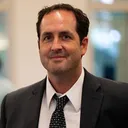
Timothy Cloughesy, M.D., is a Professor in the Department of Neurology at the Ronald Reagan UCLA Medical Center, where he has served as the Director of the NeuroOncology Program since 1992. His research is dedicated to advancing brain tumor imaging, with a primary focus on developing and standardizing advanced MRI techniques for neuro-oncology. Dr. Cloughesy has made significant contributions to the field through his work on dynamic susceptibility contrast MRI protocols, particularly for high-grade gliomas, and the establishment of standardized brain tumor imaging protocols essential for multi-institutional clinical trials.
His notable achievements include leading the development of consensus recommendations for a standardized Brain Tumor Imaging Protocol for clinical trials, a publication widely recognized for its impact. He has also been instrumental in optimizing advanced MRI techniques to enhance the assessment of brain tumors and evaluating the impact of standardized imaging on clinical trial outcomes. Dr. Cloughesy has secured significant funding from the NIH to support his research endeavors. His extensive work has led to a substantial body of high-impact publications and a distinguished career dedicated to improving the diagnosis and management of brain tumors through innovative neuroimaging.

Source: Gemini AI · Updated 8 months ago
These publications focus on developing standardized imaging protocols to improve consistency and comparability in brain tumor research and clinical management. Specifically, one paper outlines consensus recommendations for a comprehensive Brain Tumor Imaging Protocol for use in clinical trials, while the other provides specific guidelines for a dynamic susceptibility contrast MRI protocol, particularly relevant for imaging high-grade gliomas.
Research topics extracted by AI (Google Gemini) from this member’s publications.
No papers classified by NIH iCite yet · trials from ClinicalTrials.gov · patents from USPTO.
24 publications · h-index 130 · PubMed, ORCID and the BRI profile
Ellingson BM, Bendszus M, Boxerman J, et al.
Boxerman JL, Quarles CC, Hu LS, et al.
$4.5M total · 5 NIH grants · 1 active
R01CA270027Co-PI2022–2027
R01CA270027Co-PIFY2022–2026
Career Enhancement Program (NIH RePORTER, opens in a new tab)
P50CA211015Contact PIFY2017–2021
M01RR000865Contact PIFY2003–2010
U01CA105695Contact PIFY2004–2008
Consortium Therapeutic Studies of Primary Central Nervi* (NIH RePORTER, opens in a new tab)
P41RR013642Contact PIFY1998–2008
11 trials on ClinicalTrials.gov
Pembrolizumab and a Vaccine (ATL-DC) for the Treatment of Surgically Accessible Recurrent Glioblastoma
Conditions: Recurrent Glioblastoma
NCT04201873 on ClinicalTrials.gov (opens in a new tab)40 enrolledSponsor: Jonsson Comprehensive Cancer Center2020–2027
Autologous Dendritic Cells Pulsed With Tumor Lysate Antigen Vaccine and Nivolumab in Treating Patients With Recurrent Glioblastoma
Conditions: Giant Cell Glioblastoma, Gliosarcoma, Oligodendroglioma, Recurrent Glioblastoma, Small Cell Glioblastoma
NCT03014804 on ClinicalTrials.gov (opens in a new tab)Sponsor: Jonsson Comprehensive Cancer Center2019–2022
18F-FDG PET and Osimertinib in Evaluating Glucose Utilization in Patients with EGFR Activated Recurrent Glioblastoma
Conditions: EGFR Gene Amplification, EGFR Gene Mutation, Glioblastoma, Recurrent Glioblastoma, Supratentorial Glioblastoma, TP53 Wt Allele
NCT03732352 on ClinicalTrials.gov (opens in a new tab)12 enrolledSponsor: Jonsson Comprehensive Cancer Center2018–2024
Lapatinib Ditosylate Before Surgery in Treating Patients With Recurrent High-Grade Glioma
Conditions: Anaplastic Astrocytoma, Anaplastic Ependymoma, Anaplastic Oligodendroglioma, Gliosarcoma, Mixed Glioma, Recurrent Adult Brain Neoplasm, Recurrent Glioblastoma
NCT02101905 on ClinicalTrials.gov (opens in a new tab)29 enrolledSponsor: National Cancer Institute (NCI)2016–2024
Study of a Retroviral Replicating Vector Combined With a Prodrug to Treat Patients Undergoing Surgery for a Recurrent Malignant Brain Tumor
Conditions: Glioblastoma Multiforme, Anaplastic Astrocytoma, Anaplastic Oligodendroglioma, Anaplastic Oligoastrocytoma
NCT01470794 on ClinicalTrials.gov (opens in a new tab)58 enrolledSponsor: Tocagen Inc.2012–2016
Institute members who share papers or grants with this researcher
AI-generated
Generated automatically from this profile's public data to suggest possibilities. Treat them as starting points rather than recommendations.
U01 (Research Project Cooperative Agreement)
This mechanism directly aligns with the researcher's strong interest in 'development of standardized brain tumor imaging protocols for clinical trials,' addressing 'challenges in multi-institutional neuro-oncology imaging standardization,' and studying the 'impact of standardized imaging on brain tumor clinical trial outcomes.' U01 grants are ideal for multi-site studies, clinical trials, or large-scale collaborative projects that require active partnership with NIH, perfectly suited for establishing broad imaging standardization efforts and implementing them across institutions for clinical trial contexts.
R01 (Research Project Grant) - Methodological/Foundational Focus
While the researcher has existing R01s, a new R01 could be strategically pursued to focus on the foundational research questions underlying their standardization efforts. This would support investigator-initiated, in-depth investigations into 'optimizing advanced MRI techniques for neuro-oncology' and developing novel 'consensus methodology for medical imaging guideline development.' This could involve developing new algorithms for image harmonization, advanced statistical frameworks for assessing inter-site variability, or innovative approaches to protocol optimization, providing the scientific basis for future large-scale standardization implementations.
U24 (Resource-Related Research Projects Cooperative Agreement)
Given the researcher's expertise in 'standardization of dynamic susceptibility contrast MRI protocols' and 'consensus methodology for medical imaging guideline development,' a U24 would be highly appropriate. This mechanism supports the establishment and maintenance of resources, such as standardized imaging protocols, data repositories, or analysis tools, that serve a broad scientific community. A U24 could enable the creation of a widely adopted resource for neuro-oncology imaging, facilitating multi-institutional research and clinical trials by providing essential standardized infrastructure.
Shared papers, topics or department