Loading profile…

Professor
David Geffen School of Medicine
AI-generated biography
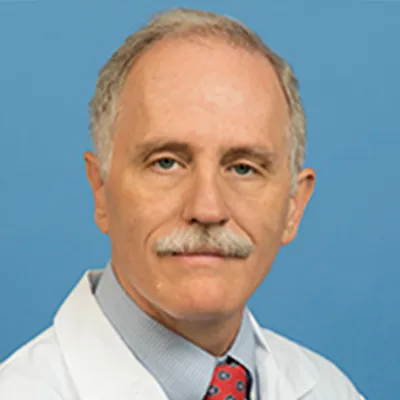
Roger Woods, M.D., is a Professor in the Department of Neurology and the Department of Psychiatry & Biobehavioral Sciences at the David Geffen School of Medicine, University of California, Los Angeles. His research program is dedicated to elucidating the neurobiological underpinnings of mood disorders and evaluating the efficacy of neuromodulatory interventions. Dr. Woods employs cutting-edge magnetic resonance spectroscopy and other neuroimaging techniques to investigate structural plasticity, default mode network connectivity, and white matter integrity in individuals with depression.
His work has significantly contributed to understanding the effects of treatments such as transcranial direct current stimulation (tDCS) and ketamine on brain circuitry. Dr. Woods has also explored epigenetic mechanisms in brain aging and the neuroimaging of depression symptom dimensions. His notable publications include seminal work on nonlinear deformation algorithms for MRI registration, which has garnered substantial citations. He has been a principal investigator on multiple NIH grants focused on neurodevelopment and has participated in clinical trials investigating novel therapeutic approaches. Dr. Woods’ extensive research has resulted in a high h-index and a significant number of total citations, underscoring his impact on the field.
Source: Gemini AI · Updated 8 months ago
Roger Woods' research primarily focuses on understanding the neurobiological mechanisms underlying major depression and the therapeutic effects of neuromodulatory interventions. Utilizing advanced neuroimaging techniques, his work investigates how treatments like transcranial direct current stimulation (tDCS), ketamine infusion, and electroconvulsive therapy induce changes in brain structure, network connectivity, and functional activity to alleviate depressive symptoms.
Research topics extracted by AI (Google Gemini) from this member’s publications.
Papers by NIH iCite research category (11 of 141 papers classified) · trials from ClinicalTrials.gov · patents from USPTO.
141 publications · h-index 83 · PubMed, ORCID and the BRI profile
Showing 10 of 141
Mazziotta J, Toga A, Evans A, et al.
Mori S, Oishi K, Jiang H, et al.
Woods RP, Grafton ST, Holmes CJ, et al.
Klein A, Andersson J, Ardekani BA, et al.
Woods RP, Grafton ST, Watson JD, et al.
Thompson PM, Giedd JN, Woods RP, et al.
Sowell ER, Peterson BS, Kan E, et al.
Weiller C, Isensee C, Rijntjes M, et al.
Harms MP, Somerville LH, Ances BM, et al.
$3.3M total · 4 NIH grants
R01MH092311Contact PI2012–2018
High Capacity Storage System for Computational Biology (NIH RePORTER, opens in a new tab)
S10OD011939Contact PI2012–2014
Functional Neuroimaging of Sensory-Motor Integration (NIH RePORTER, opens in a new tab)
K08NS001646Contact PI1993–1999
R01MH092311Contact PIFY2012–2016
High Capacity Storage System for Computational Biology (NIH RePORTER, opens in a new tab)
S10OD011939Contact PIFY2012
Neuroimaging Modeling Resource: Volume Parameterization (NIH RePORTER, opens in a new tab)
P41RR013642Contact PIFY1998
Functional Neuroimaging of Sensory-Motor Integration (NIH RePORTER, opens in a new tab)
K08NS001646Contact PIFY1993–1997
Institute members who share papers or grants with this researcher






AI-generated
Generated automatically from this profile's public data to suggest possibilities. Treat them as starting points rather than recommendations.
P01 (Program Project Grant)
The researcher's five R01 grants on the same core topic ('Postnatal Development of Cortical Receptors and White Matter Tracts') strongly suggest a well-developed, synergistic research program. A P01 would allow them to integrate these individual projects into a single, cohesive, multi-component grant, fostering deeper collaboration among investigators, sharing core resources, and addressing a broader scientific question with greater impact than individual R01s.
T32 (Institutional National Research Service Award - Training Grant)
With multiple active R01s, this researcher undoubtedly leads a substantial laboratory, actively training numerous pre-doctoral and/or post-doctoral fellows. A T32 would enable them to establish or contribute to an institutional training program specifically focused on 'Postnatal Neurodevelopment' or a related field, providing dedicated funding and a structured environment to cultivate the next generation of neuroscience researchers.
DP1 (NIH Director's Pioneer Award)
The DP1 is designed for individual investigators of exceptional creativity who propose pioneering approaches that have the potential to transform a field. Given the researcher's established track record and sustained R01 funding in a specific area, they may be poised to propose a truly innovative, high-risk, high-impact research program in postnatal brain development that challenges existing paradigms or explores entirely new research directions beyond the scope of traditional R01s.
Shared papers, topics or department