Mechanisms of plaque vulnerability and rupture. (opens in a new tab)
Shah PK.
Journal of the American College of Cardiology2003387 citationsRCR 8.0196th percentilePubMed record (opens in a new tab)

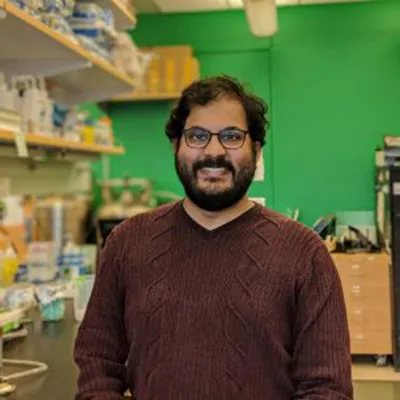
Assistant Professor
Metrics: Manual · Updated 2 months ago
Papers by NIH iCite research category (5 of 64 papers classified) · trials from ClinicalTrials.gov · patents from USPTO.
64 publications · h-index 13 · PubMed, ORCID and the BRI profile
Showing 10 of 64
Shah PK.
Ameli S, Hultgårdh-Nilsson A, Regnström J, et al.
Shah PK, Nilsson J, Kaul S, et al.
Rajavashisth TB, Liao JK, Galis ZS, et al.
Price MJ, Chou CC, Frantzen M, et al.
$2.6M total · 3 NIH grants · 1 active
Lineage-Specific Mechanisms of Cell Cycle Timing Control (NIH RePORTER, opens in a new tab)
R35GM151199Contact PI2023–2028
Lineage-Specific Mechanisms of Cell Cycle Timing Control (NIH RePORTER, opens in a new tab)
R35GM151199Contact PIFY2023–2026
R21DC019485Contact PIFY2021–2023
R00HD096050Contact PIFY2019–2021
Institute members who share papers or grants with this researcher
AI-generated
Generated automatically from this profile's public data to suggest possibilities. Treat them as starting points rather than recommendations.
While distinct, their research areas offer complementary perspectives: Dr. Shah's focus on the gut-brain axis and developmental disorders, and Dr. Zipursky's on neuronal wiring and circuit development could intersect on the neurodevelopmental consequences of gut dysbiosis or fetal alcohol exposure.
Project idea: They could investigate how maternal gut microbiome alterations, potentially exacerbated by alcohol exposure during pregnancy, impact the development and connectivity of neural circuits in offspring, using both molecular and circuit-level analyses.
There is potential for synergy, particularly through the shared interest in developmental trajectories and neurodevelopmental disorders, which can be influenced by both genetic and environmental factors.
Project idea: They could investigate the impact of early-life environmental exposures (like those related to gut microbiome development) on the neurobiological underpinnings of autism and schizophrenia spectrum disorders, drawing on Hoftman's expertise in neural circuits and genetics and Shah's in the gut-brain axis and developmental disorders.
 Avishek AdhikariPsychologyFit 6/10
Researcher A's expertise in fear and defensive behaviors, particularly involving the hypothalamus and amygdala, could provide a neural framework for understanding how gut-derived signals (Researcher B's focus) influence anxiety and stress responses.
Project idea: Investigate how disruptions in the gut-brain axis, as studied in fetal alcohol spectrum disorders, impact fear conditioning and extinction pathways in the brain.
 Mario DipoppaNeurobiologyFit 4/10
While their fields are distinct, the gut-brain axis explored by Shah could potentially influence neural processing and adaptation in the visual cortex studied by Dipoppa, though this connection is indirect.
Project idea: They could investigate if alterations in gut microbiome or fetal alcohol exposure impact visual cortical neural adaptation mechanisms and visual processing.
 Ahmet AracNeurologyFit 2/10
While both researchers are at the UCLA Brain Research Institute, their fields (neurology/neurorehabilitation and molecular/developmental biology focused on the gut-brain axis and FASD) have very limited direct overlap and would require significant bridging to find common ground.
Project idea: A highly speculative project could explore the impact of early-life neurodevelopmental insults (like FASD) on motor control outcomes in later life, potentially mediated by gut microbiome changes, though this is a substantial leap.
 Greg FieldOphthalmologyFit 2/10
The research areas of retinal degeneration and the gut-brain axis/fetal alcohol spectrum disorders are highly disparate, with no apparent overlap or complementarity.
Project idea: Given the lack of connection, it is unlikely they could pursue a meaningful collaborative project.
Shared papers, topics or department