Vision and Locomotion Shape the Interactions between Neuron Types in Mouse Visual Cortex. (opens in a new tab)
Dipoppa M, Ranson A, Krumin M, et al.
2018196 citationsRCR 6.5095th percentile

AI-generated biography
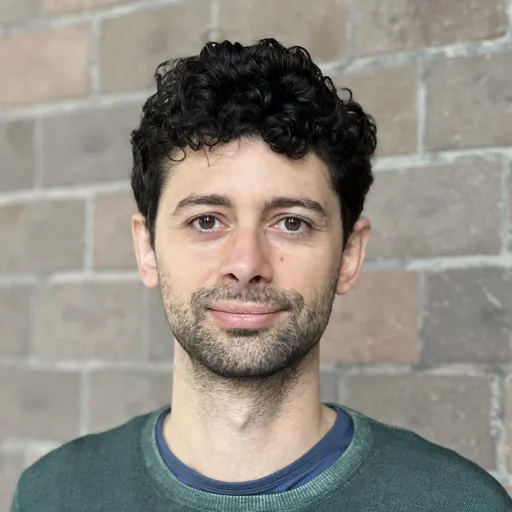
Mario Dipoppa, Ph.D., is a researcher in the Department of Neurobiology at UCLA. His work delves into the intricate workings of synapses, cells, and circuits within the brain, with a particular emphasis on learning, memory, and neural development. Dr. Dipoppa's research employs computational and systems neuroscience approaches to unravel complex neural dynamics.
His laboratory investigates the power law description of neural adaptation magnitude in the primary visual cortex, exploring how locomotion and visual input influence neuron type interactions. Dr. Dipoppa's contributions include elucidating the function of disinhibitory circuits in contextual modulation and understanding the mechanisms of working memory control through selective gating, cortical oscillations, and neural synchrony. He has also applied advanced computational methods, such as semi-supervised variational autoencoders, to analyze behavioral data. Notable publications from his group have significantly advanced our understanding of visual cortex function, interneuron regulation, and the neural basis of working memory.
Source: Gemini AI · Updated 8 months ago
Mario Dipoppa's research investigates the fundamental principles of neural adaptation, specifically focusing on how groups of neurons in the primary visual cortex adjust to ongoing stimulation. His work reveals that a mathematical power law accurately describes the magnitude of this adaptation within neural populations, providing insights into the brain's mechanisms for visual processing.
Research topics extracted by AI (Google Gemini) from this member’s publications.
17 publications · h-index 13 · PubMed, ORCID and the BRI profile
Showing 10 of 17
Dipoppa M, Ranson A, Krumin M, et al.
Bugeon S, Duffield J, Dipoppa M, et al.
Keller AJ, Dipoppa M, Roth MM, et al.
Schmidt ERE, Zhao HT, Park JM, et al.
Dipoppa M, Gutkin BS.
Tring E, Dipoppa M, Ringach DL.
Whiteway MR, Biderman D, Friedman Y, et al.
Deslippe J, Dipoppa M, Prendergast D, et al.
Dipoppa M, Szwed M, Gutkin BS.
Dipoppa M, Gutkin BS.
Institute members who share papers or grants with this researcher
AI-generated
Generated automatically from this profile's public data to suggest possibilities. Treat them as starting points rather than recommendations.
R01 from NEI
The researcher's work on neural adaptation in primary visual cortex directly aligns with the National Eye Institute's mission to understand fundamental processes of the visual system and develop insights into visual perception and its underlying mechanisms.
R01 from NIMH
This research investigates basic mechanisms of neural population dynamics and adaptation, providing foundational knowledge for understanding information processing, perception, and cognition—key areas of interest for the National Institute of Mental Health's basic neuroscience portfolio.
Their research areas strongly complement each other, with Dipoppa studying neural adaptation in the visual cortex and Zipursky focusing on the molecular mechanisms and developmental timing of neuronal wiring and circuit assembly in vision. This offers a unique opportunity to link the functional consequences of visual processing with the underlying cellular and molecular underpinnings of circuit formation.
Project idea: They could investigate how the molecular mechanisms and developmental timing of neuronal wiring, as studied by Zipursky, influence and are modulated by neural adaptation processes in the visual cortex, as explored by Dipoppa.
Their research areas are highly complementary, with Mario focusing on neural adaptation mechanisms in V1 and Alex investigating visual processing, including motion and gaze control in visual cortex areas like MT. Combining their expertise could lead to a deeper understanding of how adaptation influences dynamic visual processing and decision-making.
Project idea: They could investigate how neural adaptation in V1, as studied by Mario, specifically impacts the processing of motion and texture information, and subsequently influences perceptual decision-making related to gaze control, as studied by Alex.
 Kate WassumPsychologyFit 8/10
Their research areas are highly complementary, with A's focus on neural population dynamics in the visual cortex and B's expertise in dopamine, reward, and decision-making circuits offering a powerful combination to study how visual information is processed in the context of motivated behavior.
Project idea: They could investigate how adaptation in the visual cortex, as studied by Dipoppa, influences reward expectation and decision-making processes in goal-directed behavior and addiction models, as investigated by Wassum.
 Zili LiuPsychologyFit 8/10
Their research areas strongly complement each other, with Mario studying the neural mechanisms of adaptation in the visual cortex and Zili investigating the behavioral and perceptual consequences of visual plasticity and learning.
Project idea: They could collaborate on a project investigating how neural adaptation in the visual cortex (studied by Mario) underlies perceptual learning and plasticity in motion and orientation discrimination tasks (studied by Zili).
 Greg FieldOphthalmologyFit 7/10
Their research complements each other by bridging the gap from early visual processing in the retina to higher-level adaptation in the visual cortex, offering a comprehensive view of visual information processing.
Project idea: They could jointly investigate how retinal degeneration affects adaptation mechanisms in the visual cortex by comparing neuronal responses in healthy and degenerated animal models.
 Peyman GolshaniNeurologyFit 7/10
While their primary research areas are distinct (visual cortex adaptation vs. hippocampal memory/social behavior), there's a strong complementarity in their methodological expertise (neural circuits, neural dynamics, advanced imaging) that could be applied to cross-disciplinary questions.
Project idea: They could investigate how adaptations in visual cortex representation (Dipoppa) influence the encoding and recall of visual memories in the hippocampus (Golshani) or contribute to the neural dynamics of attention in the anterior cingulate cortex.
 Alicia IzquierdoPsychologyFit 7/10
Mario's work on neural adaptation in the visual cortex could be combined with Alicia's research on learning, decision-making, and neural oscillations to investigate how visual processing adapts to changing environments and influences flexible learning and risk assessment.
Project idea: They could investigate how adaptation in visual cortex neurons (Mario) impacts learning and decision-making under uncertainty in tasks involving visual stimuli (Alicia).
 Paul MathewsNeurologyFit 7/10
While seemingly disparate, their research on neural adaptation (A) and cerebellar circuits for motor learning/temporal processing (B) could offer a novel perspective on how sensory adaptation influences motor memory and cognitive function, particularly in the context of neurological conditions.
Project idea: Investigate how neural adaptation in visual cortex influences the formation and execution of motor memories mediated by the cerebellum, potentially using models of cognitive dysfunction.
Their research areas complement each other by linking neural adaptation in the visual cortex (Dipoppa) with sleep-dependent memory consolidation and arousal regulation (Poe), offering a pathway to understand how visual experience and its adaptation are processed and retained during sleep.
Project idea: They could investigate how neural adaptation in the visual cortex during wakefulness influences the consolidation of visual memories during sleep.
Mario's work on neural adaptation in the visual cortex could provide a foundational understanding of basic neural processing principles that are impacted by the psychiatric conditions Gil studies in the prefrontal cortex. Gil's expertise in prefrontal cortex circuits and neurobiology of psychiatric disorders could offer a critical context for how such adaptation mechanisms are dysregulated or altered in these conditions.
Project idea: They could investigate how visual adaptation mechanisms in primary visual cortex are altered in individuals with schizophrenia or autism spectrum disorders, potentially linking these changes to prefrontal cortex circuit dysfunction and genetic factors.
 Thomas O’DellPhysiologyFit 7/10
Mario's work on neural adaptation in the visual cortex and Thomas's expertise in synaptic plasticity in the hippocampus are complementary, as adaptation involves changes in synaptic strength and network dynamics that are central to plasticity. Combining their knowledge could illuminate how experience-dependent synaptic changes contribute to sensory adaptation at a network level.
Project idea: They could investigate whether the mechanisms of synaptic plasticity identified in the hippocampus by O'Dell are also at play in mediating neural adaptation in the visual cortex studied by Dipoppa, potentially using combined in vivo imaging and electrophysiology.
 Carlos Portera-CailliauNeurologyFit 7/10
Their research areas are highly complementary, with A focusing on adaptation in visual cortex and B on broader cortical development, plasticity, and circuit mechanisms related to sensory processing and disorders, offering a strong foundation for integrated research.
Project idea: Investigating how neural adaptation mechanisms in the visual cortex (A) are impacted by altered cortical circuit development and excitation-inhibition balance (B), particularly in the context of sensory processing deficits seen in autism or Fragile X syndrome.
 Daniel GeschwindNeurologyFit 7/10
Their research areas complement each other by bridging the gap between fundamental neural processing (visual cortex adaptation) and the genetic and developmental underpinnings of complex brain disorders, potentially linking molecular mechanisms to observable neural function.
Project idea: Investigate how genetic predispositions for autism spectrum disorder, studied through spatial transcriptomics, might influence the neural adaptation mechanisms within the visual cortex.
 Keith HolyoakPsychologyFit 7/10
Their research areas complement each other by bridging the gap between neural mechanisms of sensory processing and higher-level cognitive processes like reasoning and representation, potentially offering a more holistic understanding of how the brain learns and makes inferences about the world.
Project idea: They could investigate how neural adaptation in the visual cortex, as studied by Dipoppa, influences analogical reasoning and relational learning, as studied by Holyoak, by examining how prior visual experience impacts the ability to form and transfer abstract representations.
 Barbara KnowltonPsychologyFit 7/10
Mario's work on neural adaptation in visual cortex provides a low-level neural mechanism that could be crucial for understanding how Barbara's higher-level cognitive processes like decision-making, habit formation, and learning are implemented and potentially altered by factors like aging or stress. Their combined expertise could bridge the gap between neural computation and complex behavior.
Project idea: Investigate how neural adaptation in the visual cortex influences decision-making and habit formation in aging individuals, potentially using fMRI or electrophysiology alongside behavioral tasks.
 Ladan ShamsBioengineeringFit 7/10
Their research areas are highly complementary, with A focusing on intrinsic visual cortex adaptation and B investigating how auditory input modulates visual cortex activity, creating a strong foundation for cross-modal integration studies.
Project idea: They could investigate how auditory modulation of visual cortex activity alters neural adaptation dynamics in response to visual stimuli, potentially revealing mechanisms of multisensory integration and cross-modal influences on visual processing.
 Andrew WikenheiserPsychologyFit 7/10
Their research areas are highly complementary: Dipoppa studies neural adaptation in visual processing, while Wikenheiser investigates effort-delay trade-offs and decision-making, often involving value and uncertainty. Combining these could explore how visual adaptations influence choice behavior and risk assessment.
Project idea: They could investigate how changes in visual cortex adaptation, induced by different stimulus statistics or tasks, affect an individual's willingness to exert effort for delayed rewards or their perception of uncertainty in choices.
Their research areas are highly complementary, with one focusing on the technological means to modulate neural activity and the other on understanding fundamental neural processing and adaptation in the visual cortex.
Project idea: They could collaborate on a study investigating how wireless vagus nerve stimulation impacts neural adaptation mechanisms in the visual cortex, potentially for therapeutic applications related to visual processing disorders.
 Ausaf BariNeurosurgeryFit 7/10
Researcher A's broad neurosurgery and neuroscience background could provide a clinical or systems-level perspective to complement Researcher B's specific focus on neural adaptation in the visual cortex. This combination could lead to a deeper understanding of how visual processing deficits or adaptations manifest in patient populations.
Project idea: Investigate neural adaptation mechanisms in the visual cortex of patients with specific neurological conditions (e.g., stroke, optic nerve damage) to understand disease-specific processing changes.
 Laura DeNardoPhysiologyFit 7/10
Laura DeNar's general neuroscience research likely encompasses broad physiological mechanisms, which could complement Mario Dipoppa's specific focus on neural adaptation in the visual cortex by providing a deeper understanding of the underlying cellular and molecular processes driving these adaptations.
Project idea: They could investigate the physiological underpinnings of neural adaptation in the visual cortex, exploring how specific ion channels, neurotransmitter systems, or cellular excitability dynamics contribute to the power law observed in adaptation magnitude.
Researcher A's broad neuroscience interest, coupled with Researcher B's specific expertise in neural adaptation in the visual cortex, suggests complementary skills. Combining these could lead to a deeper understanding of how visual information processing, and its adaptation, relates to broader behavioral and psychiatric conditions.
Project idea: Investigate how neural adaptation mechanisms in the visual cortex, as studied by Dipoppa, contribute to or are affected by psychiatric conditions relevant to Colwell's work, such as altered visual perception in depression or anxiety.
 Neil HarrisNeurosurgeryFit 6/10
While their core research areas are distinct (visual cortex adaptation vs. TBI/epilepsy), there's potential for Dr. Dipoppa's work on neural adaptation to inform understanding of how the visual system recovers or is affected by injury, and Dr. Harris's work on TBI pathogenesis could benefit from understanding basic neural processing changes.
Project idea: Investigate how neural adaptation mechanisms in the visual cortex are altered following traumatic brain injury, potentially identifying biomarkers for visual dysfunction or recovery.
 William GrishamPsychologyFit 6/10
While their core research areas differ (neural adaptation vs. sex chromosome/hormonal effects), there's potential for collaboration by investigating how hormonal influences might modulate neural adaptation mechanisms in the visual cortex.
Project idea: They could investigate whether sex hormones influence the rate or magnitude of neural adaptation in the visual cortex, potentially using computational models developed by Grisham's expertise.
 Ahmet AracNeurologyFit 6/10
Ahmet's expertise in motor control and machine learning for rehabilitation could be applied to understand neural adaptation in visual cortex, potentially leading to novel rehabilitation strategies.
Project idea: Investigate how visual cortex adaptation (Mario's work) influences motor control recovery in stroke patients (Ahmet's work) using machine learning analysis of movement kinematics.
While their fields are distinct, the gut-brain axis explored by Shah could potentially influence neural processing and adaptation in the visual cortex studied by Dipoppa, though this connection is indirect.
Project idea: They could investigate if alterations in gut microbiome or fetal alcohol exposure impact visual cortical neural adaptation mechanisms and visual processing.
 Avishek AdhikariPsychologyFit 3/10
While both researchers study neural circuits and behavior, their core areas (defensive behaviors/fear vs. visual cortex adaptation) are quite disparate, suggesting a weak connection for direct collaboration.
Project idea: They might explore how visual input or changes in the visual environment influence learned defensive behaviors, though this would require significant bridging between their distinct expertise.
There is very little overlap or complementary expertise between neural adaptation in the visual cortex and the diverse research areas of vocal learning, prosthodontics, and gene therapy.
Project idea: No obvious project idea emerges due to the significant divergence in their research domains.
Shared papers, topics or department