A rabbit ventricular action potential model replicating cardiac dynamics at rapid heart rates. (opens in a new tab)
Mahajan A, Shiferaw Y, Sato D, et al.
Professor
AI-generated biography
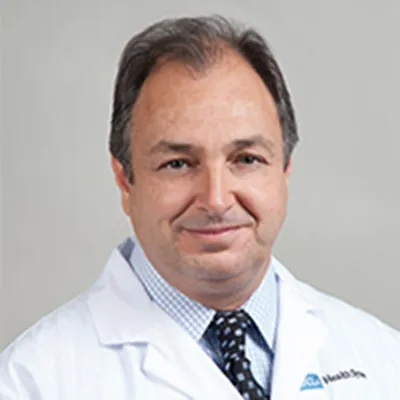
Riccardo Olcese, Ph.D., is a distinguished member of the UCLA Brain Research Institute and a Professor in the Department of Anesthesiology. Dr. Olcese's research program is dedicated to unraveling the intricate molecular and biophysical mechanisms governing the function of cardiac ion channels, particularly potassium and calcium channels. His work has significantly advanced our understanding of potassium channel gating mechanisms, calcium channel voltage sensing, and the initiation of cardiac arrhythmias.
Dr. Olcese's laboratory has made pivotal contributions to elucidating the regulation of the sodium-calcium exchanger and the role of voltage-gated ion channel mutations in disease. Furthermore, his research explores the interactions of mitochondrial ion channels and the functional significance of ion channel protein subunits. Notable achievements include highly cited publications in leading scientific journals, such as "Potentiation by the beta subunit of the ratio of the ionic current to the charge movement in the cardiac calcium channel" and "Ca2+-induced inhibition of the cardiac Ca2+ channel depends on calmodulin." He has also been awarded substantial grants from the National Institutes of Health to support his investigations into cardiac function and excitation-contraction coupling.

Source: Gemini AI · Updated 8 months ago
Riccardo Olcese investigates the fundamental molecular and biophysical mechanisms that control ion channel function, with a particular focus on calcium and potassium channels. Their research elucidates how these channels and their regulators impact cardiac excitability, muscle contraction, and contribute to the development of arrhythmias and other cardiovascular diseases. This work often employs advanced biophysical techniques to understand disease pathophysiology at a molecular level.
Research topics extracted by AI (Google Gemini) from this member’s publications.
85 publications · h-index 42 · PubMed, ORCID and the BRI profile
Showing 10 of 85
Mahajan A, Shiferaw Y, Sato D, et al.
Neely A, Wei X, Olcese R, et al.
Qin N, Olcese R, Bransby M, et al.
Qin N, Platano D, Olcese R, et al.
Birnbaumer L, Qin N, Olcese R, et al.
Olcese R, Qin N, Schneider T, et al.
Wei X, Neely A, Lacerda AE, et al.
Qu Z, Xie LH, Olcese R, et al.
Olcese R, Latorre R, Toro L, et al.
Tareilus E, Roux M, Qin N, et al.
$12.0M total · 9 NIH grants
R35GM131896Contact PI2019–2025
R01HL152296Co-PI2020–2025
R01HL134346Contact PI2017–2023
R01HL152296Co-PIFY2020–2024
R35GM131896Contact PIFY2019–2023
R01HL134346Contact PIFY2017–2020
R21NS101734Contact PIFY2017–2018
R01GM110276Contact PIFY2014–2018
BK(Ca) channel in heart mitochondria (NIH RePORTER, opens in a new tab)
R01HL107418Contact PIFY2012–2015
Molecular Approaches to Arrhythmia Therapy (NIH RePORTER, opens in a new tab)
P01HL078931Contact PIFY2005–2015
Structural Changes in BKCa Channels During Gating (NIH RePORTER, opens in a new tab)
R01GM082289Contact PIFY2002–2011
Structural Changes in BKCa Channels During Gating (NIH RePORTER, opens in a new tab)
R01NS043240Contact PIFY2002–2006
Institute members who share papers or grants with this researcher
AI-generated
Generated automatically from this profile's public data to suggest possibilities. Treat them as starting points rather than recommendations.
P01 (Program Project Grant)
Given the researcher's established track record, multiple R01s, and R35s, they are well-positioned to lead or participate in a P01. This mechanism supports highly integrated, multi-investigator projects that are focused on a common research theme. The researcher's expertise in both cardiac and skeletal muscle excitation-contraction coupling and ion exchange mechanisms provides a strong foundation for a comprehensive program involving multiple synergistic projects, potentially bridging their current work with broader neuroscience applications related to excitable cell physiology or neurological disorders involving calcium dysregulation.
R21 (Exploratory/Developmental Research Grant)
An R21 is ideal for supporting exploratory, high-risk/high-reward research that may lack extensive preliminary data but has the potential to lead to groundbreaking discoveries. While the researcher is well-funded, they may wish to explore entirely new directions within neuroscience that are distinct from their current R01 and R35 projects, or to pilot innovative methodologies. This mechanism would allow them to generate initial data and test novel hypotheses, potentially bridging their expertise in ion channels and calcium signaling in muscle/cardiac tissue to new frontiers in neuronal function or dysfunction.
S10 (Shared Instrumentation Grant)
For a highly productive and established researcher, securing state-of-the-art instrumentation can significantly enhance their research capabilities and those of their institution. The S10 mechanism supports the purchase of expensive, specialized equipment that will be used by multiple investigators. Given the researcher's focus on molecular transitions, ion dynamics, and cellular physiology, advanced imaging (e.g., super-resolution microscopy for molecular interactions), high-throughput electrophysiology, or specialized optogenetic setups could be highly beneficial. This would not fund a specific project but rather provide critical infrastructure to enable multiple cutting-edge research projects within their lab and across the UCLA neuroscience community.