
Correlation of terminal cell cycle arrest of skeletal muscle with induction of p21 by MyoD. (opens in a new tab)
Halevy O, Novitch BG, Spicer DB, et al.
19951,120 citationsRCR 20.8899th percentile

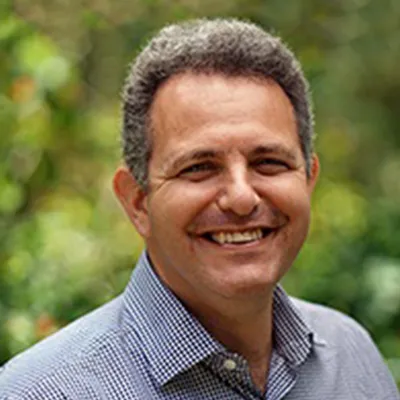
Professor
AI-generated biography
Bennett Novitch, Ph.D., is a Professor in the Department of Neurobiology at UCLA and a member of the Brain Research Institute. He earned his Ph.D. from UCLA. Dr. Novitch's research focuses on understanding the fundamental molecular and cellular mechanisms that control neural stem cell self-renewal, neuronal progenitor fate determination, and the patterning of the developing nervous system. His laboratory utilizes advanced human pluripotent stem cell-derived organoid and assembloid models to investigate how gene regulation and signaling pathways, including Wnt and Notch signaling, orchestrate processes such as motor neuron differentiation, neuronal migration, and oligodendrocyte development.
Dr. Novitch's significant contributions extend to elucidating the origins of intellectual and developmental disabilities, as well as neurovirology. His work has led to high-impact publications, with several seminal papers receiving hundreds of citations, underscoring their influence in the field. He has also been instrumental in securing substantial funding from the National Institutes of Health (NIH) for groundbreaking projects aimed at understanding human neurodevelopmental disorders and HIV-associated neurocognitive disorders through innovative organoid models. His research continues to shed light on the intricate processes of neural development and their implications for neurological diseases.
Source: Gemini AI · Updated 8 months ago
Bennett Novitch's research primarily investigates the molecular and cellular mechanisms governing neural stem cell biology, neurogenesis, and cell fate specification during brain and spinal cord development. Utilizing human pluripotent stem cell-derived organoid and assembloid models, their work identifies how specific genes and signaling pathways regulate these processes and contribute to the pathology of neurological disorders such as epilepsy, intellectual disability, and muscular dystrophies.
Research topics extracted by AI (Google Gemini) from this member’s publications.
64 publications · h-index 44 · PubMed, ORCID and the BRI profile
Showing 10 of 64
Halevy O, Novitch BG, Spicer DB, et al.
Bylund M, Andersson E, Novitch BG, et al.
Novitch BG, Chen AI, Jessell TM.
Dessaud E, Yang LL, Hill K, et al.
Watanabe M, Buth JE, Vishlaghi N, et al.
Karumbayaram S, Novitch BG, Patterson M, et al.
Li C, Deng YQ, Wang S, et al.
Lassar AB, Skapek SX, Novitch B.
Sellers WR, Novitch BG, Miyake S, et al.
Samarasinghe RA, Miranda OA, Buth JE, et al.
$21.9M total · 9 NIH grants · 2 active
R01MH130061Contact PI2022–2026
RM1MH132651Co-PI2023–2028
R01MH130061Contact PIFY2022–2026
RM1MH132651Co-PIFY2023–2026
R01DA051897Contact PIFY2020–2024
P50HD103557Contact PIFY2020–2024
R21NS115012Contact PIFY2020–2021
R01NS089817Contact PIFY2015–2019
R01NS085227Contact PIFY2015–2019
Transcriptional regulation of neuronal differentiation (NIH RePORTER, opens in a new tab)
R01NS072804Contact PIFY2010–2014
R01NS053976Contact PIFY2006–2010
Institute members who share papers or grants with this researcher









AI-generated
Generated automatically from this profile's public data to suggest possibilities. Treat them as starting points rather than recommendations.
P01 Program Project Grant
The researcher currently holds multiple R01s focusing on molecular mechanisms of neurodevelopmental/neuropsychiatric disorders using brain organoids, alongside RM1 grants for a high-throughput phenotyping center. A P01 would allow them to integrate these individual research threads into a cohesive, synergistic program involving multiple investigators and shared resources. This mechanism is ideal for a mature research program that can leverage existing expertise in organoid modeling, high-throughput phenotyping, and diverse neurological/psychiatric conditions to address a complex problem requiring a multifaceted approach.
R24 Resource-Related Research Projects
The researcher's experience leading the 'UCLA High-Throughput Neuropsychiatric Disorder Phenotyping Center' (RM1) directly aligns with the objectives of an R24 grant. An R24 could be used to further develop, expand, and disseminate the resources, tools, and methodologies from their HT-NPC to the broader scientific community. This could involve creating a national organoid resource center, developing standardized protocols for organoid-based disease modeling, or establishing a large-scale data repository for neuropsychiatric disorder phenotyping.
T32 Institutional National Research Service Award (NRSA) Training Grant
Given the researcher's established expertise, multiple R01s, and leadership of a specialized center (RM1), they are well-positioned to lead a training program. A T32 would enable them to build a robust institutional training program for predoctoral and/or postdoctoral fellows focused on cutting-edge areas like human brain organoid modeling of neurodevelopmental and neuropsychiatric disorders. This would leverage their research infrastructure and provide a pipeline for training the next generation of neuroscience researchers in these critical fields.
Shared papers, topics or department