
Brain-on-a-chip: Recent advances in design and techniques for microfluidic models of the brain in health and disease. (opens in a new tab)
Amirifar L, Shamloo A, Nasiri R, et al.

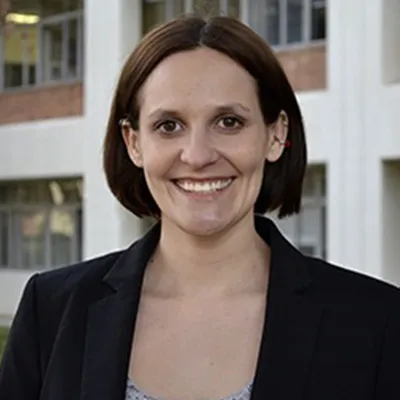
AI-generated biography
Stephanie Seidlits, Ph.D., is an Assistant Professor in the Department of Bioengineering at the University of California, Los Angeles. She earned her Ph.D. from UCLA. Dr. Seidlits' research program centers on the development of advanced bioengineered 3D culture platforms, including sophisticated hydrogels and "brain-on-a-chip" technologies, to investigate complex disease mechanisms. A significant focus of her work is understanding the critical roles of the extracellular matrix and the tumor microenvironment in glioblastoma progression. Her contributions include elucidating how these factors influence tumor cell migration, vascularization, and therapeutic resistance, thereby paving the way for improved drug screening and the development of novel treatment strategies. Dr. Seidlits has secured substantial funding for her innovative research, including multiple grants from the National Institutes of Health (NIH) for developing multi-organ-on-chip devices for modeling opioid-related conditions and tissue-engineered models of glioblastoma invasion, as well as a CAREER award from the National Science Foundation (NSF) for engineering biomaterials to promote spinal cord regeneration. Her work has garnered significant recognition, evidenced by a high h-index and a substantial number of citations.
Source: Gemini AI · Updated 8 months ago
Stephanie Seidlits' research focuses on developing advanced bioengineered 3D culture platforms, such as hydrogels and "brain-on-a-chip" models, to investigate disease mechanisms. A primary emphasis is placed on understanding how the extracellular matrix and tumor microenvironment influence glioblastoma progression, including tumor cell migration, vascularity, and mechanisms of therapeutic resistance, to facilitate improved drug screening and treatment strategies.
Research topics extracted by AI (Google Gemini) from this member’s publications.
22 publications · h-index 50 · PubMed, ORCID and the BRI profile
Showing 10 of 10
Amirifar L, Shamloo A, Nasiri R, et al.
Seidlits SK, Liang J, Bierman RD, et al.
Lim J, Ehsanipour A, Hsu JJ, et al.
Xiao W, Ehsanipour A, Sohrabi A, et al.
Ghochani Y, Muthukrishnan SD, Sohrabi A, et al.
Bastola S, Pavlyukov MS, Sharma N, et al.
Kita A, Saldate J, Chang C, et al.
Liang J, Sohrabi A, Epperson M, et al.
$6.1M total · 5 NIH + NSF grants
UH3TR003148Co-PI2019–2025
R01CA241927Contact PI2020–2025
UG3TR003148Co-PI2019–2022
UH3TR003148Co-PIFY2019–2024
UG3TR003148Co-PIFY2019–2021
R01CA241927Contact PIFY2020–2021
R21NS093199Contact PIFY2015–2016
1653730PI03/01/2017–02/28/2022
Institute members who share papers or grants with this researcher








AI-generated
Generated automatically from this profile's public data to suggest possibilities. Treat them as starting points rather than recommendations.
R01 (Research Project Grant)
The researcher already holds a successful R01, demonstrating their capability to lead independent, peer-reviewed research projects. This mechanism is ideal for continuing and expanding their well-established lines of inquiry, such as further developing their tissue-engineered glioblastoma models, or initiating new, substantial projects building upon the success of their multi-organ-on-chip platform for opioid/pain research. It offers significant funding and a multi-year timeline for in-depth scientific exploration.
P01 (Research Program Project Grant)
The researcher's portfolio includes diverse yet technologically related projects (multi-organ-on-chip for opioid/pain and tissue-engineered models for glioblastoma). A P01 would be an excellent fit if they can integrate these distinct but synergistic projects under a common scientific theme, such as 'Advanced Human-on-a-Chip Models for Neurodegenerative and Neurological Disorders' or 'Integrated Bioengineering Approaches to Neurological Disease Modeling and Therapy.' This mechanism supports multiple interdependent research projects that share common resources (cores) and a unifying hypothesis, allowing for a larger, more impactful program than individual R01s.
SBIR/STTR (Small Business Innovation Research / Small Business Technology Transfer - R41/R42/R43/R44)
The development of a 'multi-organ-on-chip device' as a 'therapeutic screening tool' has clear translational and commercial potential. If the researcher is interested in moving their technology from the academic lab toward commercialization, either by forming a startup or collaborating with an existing small business, SBIR/STTR grants are specifically designed for this purpose. These grants fund research and development that has a strong potential for commercialization, helping to bridge the gap between basic research and market-ready products, particularly for their device and screening platform.
Shared papers, topics or department