
Cancerous stem cells can arise from pediatric brain tumors. (opens in a new tab)
Hemmati HD, Nakano I, Lazareff JA, et al.
20031,460 citationsRCR 25.8399th percentile

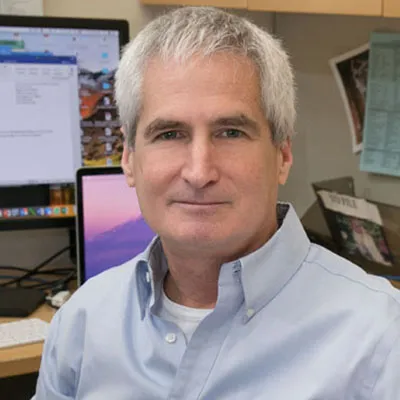
Professor of Psychiatry, Pharmacology and Pediatrics
David Geffen School of Medicine at UCLA
Dr. Kornblum is a basic and translational researcher in the Intellectual and Developmental Disabilities Research Center of the Semel Research Institute. He is Professor of Psychiatry, Pharmacology and Pediatrics at the David Geffen School of Medicine at UCLA. He is also an attending Pediatric Neurologist at Mattel Children’s Hospital at UCLA and the founding director of the Neural Stem Cell Research Center. He is a member of the Brain Research Institute, The Broad Stem Cell Research Center and the Molecular Biology Institute and serves on the Steering Committe of the Broad Stem Cell Research Center. Dr. Kornblum received his AB degree from Washington University in St. Louis and his MD and PhD degrees from UC Irvine. He trained as a Pediatrics Resident and Pediatric Neurology Fellow at UCLA. He did undergraduate research with Dr. Eugene M. Johnson and received his PhD in the laboratory of Frances M. Leslie. He pursued postdoctoral research with Dr. Christine M. Gall at UCI and Dr. Harry Chugani at UCLA. Dr. Kornblum is a frequent lecturer on the topics of neural stem cells and brain tumors at conferences and universities world-wide and has published over 100 research articles and book chapters. Dr. Kornblum is the recipient of numerous grants from the Federal Government as well as philanthropic foundations. He served as the Eleanor Leslie Professor of Pioneering Brain Research.
Source: BRI Website (AI extract) · Updated 8 months ago
Harley Kornblum's research primarily focuses on understanding the molecular and cellular mechanisms driving glioblastoma development and progression, with a significant emphasis on metabolic reprogramming. Their work investigates how altered metabolic pathways, including lipid, glucose, and mevalonate metabolism, contribute to tumor growth, vascularity, and resistance to therapeutic interventions, particularly in IDH-mutant glioblastomas. This research aims to identify critical vulnerabilities and novel therapeutic targets by elucidating the intricate metabolic dependencies of these aggressive brain cancers.
Research topics extracted by AI (Google Gemini) from this member’s publications.
Papers by NIH iCite research category (2 of 149 papers classified) · trials from ClinicalTrials.gov · patents from USPTO.
149 publications · h-index 71 · PubMed, ORCID and the BRI profile
Showing 10 of 149
Hemmati HD, Nakano I, Lazareff JA, et al.
Turner KM, Deshpande V, Beyter D, et al.
Groszer M, Erickson R, Scripture-Adams DD, et al.
Horvath S, Zhang B, Carlson M, et al.
Le Belle JE, Orozco NM, Paucar AA, et al.
Nathanson DA, Gini B, Mottahedeh J, et al.
Ludwig K, Kornblum HI.
Karumbayaram S, Novitch BG, Patterson M, et al.
Pope WB, Prins RM, Albert Thomas M, et al.
Imura T, Kornblum HI, Sofroniew MV.
$15.8M total · 12 NIH grants · 2 active
Radiation-induced vascular reprogramming in glioblastoma (NIH RePORTER, opens in a new tab)
R01NS121617Contact PI2021–2026
UCLA IDDRC: Cells, Circuits and Systems Core (NIH RePORTER, opens in a new tab)
P50HD103557Contact PI2020–2027
Radiation-induced vascular reprogramming in glioblastoma (NIH RePORTER, opens in a new tab)
R01NS121617Contact PIFY2021–2026
UCLA IDDRC: Cells, Circuits and Systems Core (NIH RePORTER, opens in a new tab)
P50HD103557Contact PIFY2020–2026
Project 4: Novel epigenetic treatment of IDH mutant gliomas (NIH RePORTER, opens in a new tab)
P50CA211015Contact PIFY2017–2021
Cells, Circuits, Systems (Core C) (NIH RePORTER, opens in a new tab)
U54HD087101Contact PIFY2018–2020
R21HD084204Contact PIFY2016–2017
Neural Progenitor Genes and Brain Tumors (NIH RePORTER, opens in a new tab)
R01NS052563Contact PIFY2006–2015
Neural Progenitor Genes and Brain Tumors (NIH RePORTER, opens in a new tab)
R56NS052563Contact PIFY2005–2010
Identity and Function of CNS Progenitor Cell Genes (NIH RePORTER, opens in a new tab)
R01MH065756Contact PIFY2001–2007
A Proteomic Analysis of Neural Progenitors (NIH RePORTER, opens in a new tab)
R21MH068649Contact PIFY2003–2004
Gene Expression in CNS Progenitors (NIH RePORTER, opens in a new tab)
R21MH062800Contact PIFY2000–2001
Growth Factors in Brain Plasticity and Development (NIH RePORTER, opens in a new tab)
K08NS001837Contact PIFY1996–2000
Institute members who share papers or grants with this researcher










AI-generated
Generated automatically from this profile's public data to suggest possibilities. Treat them as starting points rather than recommendations.
P01 (Program Project Grant)
Given the researcher's repeated success with R01 grants focused on 'Radiation-induced vascular reprogramming in glioblastoma,' a P01 is a logical next step. This mechanism supports integrated, multi-project research efforts that address a common scientific problem and require a multidisciplinary approach. Their expertise in a complex area like glioblastoma vascular biology, combined with multiple R01s, suggests they are well-positioned to lead a comprehensive program involving several inter-related projects, potentially bringing together basic, translational, and clinical researchers to tackle this disease more broadly than a single R01 allows.
R01 (Research Project Grant - in Intellectual and Developmental Disabilities)
The researcher's involvement in a P50 UCLA IDDRC (Intellectual and Developmental Disabilities Research Center) indicates a significant contribution and interest in IDD research. While their existing R01s are in glioblastoma, pursuing an independent R01 focused on a specific neuroscience question within the realm of IDD would allow them to establish their own research program in this area. This could leverage their neuroscience expertise (e.g., neurodevelopment, synaptic plasticity, neuroinflammation) to address causes, mechanisms, or potential therapies for intellectual and developmental disabilities, diversifying their portfolio and building on their center involvement.
R21 (Exploratory/Developmental Research Grant)
For a prolific researcher with multiple R01s, an R21 provides an excellent mechanism to explore novel, high-risk/high-reward ideas, develop new methodologies, or conduct pilot studies that may not yet have sufficient preliminary data for an R01. This could be applied to new directions within their glioblastoma research (e.g., exploring entirely new therapeutic targets or imaging modalities related to vascular reprogramming) or to generate preliminary data for an innovative project related to their IDD interests, allowing for agile exploration of cutting-edge concepts.
Shared papers, topics or department