Emergent properties of neural repair: elemental biology to therapeutic concepts. (opens in a new tab)
Carmichael ST.
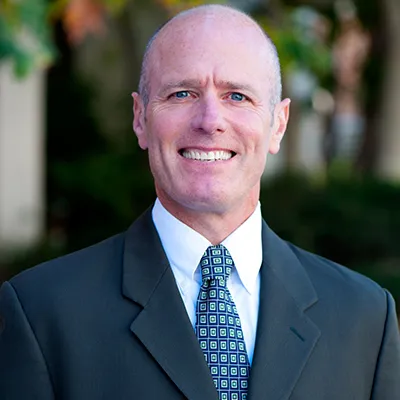
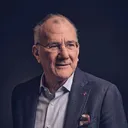
S. Thomas (Tom) Carmichael is a neurologist and neuroscientist in the Department of Neurology at the David Geffen School of Medicine at UCLA. Dr. Carmichael is Professor and Chair of the Department, with active laboratory and clinical interests in stroke and neurorehabilitation and how the brain repairs from injury. He is Co-Director of the UCLA Broad Stem Cell Center. He received his M.D. and Ph.D. degrees from Washington University School of Medicine in 1993 and 1994, and completed a Neurology residency at Washington University School of Medicine, serving as Chief Resident in 1997-1998. Dr. Carmichael was a Howard Hughes Medical Institute postdoctoral fellow at UCLA from 1998-2001, studying mechanisms of axonal sprouting, with a clinical emphasis on neurorehabilitation and stroke. He has been on the UCLA faculty since 2001. Dr. Carmichael’s laboratory studies the molecular and cellular mechanisms of neural repair after stroke and other forms of brain injury. This research focuses on the processes of axonal sprouting and neural stem cell and progenitor responses after stroke, and on neural stem cell transplantation. Dr. Carmichael is an attending physician on the Neurorehabilitation and Stroke clinical services at UCLA.
Dr. Carmichael has published important papers on stroke recovery that have defined mechanisms of plasticity and repair. These findings include the fact that the stroke produces stunned circuits that limit recovery, but can be restored to normal functioning with newly identified experimental drugs. His work has identified a novel brain “growth program” that is activated by stroke and leads to the formation of new connections. These studies have also identified how this growth program changes with age, and how specific molecules in the aged brain block the formation of new connections and of recovery.
This and other work has led to new directions in stroke therapeutics, including therapies with stem cell and tissue engineering applications. Dr. Carmichael is in the midst of stroke stem cell development applications with the FDA and with biotechnology companies.

Source: BRI Website · Updated 8 months ago
Research topics extracted by AI (Google Gemini) from this member’s publications.
1 publication · h-index 84 · PubMed, ORCID and the BRI profile
Carmichael ST.
Institute members who share papers or grants with this researcher
AI-generated
Generated automatically from this profile's public data to suggest possibilities. Treat them as starting points rather than recommendations.
R01 (Research Project Grant)
The R01 is the flagship NIH grant, providing substantial funding for comprehensive research projects (3-5 years). This mechanism would allow the researcher to pursue their core interests in stroke, neural repair, neurogenesis, and axonal sprouting in depth. Given their status of 'no current NIH grants,' they may qualify as an Early Stage Investigator (ESI) or New Investigator (NI), which offers specific advantages in the review process (e.g., separate paylines, focused review) and significantly increases their chances of funding for a first major independent grant.
R21 (Exploratory/Developmental Research Grant)
The R21 mechanism is ideal for exploratory, high-risk/high-reward research or for generating preliminary data that could lead to a larger R01 grant. It has a shorter duration (2 years) and a smaller budget, with less stringent preliminary data requirements. This is an excellent option for a researcher without current NIH funding to test novel hypotheses related to neural repair mechanisms, neurogenesis, or innovative approaches to neurorehabilitation after stroke, providing a stepping stone into sustained NIH funding.
R34 (Clinical Trial Planning Grant)
Given the researcher's focus on 'neurorehabilitation,' an R34 grant is highly relevant. This mechanism supports the planning activities for a future clinical trial (e.g., pilot studies, protocol development, recruitment strategies, data management plans). It allows investigators to develop a robust plan for a subsequent clinical trial application (e.g., R01, R61/R33) to test their rehabilitation strategies or interventions for stroke recovery in humans. This directly addresses the translational potential of their research in neurorehabilitation.
Dr. Carmichael's focus on neural repair mechanisms and the elemental biology of neural function directly complements Dr. DeNar's broad neuroscience research, offering a pathway to investigate the physiological underpinnings of regenerative processes.
Project idea: They could collaborate on a project investigating the physiological mechanisms by which specific neural repair strategies, identified by Dr. Carmichael, are enacted at the cellular and molecular level, a key area for Dr. DeNar's expertise.
Dr. Carmichael's focus on neural repair mechanisms and regenerative neuroscience could be significantly informed by Dr. Schweizer's detailed understanding of fundamental neurotransmitter release and synaptic function, particularly in the context of neurotoxicity and pathological conditions.
Project idea: They could investigate how environmental toxicants or amyloid pathology impact synaptic vesicle dynamics and neurotransmitter release in ways that hinder neural repair mechanisms.
Carmichael's focus on neural repair mechanisms and regenerative neuroscience directly complements Zipursky's expertise in neuronal wiring and circuit assembly, opening avenues to understand how damaged circuits can be rebuilt and functional connections re-established.
Project idea: They could investigate how molecular cues governing initial neuronal wiring (Zipursky) can be leveraged or reactivated to promote functional reconnection following neural injury (Carmichael).
Dr. Bari's broad neuroscience research and Dr. Carmichael's specific expertise in neural repair mechanisms and regenerative neuroscience create a strong complementary fit, allowing for a deeper exploration of how neurosurgical interventions might foster neural repair.
Project idea: They could investigate the neurobiological mechanisms by which specific neurosurgical techniques, guided by Dr. Bari's expertise, can promote neural repair and regeneration, building upon Dr. Carmichael's foundational research.
Shared papers, topics or department