Reactive astrocyte nomenclature, definitions, and future directions. (opens in a new tab)
Escartin C, Galea E, Lakatos A, et al.
Professor
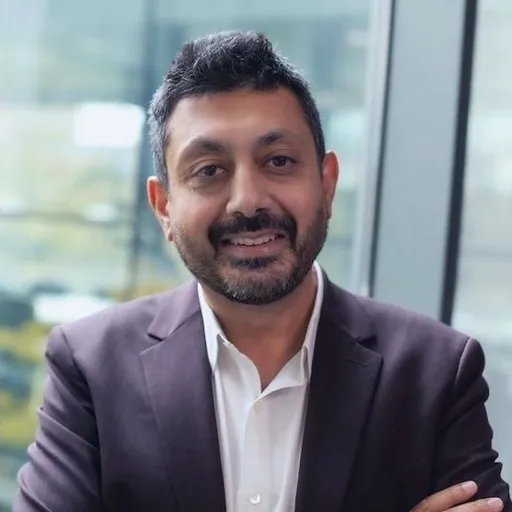
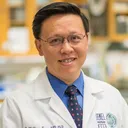
Baljit S. Khakh received a Ph.D. degree from the University of Cambridge in 1995. During his graduate studies, he also spent some time at the Geneva Biomedical Research Institute. Dr. Khakh completed a postdoctoral fellowship in the laboratory of Dr. Graeme Henderson at the University of Bristol, followed by a fellowship at the California Institute of Technology, working in the laboratories of Drs. Henry A. Lester and Norman Davidson as a Wellcome Trust International Prize Traveling Research Fellow, and Senior Research Fellow in the Division of Biology. In 2001, Dr. Khakh returned to Cambridge in the Division of Neurobiology at the MRC Laboratory of Molecular Biology. Dr. Khakh joined UCLA in April 2006.

Source: BRI Website (AI extract) · Updated 8 months ago
This research focuses on the molecular regulation of AMPA-type glutamate receptors, which are essential for excitatory synaptic transmission in the brain. Specifically, the study investigates the GluA1 subunits of these receptors, identifying inhibitory interactions between phosphorylation sites located in their C-terminus. This suggests a novel regulatory mechanism where the modification of one site can negatively impact the phosphorylation of another, thereby influencing receptor function.
Research topics extracted by AI (Google Gemini) from this member’s publications.
57 publications · h-index 73 · PubMed, ORCID and the BRI profile
Showing 10 of 57
Escartin C, Galea E, Lakatos A, et al.
Chai H, Diaz-Castro B, Shigetomi E, et al.
Khakh BS, Deneen B.
Srinivasan R, Lu TY, Chai H, et al.
Yu X, Taylor AMW, Nagai J, et al.
Watanabe M, Buth JE, Vishlaghi N, et al.
Khakh BS, North RA.
Nagai J, Rajbhandari AK, Gangwani MR, et al.
Nagai J, Yu X, Papouin T, et al.
$32.4M total · 13 NIH grants · 3 active
R01MH134926Contact PI2024–2028
Fundamental astrocyte biology in intact neural circuits (NIH RePORTER, opens in a new tab)
R35NS111583Contact PI2019–2027
R21AG092914Contact PI2025–2027
R01MH134926Contact PIFY2024–2026
Fundamental astrocyte biology in intact neural circuits (NIH RePORTER, opens in a new tab)
R35NS111583Contact PIFY2019–2026
R01AG075955Contact PIFY2021–2025
R21AG092914Contact PIFY2025
R01DA047444Contact PIFY2018–2020
Functions of astrocyte calcium signaling in the striatum (NIH RePORTER, opens in a new tab)
R01NS060677Contact PIFY2008–2018
DP1MH104069Contact PIFY2013–2017
U01NS094286Co-PIFY2015–2017
R01MH099559Contact PIFY2013–2017
R21NS100525Contact PIFY2016–2017
Optical reporter mice to study P2X4 receptors in microglia (NIH RePORTER, opens in a new tab)
R21NS073980Contact PIFY2011–2012
R21NS071292Contact PIFY2010–2011
R21NS063186Contact PIFY2008–2009
Institute members who share papers or grants with this researcher
AI-generated
Generated automatically from this profile's public data to suggest possibilities. Treat them as starting points rather than recommendations.
R01 (Research Project Grant)
Given the researcher's detailed description of their studies on GluA1 C-terminal phosphorylation, AMPA receptor activity, and synaptic plasticity, an investigator-initiated R01 remains the most direct mechanism to fund their core research interests. They have a strong track record of securing multiple R01s, demonstrating their capability and competitiveness for this mechanism. This would allow them to fully explore the molecular mechanisms, structural basis, and functional consequences of GluA1 phosphorylation within their established expertise, potentially targeting Institutes like NINDS, NIMH, or NIDA depending on the specific disease context or behavioral outcomes investigated.
R01 (Research Project Grant) - tailored for NIA/NINDS joint interests
The researcher has a proven track record of securing grants (R01s, R21) focused on astrocytes, aging, and Alzheimer's disease (NIA). A strategic approach would be to leverage this existing success by framing their core GluA1/AMPA receptor phosphorylation research within the context of age-related neurological changes or neurodegenerative diseases. For example, investigating how GluA1 C-terminal phosphorylation is altered in aging or AD models, how these alterations contribute to synaptic dysfunction, or how astrocytes modulate these processes. This approach bridges their deep expertise in receptor biology with a highly relevant and fundable area, potentially increasing their chances of success with NIA or through joint programs between NIA and NINDS.
P01 (Program Project Grant)
With an R35 (Outstanding Investigator Award) and multiple R01s, this researcher is a well-established leader in neuroscience. A P01 allows for a larger, multi-project, multi-investigator grant that supports a synergistic research program focused on a common theme. Given the breadth of their stated research interests (from molecular mechanisms to synaptic plasticity and structural biology), they could propose a P01 to lead a comprehensive program exploring a major aspect of AMPA receptor dynamics and its role in brain function or disease, integrating multiple complementary projects led by co-investigators. This mechanism is suitable for investigators with a strong track record who can integrate diverse expertise into a cohesive scientific endeavor.
Shared papers, topics or department