Consensus statement on concussion in sport-the 5(th) international conference on concussion in sport held in Berlin, October 2016. (opens in a new tab)
McCrory P, Meeuwisse W, Dvořák J, et al.
Professor of Pediatric Neurology and Neurosurgery
David Geffen School of Medicine
Metrics: Semantic Scholar · Updated 8 months ago
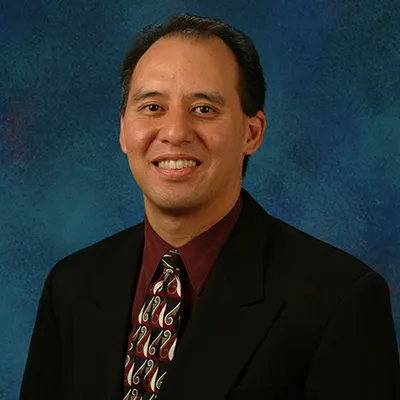
Christopher Giza graduated from Dartmouth College, received his M.D. from West Virginia University and completed his internship at the University of Pennsylvania. Dr. Giza then trained in Adult and Pediatric Neurology at UCLA, after which he worked on the Yosemite Search and Rescue team. In 1998, he returned to UCLA and joined the Brain Injury Research Center. Dr. Giza leads the Pediatric TBI program at UCLA. He traveled to Afghanistan in 2011 as a civilian advisor to the Department of Defense and in 2012 established UCLA BrainSPORT, a comprehensive sports concussion/mild TBI program for prevention, outreach, research and treatment. In 2012, he received the “Professional in the Field Award” from the Brain Injury Association of California. Dr. Giza co-Chaired the American Academy of Neurology’s committee that developed an evidence-based Practice Guideline for Management of Sports Concussions in 2013. He serves on the Center for Disease Control’s Pediatric mild TBI committee, the NCAA Concussion Task Force, the Major League Soccer Concussion Program Committee and has served as Vice-Chair for the California State Athletic Commission. He directs the NFL Neurological Care Program at UCLA. He is currently Professor of Pediatric Neurology and Neurosurgery at the David Geffen School of Medicine and Mattel Children’s Hospital – UCLA. His research interests include neuroplasticity, recovery from injury, sport-related concussions, post-traumatic epilepsy and brain development.

Source: BRI Website · Updated 8 months ago
This research extensively investigates neurological health, with a primary focus on concussion across diverse populations, including pediatric patients and collegiate athletes. Key areas include identifying factors influencing concussion recovery (e.g., premorbid anxiety/depression), evaluating optimal management strategies such as rest, understanding long-term sequelae like post-traumatic headaches and CTE, and exploring shared decision-making in return-to-sport decisions. A distinct, but equally important, research line focuses on advancing neurological monitoring in critically ill children, particularly using EEG for seizure prediction, detection of electrographic seizures after acute events, and improving overall critical care for pediatric neurological conditions.
Research topics extracted by AI (Google Gemini) from this member’s publications.
Papers by NIH iCite research category (5 of 166 papers classified) · trials from ClinicalTrials.gov · patents from USPTO.
166 publications · h-index 70 · PubMed, ORCID and the BRI profile
Showing 10 of 152
McCrory P, Meeuwisse W, Dvořák J, et al.
Giza CC, Hovda DA.
Patricios JS, Schneider KJ, Dvorak J, et al.
Giza CC, Kutcher JS, Ashwal S, et al.
Silverberg ND, Iverson GL, ACRM Brain Injury Special Interest Group Mild TBI Task Force members:, et al.
Barkhoudarian G, Hovda DA, Giza CC.
Prins M, Greco T, Alexander D, et al.
Kamins J, Bigler E, Covassin T, et al.
Davis GA, Anderson V, Babl FE, et al.
Prins ML, Alexander D, Giza CC, et al.
$6.6M total · 6 NIH grants · 1 active
CARE4Kids: Administrative Core (NIH RePORTER, opens in a new tab)
U54NS121688Contact PI2021–2027
CARE4Kids: Administrative Core (NIH RePORTER, opens in a new tab)
U54NS121688Contact PIFY2021–2026
Western Neurotrauma Symposium (NIH RePORTER, opens in a new tab)
R13NS134287Contact PIFY2023
Western Neurotrauma Symposium (NIH RePORTER, opens in a new tab)
R13NS129212Contact PIFY2022
Restoration of Plasticity After Pediatric Traumatic Brain Injury (NIH RePORTER, opens in a new tab)
P41RR013642Contact PIFY2008–2011
Restoration of plasticity after pediatric traumatic brain injury (NIH RePORTER, opens in a new tab)
K02NS057420Contact PIFY2007–2009
NMDA receptor dysfunction after traumatic brain injury (NIH RePORTER, opens in a new tab)
K08NS002197Contact PIFY2002–2006
1 trial on ClinicalTrials.gov
Augmentation of Cognitive Training in Children With TBI With D-Cyloserine
Conditions: Traumatic Brain Injury
NCT02312635 on ClinicalTrials.gov (opens in a new tab)30 enrolledSponsor: University of California, Los Angeles2012–2016
Institute members who share papers or grants with this researcher
AI-generated
Generated automatically from this profile's public data to suggest possibilities. Treat them as starting points rather than recommendations.
R01 (Research Project Grant)
Given the researcher's extensive experience leading large U54 cooperative agreements, an R01 would allow them to pursue a highly focused, hypothesis-driven project on a specific aspect of their research interests. For instance, a dedicated R01 could investigate 'Biomarkers and endophenotypes of post-traumatic headaches' in a specific cohort, or delve deeply into 'The influence of premorbid anxiety and depression on concussion recovery in athletes' with detailed mechanistic studies. This mechanism supports well-defined projects that contribute significantly to the field and demonstrate independent research capability beyond large consortia.
R21 (Exploratory/Developmental Research Grant)
The researcher has interests in 'Future directions and advancements in concussion research' and topics that might involve novel methodologies or high-risk approaches (e.g., new biomarker discovery, innovative EEG monitoring techniques). An R21 is ideal for exploratory or developmental research, pilot studies, or testing new concepts that could lay the groundwork for a larger R01 or U01 in the future. This mechanism provides flexibility for pursuing innovative, early-stage ideas without extensive preliminary data, such as pilot testing a novel 'shared decision-making' intervention for return to sport or developing new algorithms for 'seizure prediction in critically ill children'.
U01 (Research Project Cooperative Agreement) - Clinical Trial Focused
Building on their success with U54 cooperative agreements, a U01 would be a natural fit for leading a large-scale, multi-site clinical trial or complex intervention study. For instance, a U01 could directly address 'Optimal rest strategies and recovery protocols after concussion' through a multi-center randomized controlled trial, or implement and evaluate 'Shared decision-making for return to sport after pediatric concussion' across multiple clinical sites. This mechanism allows for substantial programmatic involvement and is well-suited for projects requiring extensive collaboration, particularly for moving research findings into clinical practice or testing interventions, leveraging their established leadership in large-scale initiatives.
Shared papers, topics or department