
Darwin's mistake: explaining the discontinuity between human and nonhuman minds. (opens in a new tab)
Penn DC, Holyoak KJ, Povinelli DJ.
Behavioral and Brain Sciences20081,228 citationsRCR 9.8897th percentilePubMed record (opens in a new tab)

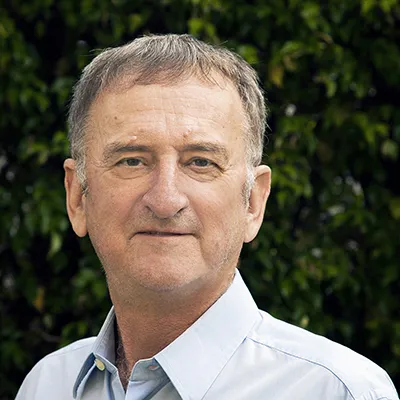
Distinguished Professor
Combining behavioral studies of normal cognition, computational modeling, and neuropsychological and neuroimaging studies, to understand the role of the prefrontal cortex in human thinking Keith J. Holyoak conducts research in human reasoning and problem solving. Much of his work is concerned with the role of analogy in thinking. One of the major themes of this work is the way in which analogy serves as a psychological mechanism for learning and transfer of knowledge. In his book Mental Leaps with Paul Thagard, he presents a general theory of analogical thinking that includes analysis of how the capacity to use analogy evolved in primates, how it develops in children, and how it is used to reason in domains ranging from law and politics to science. Other related reserach, in collaboration with Dan Simon, deals with complex decision-making in fields such as the law. Holyoaks research combines studies of thinking in normal adults with neuropsychological studies of how thinking in brain-damaged individuals. This work, in collaboration with Barbara Knowlton and others, is investigating the role of prefrontal cortex in complex human reasoning. In addition to experimental work, Holyoak works with John Hummel to develop computational models of human thinking based on neural-network models. These models use neural synchrony to preform dynamic variable binding, and thereby represent and maniputlate symbolic knowledge. The overall goal is to understand the neural basis for human thought.
Source: BRI Website · Updated 8 months ago
Keith Holyoak's research primarily investigates the fundamental cognitive processes involved in analogical and relational reasoning. His work explores how humans derive meaning, solve problems, and make judgments by identifying and applying structural similarities across different domains, ranging from visual perception and language to numerical cognition and complex moral dilemmas. He also examines the computational underpinnings and individual differences in these sophisticated reasoning abilities.
Research topics extracted by AI (Google Gemini) from this member’s publications.
Papers by NIH iCite research category (1 of 39 papers classified) · trials from ClinicalTrials.gov · patents from USPTO.
39 publications · h-index 84 · PubMed, ORCID and the BRI profile
Showing 10 of 39
Penn DC, Holyoak KJ, Povinelli DJ.
Holyoak KJ, Cheng PW.
Kubricht JR, Holyoak KJ, Lu H.
Morrison RG, Krawczyk DC, Holyoak KJ, et al.
Lu H, Yuille AL, Liljeholm M, et al.
Viskontas IV, Morrison RG, Holyoak KJ, et al.
Cho S, Holyoak KJ, Cannon TD.
DeWolf M, Bassok M, Holyoak KJ.
Knowlton BJ, Morrison RG, Hummel JE, et al.
$1.2M total · 7 NIH + NSF grants
1827374PI08/15/2018–07/31/2022
Neuroimaging of Analogical Reasoning (NIH RePORTER, opens in a new tab)
P41RR013642Contact PI2004–2009
Neuroimaging of analogical reasoning (NIH RePORTER, opens in a new tab)
R03MH072613Contact PI2005–2008
Neuroimaging of Analogical Reasoning (NIH RePORTER, opens in a new tab)
P41RR013642Contact PIFY2004–2008
Neuroimaging of analogical reasoning (NIH RePORTER, opens in a new tab)
R03MH072613Contact PIFY2005–2006
1827374PI08/15/2018–07/31/2022
0350920PI04/15/2004–03/31/2007
0080375PI08/01/2000–07/31/2004
Mechanisms of Analogical Reminding and Priming (NSF award, opens in a new tab)
9310614PI09/15/1993–08/31/1995
8615316PI08/15/1986–01/31/1990
Institute members who share papers or grants with this researcher










AI-generated
Generated automatically from this profile's public data to suggest possibilities. Treat them as starting points rather than recommendations.
R01 (Research Project Grant)
Given their strong foundation in neuroimaging and analogical/human reasoning (evidenced by multiple P41s and an R03), an R01 would allow them to pursue specific, hypothesis-driven research projects in more depth. This mechanism is ideal for expanding current lines of inquiry, exploring new facets of reasoning, applying novel neuroimaging techniques they've developed, or extending their work to new populations or paradigms within a focused research project.
P01 (Program Project Grant)
The presence of multiple P41 grants suggests a well-established, multi-component research program with significant infrastructure. A P01 would be an excellent fit if the researcher aims to integrate several distinct but thematically related projects under a single, overarching scientific goal (e.g., exploring different aspects or types of reasoning, developmental trajectories, or computational models) that leverage their existing neuroimaging resource. This mechanism supports a coordinated, multi-investigator approach to a complex problem.
P41 (Research Resource Grant - Renewal or Expansion)
As the researcher already holds multiple P41 grants, they are clearly experts in developing and managing major neuroimaging research resources. A renewal or expansion of a P41 would be appropriate if they have significant new methodological advancements in neuroimaging (e.g., novel acquisition methods, advanced analytical tools, AI integration for data processing) that would benefit the broader neuroscience community and extend the utility of their resource for studying complex cognitive functions like reasoning. This mechanism supports the continued innovation and provision of cutting-edge research infrastructure.
Holyoak's work on analogical reasoning and cognitive processes could be deeply enriched by Uddin's expertise in neuroimaging and brain connectivity, particularly in understanding the neural underpinnings of complex cognitive functions. Combining their strengths could illuminate how brain networks support abstract thought and decision-making in conditions like ASD.
Project idea: Investigate the neural correlates of analogical reasoning deficits in individuals with autism spectrum disorder using fMRI during analogical reasoning tasks, integrating Holyoak's cognitive paradigms with Uddin's connectivity analyses.
 Ausaf BariNeurosurgeryFit 7/10
Researcher A's broad neuroscience focus and Researcher B's deep expertise in cognitive processes like analogical reasoning and relational learning offer a strong complementarity. Combining these could yield insights into the neural underpinnings of complex reasoning.
Project idea: Investigate the neural correlates of analogical reasoning in patients with specific neurological conditions, potentially using fMRI or EEG while subjects engage in tasks developed by Holyoak and administered by Bari.
 Dean BuonomanoNeurobiologyFit 7/10
Buonomano's work on neural encoding of temporal patterns could provide a biological substrate for the cognitive processes of relational learning and inference that Holyoak investigates, creating a bridge between neural mechanisms and higher-level cognition.
Project idea: They could collaborate on a project investigating how the brain's temporal processing mechanisms (Buonomano) support analogical reasoning and causal inference (Holyoak) by examining neural activity during relational learning tasks.
 Mario DipoppaNeurobiologyFit 7/10
Their research areas complement each other by bridging the gap between neural mechanisms of sensory processing and higher-level cognitive processes like reasoning and representation, potentially offering a more holistic understanding of how the brain learns and makes inferences about the world.
Project idea: They could investigate how neural adaptation in the visual cortex, as studied by Dipoppa, influences analogical reasoning and relational learning, as studied by Holyoak, by examining how prior visual experience impacts the ability to form and transfer abstract representations.
 Peyman GolshaniNeurologyFit 7/10
There is strong potential for collaboration as Golshani's work on neural circuits and dynamics in memory and behavior could provide a neural substrate for Holyoak's computational and psychological models of reasoning and learning, particularly in analogical reasoning and moral judgment.
Project idea: Investigate the neural mechanisms underlying analogical reasoning and transfer using Golshani's voltage imaging techniques and behavioral paradigms developed by Holyoak.
 Ahmet AracNeurologyFit 7/10
Arac's work on motor control and neurorehabilitation using machine learning, combined with Holyoak's expertise in analogical reasoning and computational models of cognition, offers a strong potential for synergistic collaboration. Holyoak's theories on how humans learn and transfer knowledge could inform the development of more sophisticated and personalized machine learning algorithms for Arac's neurorehabilitation research, enabling machines to learn and adapt more like the human brain.
Project idea: They could collaborate on developing and testing novel machine learning models for stroke rehabilitation that leverage principles of analogical reasoning to improve motor skill transfer and generalization to novel tasks.
Holyoak's work on analogical reasoning and representation could be applied to understand how sleep-dependent memory consolidation (Poe) influences the formation and retrieval of relational knowledge, potentially revealing how generalized principles are learned and applied.
Project idea: Investigate how sleep quality and specific sleep stages impact the ability to form and utilize analogical mappings in novel problem-solving tasks.
 Austin ColeyNeurobiologyFit 6/10
While their fields are distinct, Holyoak's expertise in relational reasoning and causal inference could provide novel cognitive frameworks to understand the neurobiological mechanisms of glutamate and GABA dysregulation in schizophrenia proposed by Coley.
Project idea: They could investigate how deficits in relational learning and causal inference, as studied by Holyoak, contribute to the cognitive symptoms of schizophrenia, and if these cognitive deficits correlate with specific patterns of glutamate and GABA dysregulation observed by Coley.
 Arpana GuptaMedicineFit 6/10
Gupta's work on the gut-brain axis could be enhanced by Holyoak's expertise in cognitive and causal inference, particularly in understanding how subjective experiences of gut symptoms are processed and reasoned about.
Project idea: They could investigate how individuals with IBS reason about the causes of their symptoms and how this reasoning is influenced by gut-brain axis dysregulation.
There is moderate synergy as Holyoak's expertise in analogical reasoning and relational learning could inform understanding of how individuals with psychiatric disorders, like those studied by Hoftman, learn and represent information, potentially impacting treatment strategies.
Project idea: Investigate how deficits in analogical reasoning and relational learning, as studied by Holyoak, contribute to the cognitive impairments observed in individuals with schizophrenia and autism spectrum disorders studied by Hoftman.
 Paul MathewsNeurologyFit 3/10
While their core research areas are distinct (cognitive psychology vs. neuroscience/cerebellar circuits), there's a potential for a weak connection through the lens of learning and representation. However, significant bridging would be required.
Project idea: Investigating how cerebellar mechanisms for motor learning and temporal processing might underlie or be modulated by higher-level analogical reasoning processes.
While Researcher A's work is on the engineering of neural stimulation and Researcher B's on cognitive processes, there's a potential bridge in understanding how targeted neural stimulation might influence complex cognitive functions like reasoning or decision-making, though this requires significant conceptual translation.
Project idea: A study could investigate whether vagus nerve stimulation can modulate analogical reasoning or moral judgment processes in human participants.
Shared papers, topics or department