Loading profile…

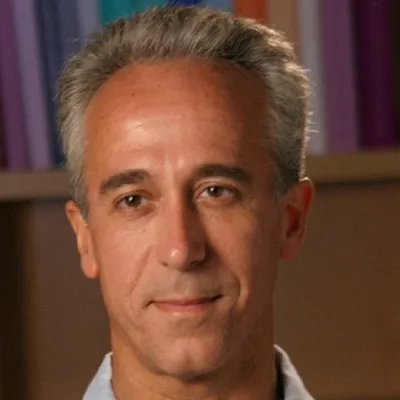
Marco Iacoboni is Professor of Psychiatry and Biobehavioral Sciences and Director of the Transcranial Magnetic Stimulation Lab at the Ahmanson-Lovelace Brain Mapping Center. Iacoboni is a neurologist and neuroscientist originally from Rome, Italy. He joined the faculty of the Ahmanson-Lovelace Brain Mapping Center at UCLA in 1999.
Source: BRI Website · Updated 8 months ago
Marco Iacoboni's research investigates the neural underpinnings of self-awareness, social cognition (including empathy and trust), and cognitive processes like motor imagery and reasoning. A significant portion of this work involves applying and studying the therapeutic potential of non-invasive brain stimulation techniques, such as transcranial direct current stimulation (tDCS) and repetitive transcranial magnetic stimulation (rTMS), for various neurological and psychiatric conditions, including depression, stroke, phobias, and gliomas. This research aims to understand brain function and modulate it for clinical benefit.
Research topics extracted by AI (Google Gemini) from this member’s publications.
Papers by NIH iCite research category (18 of 166 papers classified) · trials from ClinicalTrials.gov · patents from USPTO.
166 publications · h-index 78 · PubMed, ORCID and the BRI profile
Showing 10 of 166
Mazziotta J, Toga A, Evans A, et al.
Iacoboni M, Molnar-Szakacs I, Gallese V, et al.
Dapretto M, Davies MS, Pfeifer JH, et al.
Iacoboni M.
Iacoboni M, Dapretto M.
Christov-Moore L, Simpson EA, Coudé G, et al.
Mukamel R, Ekstrom AD, Kaplan J, et al.
Carr L, Iacoboni M, Dubeau MC, et al.
Wilson SM, Saygin AP, Sereno MI, et al.
$770K total · 3 NIH grants
Increasing empathy to improve mental health (NIH RePORTER, opens in a new tab)
R21MH097178Contact PI2012–2015
Multimodal Maps of Human Imitative Behavior (NIH RePORTER, opens in a new tab)
P41RR013642Contact PI2004–2008
Multimodal maps of human imitative behavior (NIH RePORTER, opens in a new tab)
R21MH063860Contact PI2003–2006
Increasing empathy to improve mental health (NIH RePORTER, opens in a new tab)
R21MH097178Contact PIFY2012–2013
Multimodal Maps of Human Imitative Behavior (NIH RePORTER, opens in a new tab)
P41RR013642Contact PIFY2004–2007
Multimodal maps of human imitative behavior (NIH RePORTER, opens in a new tab)
R21MH063860Contact PIFY2003–2004
1 trial on ClinicalTrials.gov
TMS and Exposure Therapy
Conditions: Arachnophobia, Phobia
NCT04019054 on ClinicalTrials.gov (opens in a new tab)22 enrolledSponsor: University of California, Los Angeles2019–2020
Institute members who share papers or grants with this researcher









AI-generated
Generated automatically from this profile's public data to suggest possibilities. Treat them as starting points rather than recommendations.
R01 Research Project Grant
The researcher has two R21 grants focused on 'Increasing empathy to improve mental health.' R21s are typically exploratory/developmental, designed to generate preliminary data. A natural progression would be to leverage the insights and data from these R21s to propose a larger, more comprehensive R01. This would allow for expanded scope, increased sample sizes, more rigorous testing of hypotheses, and definitive studies on the mechanisms through which empathy influences mental health, or to further develop and validate interventions derived from this work.
P01 Research Program Grant or U19 Research Program Award
The researcher leads multiple P41 grants for 'MULTIMODAL MAPS OF HUMAN IMITATIVE BEHAVIOR.' P41s are for NIH National Research Resources Centers, indicating significant experience in managing large, multi-component, and collaborative research initiatives with substantial infrastructure. A P01 or U19 would allow them to lead a highly integrated, multi-project research program. This could focus on a broader theme of social cognition, mental health interventions, or advanced behavioral neuroscience methodologies, leveraging their multimodal mapping expertise and integrating findings from their empathy research in a programmatic, collaborative setting.
R61/R33 Phased Innovation Award (or R34 Clinical Trial Planning Grant)
Given the explicit focus of their R21 grants on 'Increasing empathy to improve mental health,' there's a clear trajectory towards intervention development. The R61/R33 mechanism is specifically designed for phased research projects, commonly used for the development and testing of behavioral interventions (R61 for initial development/pilot, R33 for subsequent efficacy testing). Alternatively, an R34 would support the planning phase of a clinical trial, helping to design a robust protocol for testing an empathy-based intervention developed from their R21 findings.
Shared papers, topics or department