Positron emission tomography in evaluation of dementia: Regional brain metabolism and long-term outcome. (opens in a new tab)
Silverman DH, Small GW, Chang CY, et al.

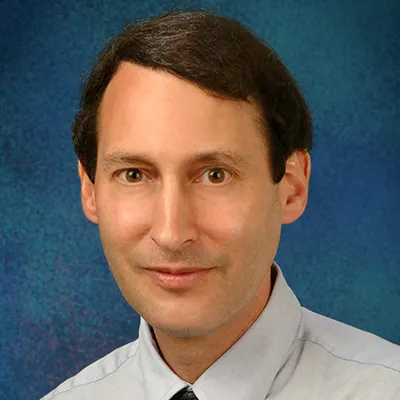
Professor
David Geffen School of Medicine
Daniel H. Silverman, M.D., Ph.D., is Head of the Neuronuclear Imaging Section of the Ahmanson Translational Imaging Division at UCLA Medical Center, on the Executive Committee of the UCLA Alzheimer’s Disease Research Center, and a Professor in the Department of Molecular and Medical Pharmacology, University of California, Los Angeles. He obtained his Ph.D. in Biological Chemistry at Harvard University, and postdoctoral research training in Biochemistry and Molecular Pharmacology at Harvard Medical School. He obtained his M.D. from The Ohio State University College of Medicine, subsequently completed post-M.D. training at UCLA, and then obtained certification from both the American Board of Internal Medicine and the American Board of Nuclear Medicine.
Source: BRI Website (AI extract) · Updated 8 months ago
Daniel Silverman's research primarily leverages advanced neuroimaging, particularly PET scans, to investigate brain function, metabolism, and pathology across various neurological conditions. A significant focus is on understanding cognitive dysfunction and neurodegeneration in disorders such as Alzheimer's disease and epilepsies, alongside the long-term neurological impacts of cancer and its treatments. Their work also explores the brain's response to therapeutic interventions, ranging from external nerve stimulation to pharmacological and dietary approaches.
Research topics extracted by AI (Google Gemini) from this member’s publications.
Papers by NIH iCite research category (17 of 107 papers classified) · trials from ClinicalTrials.gov · patents from USPTO.
107 publications · h-index 79 · PubMed, ORCID and the BRI profile
Showing 10 of 107
Silverman DH, Small GW, Chang CY, et al.
Small GW, Ercoli LM, Silverman DH, et al.
Silverman DH, Munakata JA, Ennes H, et al.
Chen W, Cloughesy T, Kamdar N, et al.
Chen W, Silverman DH, Delaloye S, et al.
Chen W, Delaloye S, Silverman DH, et al.
Munakata J, Naliboff B, Harraf F, et al.
Silverman DH, Dy CJ, Castellon SA, et al.
Brody AL, Saxena S, Silverman DH, et al.
Pio BS, Park CK, Pietras R, et al.
$729K total · 2 NIH grants
R21NS071385Contact PI2011–2014
Evaluation of Presynaptic Calcium Channels In Vivo (NIH RePORTER, opens in a new tab)
R21MH064679Contact PI2002–2005
R21NS071385Contact PIFY2011–2012
Evaluation of Presynaptic Calcium Channels In Vivo (NIH RePORTER, opens in a new tab)
R21MH064679Contact PIFY2002–2003
4 trials on ClinicalTrials.gov
Fluoxetine Prevention Trial
Conditions: Cognitive Dysfunction
NCT01615055 on ClinicalTrials.gov (opens in a new tab)Sponsor: University of California, Los Angeles2018–2020
Impact of Grape Consumption on Brain Metabolism and Neuropsychological Performance Over 1 Year
Conditions: Mild Cognitive Impairment
NCT03361410 on ClinicalTrials.gov (opens in a new tab)32 enrolledSponsor: University of California, Los Angeles2017–2022
Impact of Grape Consumption on Brain Metabolism and Cognitive Function
Conditions: Mild Cognitive Impairment
NCT01573611 on ClinicalTrials.gov (opens in a new tab)12 enrolledSponsor: University of California, Los Angeles2012–2014
Metabolic Cerebral Imaging in Incipient Dementia (MCI-ID)
Conditions: Dementia
NCT00329706 on ClinicalTrials.gov (opens in a new tab)710 enrolledSponsor: University of California, Los Angeles2006–2017
Institute members who share papers or grants with this researcher






AI-generated
Generated automatically from this profile's public data to suggest possibilities. Treat them as starting points rather than recommendations.
R01 Research Project Grant
The researcher has successfully secured multiple R21 grants, which are designed for exploratory and developmental research. The natural progression from successful R21 projects is to consolidate and expand them into a more comprehensive and sustained research program. An R01 allows for a longer duration, larger budget, and deeper investigation into the mechanisms identified in their R21s, whether it's the effects of chemotherapy on cerebral metabolism or the intricacies of presynaptic calcium channels. They can leverage the preliminary data generated from their R21s to build a strong R01 application.
DP2 NIH Director's New Innovator Award
The consistent success with R21 grants suggests the researcher has a track record of proposing innovative and potentially high-impact research. The DP2 award specifically targets Early Stage Investigators (those who have not yet received a substantial NIH research grant like an R01) and supports unusually innovative research projects with the potential for unusually high impact. If the researcher's R21s are their primary independent funding, they may qualify as an ESI, making the DP2 an excellent mechanism to fund a highly creative, potentially transformative research direction that might be too high-risk for traditional mechanisms.
SBIR/STTR (Small Business Innovation Research / Small Business Technology Transfer) Grant
The research on 'Acute and Long-Term Effects of Chemotherapy on Regional Cerebral Metabolism' has significant translational potential. This line of inquiry could lead to the development of diagnostic tools, monitoring technologies, or therapeutic interventions to mitigate neurotoxic side effects. SBIR/STTR grants (Phase I for feasibility, Phase II for full development) are specifically designed to support small businesses in developing and commercializing such innovations. If the researcher is interested in translating their findings into practical applications with commercial potential, this mechanism would be highly appropriate.
 Daniel Benjamin AharoniNeurologyFit 7/10
Researcher A's expertise in miniaturized microscopy for freely behaving animals could provide a novel in vivo platform to study brain metabolism and blood flow in diseases, complementing Researcher B's focus on neuroimaging of cognitive dysfunction and neurodegenerative diseases.
Project idea: They could collaborate on developing and applying novel, high-resolution in vivo imaging techniques to investigate metabolic changes and cerebral blood flow dynamics in animal models of neurodegenerative diseases studied by Researcher B.
Shared papers, topics or department