Learning in Aplysia: looking at synaptic plasticity from both sides. (opens in a new tab)
Roberts AC, Glanzman DL.

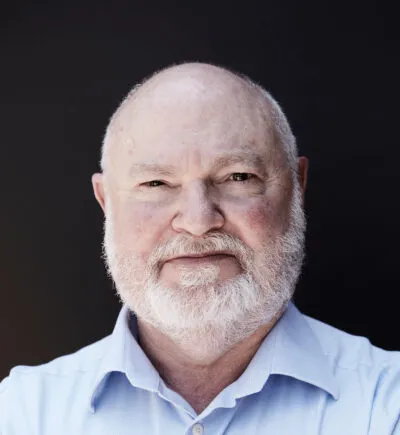
Professor
AI-generated biography
David Glanzman, Ph.D., is a Professor in the Department of Neurobiology at UCLA and a member of the Brain Research Institute. His research program is dedicated to unraveling the cellular and molecular underpinnings of learning and memory, with a particular focus on habituation and sensitization. Dr. Glanzman employs a comparative approach, investigating these fundamental processes in a range of model organisms, including marine molluscs such as Aplysia and octopus, as well as larval zebrafish.
His laboratory's work delves into the critical roles of nuclear mechanisms, protein synthesis, and DNA methylation in the consolidation and long-term maintenance of memories. Utilizing advanced in vivo imaging techniques, his research provides crucial insights into neural activity during learning. Dr. Glanzman's significant contributions to the field are evidenced by numerous high-impact publications and substantial grant funding from agencies including the National Institutes of Health and the National Science Foundation, supporting his investigations into synaptic plasticity, nuclear mechanisms in memory storage, and the evolution of behavior.
Source: Gemini AI · Updated 8 months ago
David Glanzman's research investigates the cellular and molecular mechanisms underlying fundamental forms of learning and memory, specifically habituation and sensitization. He employs a comparative approach, studying these processes in diverse model organisms including marine molluscs (Aplysia, octopus, ascidians) and larval zebrafish. His work specifically explores the roles of nuclear mechanisms, protein synthesis, and DNA methylation in memory consolidation and maintenance, often utilizing advanced in vivo imaging techniques to observe neural activity.
Research topics extracted by AI (Google Gemini) from this member’s publications.
39 publications · h-index 41 · PubMed, ORCID and the BRI profile
Showing 10 of 21
Roberts AC, Glanzman DL.
Glanzman DL.
Glanzman DL.
Pearce K, Cai D, Roberts AC, et al.
Cai D, Chen S, Glanzman DL.
Villareal G, Li Q, Cai D, et al.
Issa FA, O'Brien G, Kettunen P, et al.
Roberts AC, Pearce KC, Choe RC, et al.
Glanzman DL.
Glanzman DL.
$14.7M total · 15 NIH + NSF grants
Elucidation of RNA-Based Mechanisms of Long-Term Memory Storage (NSF award, opens in a new tab)
2050850PI02/01/2022–01/31/2026
Hebbian Long-Term Potentiation and Learning in Aplysia (NIH RePORTER, opens in a new tab)
R01NS029563Contact PI1992–2019
Plasticity of Long-Term Plasticity of a Single Sensorimotor Synapse (NSF award, opens in a new tab)
1258222PI06/01/2013–12/31/2019
Hebbian Long-Term Potentiation and Learning in Aplysia (NIH RePORTER, opens in a new tab)
R01NS029563Contact PIFY1992–2017
Mechanisms of Long-Term Memory Maintenance in Aplysia. (NIH RePORTER, opens in a new tab)
R01MH096120Contact PIFY2012–2016
Hebbian Long-Term Potentiation and Learning in Aplysia (NIH RePORTER, opens in a new tab)
R37NS029563Contact PIFY1992–2011
Training Program in Molecular and Cellular Neurobiology (NIH RePORTER, opens in a new tab)
T32MH019384Contact PIFY1995–2011
Cellular and Molecular Mechanisms of Learning in the Zebrafish (NIH RePORTER, opens in a new tab)
R21NS056143Contact PIFY2006–2007
Cellular and Molecular Basis of Long-Term Habituation (NIH RePORTER, opens in a new tab)
R01MH068543Contact PIFY2003–2007
Modulation of AMPA-Type Receptor Trafficking in Aplysia (NIH RePORTER, opens in a new tab)
K02MH067062Contact PIFY2002–2007
Elucidation of RNA-Based Mechanisms of Long-Term Memory Storage (NSF award, opens in a new tab)
2050850PI02/01/2022–01/31/2026
Plasticity of Long-Term Plasticity of a Single Sensorimotor Synapse (NSF award, opens in a new tab)
1258222PI06/01/2013–12/31/2019
1229739PI05/15/2012–04/30/2013
Neurobiology of Simple Forms of Learning in the Zebrafish (NSF award, opens in a new tab)
0923143PI08/01/2009–07/31/2012
Simple Forms of Learning and Memory in Zebrafish (NSF award, opens in a new tab)
0725372PI04/01/2008–03/31/2009
Homosynaptic Long-Term Depression: Mechanisms and Role in Learning (NSF award, opens in a new tab)
9808930PI08/01/1998–07/31/2003
Mechanisms of Hebbian Long-Term Potentiation and Learning (NSF award, opens in a new tab)
9410579PI09/01/1994–08/31/1997
Optical Studies of Synaptic Plasticity (NSF award, opens in a new tab)
9110597PI08/15/1991–07/31/1992
Institute members who share papers or grants with this researcher
AI-generated
Generated automatically from this profile's public data to suggest possibilities. Treat them as starting points rather than recommendations.
P01 - Research Program Project Grant
The researcher has multiple successful R01s focused on a cohesive theme (Hebbian LTP, learning, and memory maintenance in Aplysia). A P01 would allow them to lead a larger, highly integrated, and multidisciplinary program. This could involve several interconnected projects addressing different facets of their core research questions (e.g., molecular mechanisms, circuit dynamics, behavioral integration, computational modeling) under a unified scientific objective, potentially bringing in new collaborators and techniques to deepen the impact of their established Aplysia research program.
DP1 - NIH Director's Pioneer Award
This award targets exceptionally creative investigators proposing highly innovative approaches with the potential to transform a broad area of biomedical or behavioral science. Given the researcher's track record of sustained R01 funding in a foundational area like learning and memory, they may have a truly groundbreaking, high-risk, high-reward idea that doesn't fit the typical R01 incremental progression. A DP1 would provide substantial, flexible funding to pursue a truly pioneering conceptual or technological advance in the field of memory, leveraging their expertise in Aplysia.
RF1 - Multi-PI Research Project Grant
While the researcher successfully leads multiple R01s, an RF1 could be ideal for tackling a complex research problem that significantly benefits from the expertise of two or more Principal Investigators, each contributing distinct but complementary skills to a single, integrated project. For instance, they could collaborate intensely with a specialist in advanced electrophysiology, novel imaging techniques, or computational modeling, focusing on a specific, ambitious question in Aplysia that requires more integrated effort than separate R01s but is less extensive than a full P01.
 Kate WassumPsychologyFit 8/10
Their research areas are highly complementary, with Glanzman's focus on the cellular and molecular underpinnings of learning and memory mechanisms, and Wassum's expertise in the neurobiological circuits and neurochemistry (dopamine, opioids) driving reward-seeking and decision-making behaviors. Combining their strengths could provide a comprehensive understanding of how memory consolidation and retrieval are influenced by motivational and reward-related signals.
Project idea: They could investigate how dopaminergic and opioid signaling modulates the consolidation or retrieval of specific learned memories, bridging molecular memory mechanisms with reward-driven behavioral plasticity.
Their research areas are highly complementary, with Glanzman focusing on the molecular and cellular underpinnings of memory and Poe investigating the role of sleep in memory consolidation, creating a natural bridge between molecular mechanisms and systems-level processes.
Project idea: They could investigate how specific molecular mechanisms of synaptic plasticity and protein synthesis identified by Glanzman are modulated by sleep states and neural circuits regulated by Poe to consolidate long-term memories.
 Peyman GolshaniNeurologyFit 7/10
Their research complements each other by bridging molecular/cellular mechanisms of memory (Glanzman) with neural circuit and systems-level representations of memory and behavior (Golshani). Combining these could provide a more comprehensive understanding of memory, from its molecular underpinnings to its expression in behavior.
Project idea: They could investigate how nuclear mechanisms and protein synthesis involved in long-term memory consolidation (Glanzman) relate to the specific hippocampal and cortical neural sequences encoding working memory and social behavior (Golshani).
 Carlos Portera-CailliauNeurologyFit 7/10
Their research on synaptic plasticity, memory mechanisms, and circuit development in sensory systems, particularly when considering autism and neurodevelopmental disorders, shows strong potential for complementary investigation.
Project idea: They could investigate how molecular mechanisms of synaptic plasticity identified by Glanzman, such as protein synthesis and DNA methylation, contribute to altered sensory processing and network states observed in autism spectrum disorder models studied by Portera-Cailliau.
 Alicia IzquierdoPsychologyFit 7/10
There is strong potential for synergy as Glanzman's focus on cellular and molecular mechanisms of memory in invertebrates can inform Izquier's work on higher-level learning and decision-making in mammals, potentially bridging the gap between molecular underpinnings and complex cognitive functions.
Project idea: They could investigate how conserved molecular pathways of synaptic plasticity, identified by Glanzman, contribute to flexible learning and decision-making under uncertainty, as studied by Izquier, using a comparative approach from invertebrates to rodents.
 Thomas O’DellPhysiologyFit 7/10
Their research areas are highly complementary, with Glanzman's work on cellular and nuclear mechanisms of learning in invertebrates providing a foundational understanding that can be applied to O'Dell's focus on synaptic plasticity and NMDA receptor signaling in the hippocampus.
Project idea: They could collaborate to investigate how nuclear mechanisms identified by Glanzman contribute to the induction and maintenance of synaptic plasticity in the hippocampus, using O'Dell's expertise in this brain region and its molecular signaling.
Glanzman's focus on cellular and molecular mechanisms of learning and memory, particularly at the synaptic and nuclear levels, could be significantly advanced by Zipursky's expertise in neuronal wiring, circuit assembly, and the molecular basis of synaptic specificity.
Project idea: They could investigate how the specific neuronal connections and circuit architectures established through Zipursky's research are modulated by molecular mechanisms of synaptic plasticity and memory consolidation studied by Glanzman.
 Laura DeNardoPhysiologyFit 7/10
Laura DeNar's broad neuroscience research, while not detailed, likely involves physiological mechanisms that could be experimentally tested using the specific molecular and cellular models of learning and memory that David Glanzman excels in. Glanzman's expertise in synaptic plasticity, nuclear mechanisms, and protein synthesis in memory offers a fertile ground for DeNar to investigate the underlying physiological correlates.
Project idea: They could collaborate on a project investigating the physiological underpinnings of long-term memory consolidation in invertebrates, utilizing Glanzman's molecular expertise and DeNar's potential physiological measurement capabilities.
 Avishek AdhikariPsychologyFit 7/10
Avishek Adhikari's work on the neural circuits of defensive behaviors and fear, particularly involving the amygdala and hypothalamus, could be powerfully informed by David Glanzman's deep understanding of the cellular and molecular mechanisms underlying learning and memory, including synaptic plasticity and nuclear mechanisms.
Project idea: They could investigate how specific fear-related memories are encoded and maintained at a molecular level in the brain, potentially using a fear conditioning paradigm in vertebrates and examining the role of synaptic plasticity and protein synthesis in the relevant brain regions identified by Adhikari.
 Paul MathewsNeurologyFit 6/10
While their primary research areas differ (invertebrate learning vs. cerebellar motor control), both researchers investigate fundamental neural mechanisms of learning, memory, and synaptic plasticity, offering complementary perspectives on how these processes are encoded and maintained. Their expertise could bridge cellular and circuit-level understanding of memory.
Project idea: Investigating how cerebellar circuits involved in motor memory (Mathews) contribute to or are influenced by broader cellular mechanisms of long-term memory consolidation and protein synthesis (Glanzman) in a relevant model system.
 Ahmet AracNeurologyFit 6/10
Ahmet's work on motor control and neurorehabilitation, particularly using machine learning for movement analysis, could provide a sophisticated quantitative framework to investigate David's fundamental research into the cellular and molecular mechanisms of learning and memory, especially in the context of restoring learned motor skills after injury.
Project idea: They could collaborate on a project investigating how specific molecular pathways (studied by Glanzman) underpin the effectiveness of machine learning-driven neurorehabilitation techniques (developed by Arac) in stroke patients relearning motor tasks.
Their research areas are largely disparate, with Researcher A focusing on invertebrate learning mechanisms and Researcher B on vocal learning in birds and human health topics.
Project idea: There is no immediately obvious or compelling project that leverages complementary expertise from both researchers.
Shared papers, topics or department