Probing the dynamics of O-GlcNAc glycosylation in the brain using quantitative proteomics. (opens in a new tab)
Khidekel N, Ficarro SB, Clark PM, et al.
2007275 citationsRCR 5.6594th percentile

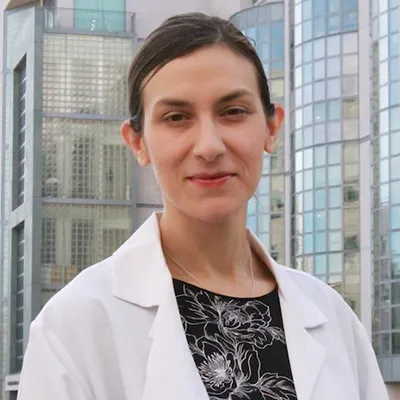
Assistant Professor
David Geffen School of Medicine
Metrics: Semantic Scholar · Updated 8 months ago
AI-generated biography
Jessica Rexach, M.D., Ph.D., is an Assistant Professor in the Department of Neurology at the David Geffen School of Medicine, University of California, Los Angeles, and a member of the Brain Research Institute. Her research program is dedicated to uncovering novel therapeutic targets for neurodegenerative diseases, with a particular focus on Alzheimer's and related dementias. Dr. Rexach integrates cutting-edge techniques such as single-cell transcriptomics, epigenomic profiling, human genetics, and stem cell-based models to investigate the intricate interplay between glial cells, immune factors, and disease pathology.
Her work has significantly advanced our understanding of neuroinflammation in dementia, the role of glial cell states in neurodegeneration, and the impact of O-GlcNAc glycosylation on neuronal function and memory. Notable publications from her laboratory have explored the dynamics of O-GlcNAc modification in the brain and its implications for neurodegenerative processes. Dr. Rexach also leads the UCLA Neurogenetics clinic, where she applies advanced genomics to the molecular diagnosis of adult-onset genetic neurological disorders. Her research is supported by substantial funding from the National Institutes of Health, enabling groundbreaking investigations into the mechanisms of neurodegenerative diseases and the development of innovative therapeutic strategies.
Source: Gemini AI · Updated 8 months ago
New therapeutic targets are needed for neurodegenerative disease including Alzheimer’s and related dementias. The immune system includes many of the most successful therapeutic targets in medicine. My research lab seeks to uncover mechanism by which glia and immune factors influence disease pathology in dementia to inform novel therapeutic strategies. We integrate single cell and tissue transcriptomics, epigenetic profiling, human genetics, and stem cell-based experimental models to identify neuroimmune regulators of dementia. A major focus of our current work is the interplay of glial immune signaling and neuronal dysfunction in dementia, including the role of interferon-mediated immune suppression in disease pathology.
In addition to this basic research, I am an attending at the UCLA Neurogenetics clinic where we apply advanced genomics technologies to the molecular diagnosis of adult-onset genetic diseases, including inherited neurodegenerative disorders.
Jessica Rexach investigates the cellular and molecular mechanisms of neurodegenerative diseases, including Alzheimer's, ALS, and various dementias. Their research extensively utilizes single-cell genomics and epigenomics to identify disease-associated glia and immune cell states, elucidating how genetic risk factors drive neuroinflammation and dysfunctional pathways in the brain. This work aims to uncover both shared and disease-specific pathways to better understand disease progression and identify potential therapeutic targets.
Research topics extracted by AI (Google Gemini) from this member’s publications.
32 publications · h-index 19 · PubMed, ORCID and the BRI profile
Showing 10 of 32
Khidekel N, Ficarro SB, Clark PM, et al.
Rexach JE, Clark PM, Mason DE, et al.
Wang AC, Jensen EH, Rexach JE, et al.
Li J, Pan L, Pembroke WG, et al.
Rexach JE, Rogers CJ, Yu SH, et al.
Rexach JE, Clark PM, Hsieh-Wilson LC.
Lall D, Lorenzini I, Mota TA, et al.
Swarup V, Hinz FI, Rexach JE, et al.
Rexach J, Lee H, Martinez-Agosto JA, et al.
Rexach JE, Polioudakis D, Yin A, et al.
$5.4M total · 5 NIH grants · 2 active
R01AG100878Contact PI2026–2031
RF1NS144499Contact PI2025–2029
R01AG100878Contact PIFY2026
RF1NS144499Contact PIFY2025
R21AG091113Contact PIFY2024
K08NS105916Contact PIFY2019–2023
The story of methyl-CpG binding protein 2 glycosylation (NIH RePORTER, opens in a new tab)
F31NS056525Contact PIFY2006–2009
Institute members who share papers or grants with this researcher









AI-generated
Generated automatically from this profile's public data to suggest possibilities. Treat them as starting points rather than recommendations.
R01 (Research Project Grant)
The researcher has a strong foundation of preliminary data and established methodologies from their existing R21 (exploring tau pathology and microglial modulation), K08 (astrocyte mechanisms in tauopathy), and RF1 (hippocampal assembloids for dementia modeling) grants. An R01 is the cornerstone of NIH funding for independent investigators and would allow them to pursue in-depth, hypothesis-driven research on specific molecular and cellular mechanisms identified in their earlier work, for example, a detailed investigation into specific astrocyte-microglia-neuron circuit interactions in genetically-encoded dementia or tauopathy using their advanced iPSC assembloid models.
P01 (Research Program Project Grant)
The researcher's portfolio demonstrates expertise across several related areas: interneuron vulnerability, microglial modulation, and astrocyte-related mechanisms, all studied within the context of dementia and tauopathy using iPSC-derived hippocampal assembloids. A P01 would be an excellent fit to integrate these diverse but thematically linked research lines into a cohesive, multi-project program. This mechanism is ideal for consolidating their expertise in different cell types and their interactions within their advanced model systems to address a broader, overarching question in neurodegeneration, leveraging the experience gained from managing multi-component research (implied by the RF1).
U01 (Research Project Cooperative Agreement)
Given the researcher's robust development and application of iPSC-derived assembloids (as highlighted by the RF1 and R21), there's a strong potential for these models to serve as critical resources or platforms for broader scientific endeavors. A U01, a cooperative agreement, would be suitable for larger-scale projects involving significant collaboration, standardization, or resource development with NIH involvement. This could include developing a standardized assembloid platform for drug screening in dementia/tauopathy, participating in a consortium aimed at validating novel biomarkers, or contributing their models to a larger initiative focused on understanding circuit vulnerability or glial dysfunction across various neurodegenerative diseases.
Shared papers, topics or department