Voltage-dependent anion channels (VDACs) recruit Parkin to defective mitochondria to promote mitochondrial autophagy. (opens in a new tab)
Sun Y, Vashisht AA, Tchieu J, et al.
Assistant Professor
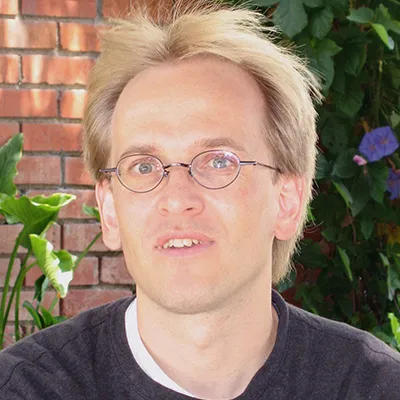
Dr. Lars Dreier joined the Department of Neurobiology as an Assistant Professor in 2006. Lars did his Ph.D. work in the Department of Cell Biology, Harvard Medical School, Boston, in the lab of Tom Rapoport, reconstituting the transport of secretory proteins through the Endoplasmic Reticulum (ER) membrane and characterizing the formation of the ER in vitro. In 2000, he joined the lab of Josh Kaplan at the University of California, Berkeley, where he started to work on ubiquitin-dependent regulation of glutamate receptors in C. elegans . Lars moved with the Kaplan lab back to Boston in 2002.

Source: BRI Website · Updated 8 months ago
Lars Dreier's research investigates the cellular mechanisms of mitochondrial quality control, specifically focusing on how defective mitochondria are identified and removed. Their work reveals that Voltage-dependent anion channels (VDACs) play a crucial role by recruiting the protein Parkin to damaged mitochondria. This recruitment is a key step in initiating mitochondrial autophagy (mitophagy), the essential process that selectively degrades and recycles dysfunctional mitochondria.
Research topics extracted by AI (Google Gemini) from this member’s publications.
7 publications · PubMed, ORCID and the BRI profile
Sun Y, Vashisht AA, Tchieu J, et al.
$429K total · 1 NIH grant
R21HD094172Co-PI2018–2020
R21HD094172Co-PIFY2018–2019
Institute members who share papers or grants with this researcher
AI-generated
Generated automatically from this profile's public data to suggest possibilities. Treat them as starting points rather than recommendations.
R01 (Research Project Grant)
The R01 is the flagship NIH funding mechanism and the logical next step for a researcher who has successfully generated preliminary data through R21 grants. This mechanism allows for a substantial expansion of the current research on E3-ligase APC/C and ubiquitination in X-inactivation, enabling a comprehensive, hypothesis-driven investigation with a longer duration and larger budget. An R01 proposal would be crucial for establishing the specific roles of these mechanisms and exploring their broader implications, especially how X-inactivation processes impact neuronal development, function, or contribute to neurological disorders, thereby directly addressing neuroscience-specific questions.
DP2 (NIH Director's New Innovator Award)
Assuming the researcher is an Early Stage Investigator (a common profile for those with R21 grants), the DP2 supports unusually innovative research from new investigators. If their ongoing work or a new tangent offers a truly novel, high-risk/high-reward approach to understanding X-inactivation's role in the brain, or developing groundbreaking tools to study these molecular mechanisms within a neurological context, the DP2 would provide substantial, flexible funding. This could enable a transformative project that significantly advances our understanding of sex-specific neurological mechanisms or disease etiology.
R21 (Exploratory/Developmental Research Grant) for a new direction
While the researcher already holds two R21s, this mechanism remains highly valuable for piloting entirely *new*, distinct exploratory projects or developing novel methodologies that branch off their core expertise. For instance, they could propose a new R21 to investigate a completely different aspect of APC/C function in a specific neuronal population, explore the epigenetic consequences of aberrant X-inactivation in an *in vivo* model of a neurological disease, or develop cutting-edge technologies to visualize ubiquitination dynamics in the brain. This mechanism allows for continuous agility in exploring innovative, higher-risk ideas without requiring the extensive preliminary data often expected for an R01 in a new area.
Shared papers, topics or department