A role for BMP heterodimers in roof plate-mediated repulsion of commissural axons. (opens in a new tab)
Butler SJ, Dodd J.
2003217 citationsRCR 3.3286th percentile

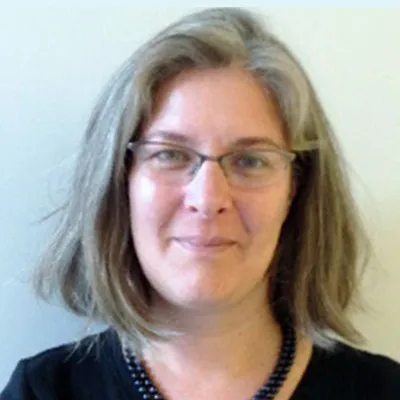
Associate Professor
AI-generated biography
Samantha Butler, Ph.D., is a Professor in the Department of Neurobiology at the UCLA Geffen School of Medicine and a faculty member of the Brain Research Institute. Her research focuses on understanding the molecular and cellular mechanisms that control neural development, particularly within the dorsal spinal cord. Dr. Butler's laboratory investigates how signaling pathways such as Netrin1, BMP, and Wnt orchestrate the differentiation of neural progenitors into specific interneuron subtypes and guide the precise pathfinding of developing axons.
Her significant contributions include elucidating the roles of BMP heterodimers and BMP type I receptor complexes in mediating cell fate decisions and axon guidance in the developing spinal cord. Dr. Butler has also explored the function of the Cofilin/Limk1 pathway in motor axon growth and regeneration. Her work has been supported by multiple NIH grants, including those focused on assessing mechanisms directing cell fate in the dorsal spinal cord and the contact-mediated role of Netrin1 in axon guidance. Her research, often utilizing human and mouse pluripotent stem cell models, has led to high-impact publications that have significantly advanced our understanding of neural circuit formation and intellectual and developmental disabilities.
Source: Gemini AI · Updated 8 months ago
Samantha Butler's research elucidates the molecular and cellular mechanisms governing spinal cord development and patterning. Her work specifically investigates how key signaling pathways, including Netrin1, BMP, and Wnt, regulate the differentiation of neural progenitors into dorsal spinal interneurons and precisely guide axon growth. This research often employs stem cell models to uncover fundamental principles of neural circuit formation.
Research topics extracted by AI (Google Gemini) from this member’s publications.
30 publications · h-index 21 · PubMed, ORCID and the BRI profile
Showing 10 of 30
Butler SJ, Dodd J.
Varadarajan SG, Kong JH, Phan KD, et al.
Lisanti AJ, Vittner D, Medoff-Cooper B, et al.
Butler SJ, Bronner ME.
Butler SJ, Tear G.
Andrews MG, Kong J, Novitch BG, et al.
Yamauchi K, Phan KD, Butler SJ.
Phan KD, Hazen VM, Frendo M, et al.
Gaber ZB, Butler SJ, Novitch BG.
Gupta S, Sivalingam D, Hain S, et al.
$8.4M total · 6 NIH grants · 2 active
UCLA IDDRC: Structural and Functional Visualization Core (NIH RePORTER, opens in a new tab)
P50HD103557Contact PI2020–2027
R01NS123187Contact PI2022–2027
UCLA IDDRC: Structural and Functional Visualization Core (NIH RePORTER, opens in a new tab)
P50HD103557Contact PIFY2020–2026
R01NS123187Contact PIFY2022–2026
Assessing the contact-mediated role of netrin1 in axon guidance (NIH RePORTER, opens in a new tab)
R01NS107509Contact PIFY2019–2023
Functional Visual Core (Core D) (NIH RePORTER, opens in a new tab)
U54HD087101Contact PIFY2016–2020
R01NS085097Contact PIFY2014–2018
Regulation of axonal outgrowth in the developing spinal cord (NIH RePORTER, opens in a new tab)
R01NS063999Contact PIFY2008–2014
Institute members who share papers or grants with this researcher



AI-generated
Generated automatically from this profile's public data to suggest possibilities. Treat them as starting points rather than recommendations.
P01 (Program Project Grant)
With multiple R01s in fundamental neuroscience areas (cell fate, axon guidance, spinal cord development) and involvement in a P50 center grant (IDDRC), this researcher is well-positioned to lead a P01. This mechanism supports a multidisciplinary, integrated research program composed of several highly synergistic projects and often includes shared core resources. It's ideal for a comprehensive attack on a complex scientific problem that is beyond the scope of individual R01s, leveraging their established expertise and collaborative experience, potentially integrating their basic science with the mission of the IDDRC.
R21 (Exploratory/Developmental Research Grant)
Even established researchers often have innovative, high-risk, high-reward ideas that are too early-stage or lack sufficient preliminary data for an R01. An R21 would allow this investigator to test novel hypotheses, develop cutting-edge methodologies (perhaps building on their 'Structural and Functional Visualization Core' expertise), or explore a nascent research direction without requiring extensive preliminary data. This fosters innovation and could lead to new paradigms in developmental neurobiology or neurodevelopmental disorders.
U01 (Research Project Cooperative Agreement)
Given their involvement in the P50 UCLA IDDRC (Intellectual and Developmental Disabilities Research Center), a U01 would be a strong consideration. This mechanism supports discrete, circumscribed projects that require substantial programmatic staff involvement from NIH, often for large-scale, collaborative, and sometimes multi-site research efforts. This could be an excellent avenue for leading a coordinated effort to address specific IDD research gaps, applying their expertise in cell fate, axon guidance, and advanced visualization to a broader, potentially more translational problem in neurodevelopmental disorders, possibly as part of a larger NIH initiative or consortium.
 Ranmal SamarasingheNeurologyFit 8/10
Their research areas strongly complement each other, with Butler's focus on neural progenitor differentiation and Samarasignhe's work on human brain organoids and neurogenesis in the context of epilepsy and TBI.
Project idea: They could investigate how specific neural progenitor differentiation pathways influenced by external factors (like glucocorticoids or TBI-related signaling) contribute to network dysfunction in human brain organoids modeling epilepsy or TBI.
 Laura DeNardoPhysiologyFit 7/10
While their direct research topics appear broad, Butler's expertise in neural progenitor cell differentiation and Netrin1 patterning provides a specific cellular and molecular focus that could be investigated from a physiological perspective by DeNar.
Project idea: They could collaborate on a study investigating the physiological consequences of specific Netrin1-mediated dorsal spinal interneuron differentiation patterns on neuronal function and circuit activity.
Samantha's work on progenitor cell differentiation and neural development complements Luis's expertise in gene co-expression networks and neuronal diversity, allowing for a deeper understanding of the regulatory mechanisms underlying neuronal evolution and function.
Project idea: They could jointly investigate the gene regulatory networks controlling specific neuronal subtype differentiation in spinal interneurons, linking developmental processes to evolutionary patterns of neuronal diversity.
 Greg FieldOphthalmologyFit 7/10
Samantha's expertise in neural progenitor cell differentiation and Greg's focus on retinal ganglion cell function and degeneration present a strong complementary connection, particularly in understanding neurodevelopment and repair mechanisms in the visual system.
Project idea: They could collaborate on a project investigating the differentiation of retinal ganglion cells from neural progenitors to understand the mechanisms underlying their development and how these processes might be leveraged to address retinal degeneration.
 Neil HarrisNeurosurgeryFit 7/10
Their research areas complement each other by linking fundamental neural development with injury-induced pathologies, potentially bridging understanding from basic cell processes to clinical outcomes.
Project idea: They could investigate how early disruptions in neural progenitor cell differentiation, as studied by Dr. Butler, might contribute to altered neuronal network formation and subsequent epilepsy development after traumatic brain injury, as studied by Dr. Harris.
Their research areas are highly complementary, with Butler's focus on neural progenitor cell differentiation providing a foundation for understanding the developmental origins of neural circuits studied by Hoftman, particularly in the context of psychiatric disorders.
Project idea: They could investigate how specific genetic or environmental factors influencing neural progenitor cell differentiation (Butler) impact the development of prefrontal cortex neural circuits implicated in schizophrenia or autism spectrum disorders (Hoftman).
 Carlos Portera-CailliauNeurologyFit 7/10
Butler's focus on neural progenitor cell differentiation and developmental patterning directly complements Portera-Cailliau's work on cortical circuit development and plasticity, offering a developmental foundation for his circuit-level investigations.
Project idea: They could investigate how specific neural progenitor cell differentiation pathways influenced by Butler's work contribute to the development of sensory circuits and their plasticity in the somatosensory cortex, as studied by Portera-Cailliau, potentially informing insights into disorders like autism spectrum disorder.
Samantha's expertise in neural progenitor cell differentiation and neuronal development strongly complements Xiangdong's research on autism spectrum disorder genetics, TBI mechanisms, and neuronal repair by glial cells. This pairing offers significant potential for investigating the developmental origins of neurological disorders and the mechanisms of neural repair.
Project idea: They could collaborate on a project using pluripotent stem cells to model neurodevelopmental deficits associated with autism or TBI, investigating how genetic factors identified by Xiangdong influence progenitor cell differentiation pathways studied by Samantha, and then explore glial cell-mediated repair strategies.
 William ZeigerNeurologyFit 7/10
Samantha's expertise in neural progenitor cell differentiation and circuit development complements William's research on circuit mechanisms in neurological disorders and neural plasticity, offering a unique opportunity to study how developmental processes influence disease pathology.
Project idea: They could investigate how disruptions in neural progenitor cell differentiation, studied by Samantha, contribute to circuit abnormalities observed in autism spectrum disorder, stroke recovery, or Parkinson's disease, as investigated by William.
Samantha's expertise in neural progenitor cell differentiation and Ye's knowledge of epigenetic regulation of gene expression offer a strong complementary pairing, potentially allowing them to investigate the epigenetic mechanisms governing neuronal development.
Project idea: They could investigate how specific epigenetic modifications influence the differentiation of dorsal spinal sensory interneurons in vitro or in vivo.
While their specific research topics differ (cell differentiation vs. broader neuroscience), Butler's expertise in neural progenitor cell differentiation could provide a cellular and developmental foundation for Chandler's broader neuroscience investigations.
Project idea: Chandler could investigate the functional roles of specific interneurons, whose development and patterning are studied by Butler, in relevant neural circuits.
While their core research areas are distinct, Poe's work on sleep-dependent memory consolidation in the hippocampus and cortex could potentially be influenced by the neural progenitor cell differentiation work of Butler, particularly if progenitor cells differentiate into neurons involved in these circuits.
Project idea: Investigating if and how the differentiation of specific neural progenitor cells studied by Butler is modulated by sleep states investigated by Poe.
 Ahmet AracNeurologyFit 4/10
Their research areas are complementary, with Ahmet focusing on motor control and rehabilitation at a systems/behavioral level and Samantha focusing on cellular and molecular mechanisms of neural development. While not directly overlapping, a bridge could be formed.
Project idea: Investigating how early neural progenitor cell differentiation (Samantha's work) might influence motor control recovery after stroke (Ahmet's work) by using machine learning to analyze subtle motor changes in models relevant to Samantha's research.
The research areas of Samantha Butler (neurobiology of progenitor cell differentiation) and Stephanie White (vocal learning, neural basis of speech) are too disparate, with no clear overlap or complementary connection.
Project idea: There is no readily apparent project idea that combines their current research interests effectively.
Shared papers, topics or department