A bivalent chromatin structure marks key developmental genes in embryonic stem cells. (opens in a new tab)
Bernstein BE, Mikkelsen TS, Xie X, et al.
20064,155 citationsRCR 71.3199th percentile

AI-generated biography
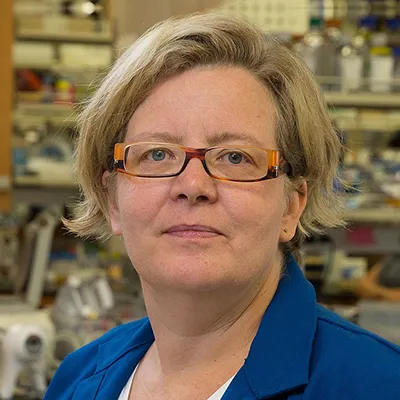
Kathrin Plath, Ph.D., is a Professor and Vice Chair in the Department of Biological Chemistry at the David Geffen School of Medicine, University of California, Los Angeles. Her research program is dedicated to unraveling the intricate molecular mechanisms governing X-chromosome inactivation, with a particular focus on the critical roles of XIST RNA and three-dimensional genome architecture in regulating gene dosage in mammalian cells. Dr. Plath's laboratory also conducts extensive investigations into human pluripotent stem cell biology, exploring the regulation of pluripotency, the fate diversification of embryonic progenitor cells, and their differentiation into various lineages such as germ cells and neurons. Her contributions to the field are marked by high-impact publications, including seminal works on bivalent chromatin structures in embryonic stem cells and the function of Polycomb complexes. She has also been awarded significant funding from the National Institutes of Health for her groundbreaking research.
Source: Gemini AI · Updated 8 months ago
Kathrin Plath's research program primarily dissects the molecular mechanisms of X-chromosome inactivation, including the critical roles of XIST RNA and chromosome architecture in regulating gene dosage in mammalian cells. Her work also extensively explores human pluripotent stem cell biology, investigating the regulation of pluripotency, the fate diversification of embryonic progenitor cells, and their differentiation into various lineages like germ cells, neurons, and organoids, often employing advanced single-cell analysis technologies to gain precise insights.
Research topics extracted by AI (Google Gemini) from this member’s publications.
134 publications · h-index 72 · PubMed, ORCID and the BRI profile
Showing 10 of 134
Bernstein BE, Mikkelsen TS, Xie X, et al.
Boyer LA, Plath K, Zeitlinger J, et al.
Maherali N, Sridharan R, Xie W, et al.
Lowry WE, Richter L, Yachechko R, et al.
Plath K, Fang J, Mlynarczyk-Evans SK, et al.
McHugh CA, Chen CK, Chow A, et al.
Engreitz JM, Pandya-Jones A, McDonel P, et al.
Chin MH, Mason MJ, Xie W, et al.
Mayshar Y, Ben-David U, Lavon N, et al.
Chronis C, Fiziev P, Papp B, et al.
$34.9M total · 14 NIH grants · 6 active
R01HD115349Contact PI2024–2029
Epigenomics, RNA, and Gene Regulation (ERGR) (NIH RePORTER, opens in a new tab)
P30CA016042Contact PI1996–2030
U01HG012079Co-PI2021–2027
Mechanisms of Xist-Mediated T cell Autoimmunity (NIH RePORTER, opens in a new tab)
R01AI200375Co-PI2026–2031
U01HL175451Co-PI2024–2029
Understanding the cellular time machine that enables rejuvenation (NIH RePORTER, opens in a new tab)
R21AG092008Contact PI2024–2026
R01HD115349Contact PIFY2024–2026
Epigenomics, RNA, and Gene Regulation (ERGR) (NIH RePORTER, opens in a new tab)
P30CA016042Contact PIFY1996–2026
U01HG012079Co-PIFY2021–2026
Mechanisms of Xist-Mediated T cell Autoimmunity (NIH RePORTER, opens in a new tab)
R01AI200375Co-PIFY2026
U01HL175451Co-PIFY2024–2026
UH2CA286583Co-PIFY2024–2025
Understanding the cellular time machine that enables rejuvenation (NIH RePORTER, opens in a new tab)
R21AG092008Contact PIFY2024–2025
Epigenetic control of the human X chromosome (NIH RePORTER, opens in a new tab)
R01HD098387Contact PIFY2019–2023
Reprogramming Genetic Networks to a Pluripotent State (NIH RePORTER, opens in a new tab)
P01GM099134Contact PIFY2011–2021
R01MH109166Co-PIFY2016–2020
R21HD094172Contact PIFY2018–2019
R01GM115233Contact PIFY2015–2018
Computational and Bioinformatics Analysis Core (NIH RePORTER, opens in a new tab)
P01GM081621Contact PIFY2008–2012
Chromatin and Epigenetic Inheritance (NIH RePORTER, opens in a new tab)
DP2OD001686Contact PIFY2007
Institute members who share papers or grants with this researcher









AI-generated
Generated automatically from this profile's public data to suggest possibilities. Treat them as starting points rather than recommendations.
R01 (Research Project Grant)
This researcher already holds an R01, which is the foundational NIH mechanism for investigator-initiated research. Given their expertise in epigenetics, gene regulation, and cellular mechanisms, a new R01 would allow them to pursue independent, well-defined projects. This could involve applying their core expertise to specific neuroscience questions, such as the epigenetic drivers of neural plasticity, gene regulatory networks in neurodevelopmental disorders, or the metabolic regulation of neuronal function, building on their existing diverse portfolio.
P01 (Research Program Project Grant)
The researcher's involvement in a P30 (Center Core Grant) and a U01 (Cooperative Agreement) demonstrates significant experience in leading and collaborating on large-scale, multi-investigator, and programmatic research. A P01 supports a group of highly meritorious, interrelated research projects that share a common theme and overall objective. This mechanism would enable them to lead a comprehensive program integrating several distinct but synergistic projects focused on a broad neuroscience challenge, for example, 'Epigenetic Regulation of Brain Development and Neurodegenerative Disease' or 'Gene Regulatory Networks in Neural Stem Cell Reprogramming and Repair'.
DP1 (NIH Director's Pioneer Award)
The researcher's current R21, 'Understanding the cellular time machine that enables rejuvenation,' indicates a clear interest in high-risk, high-reward, and potentially transformative research. The DP1 specifically targets exceptionally innovative research from established investigators who are pioneering new directions or developing groundbreaking approaches. This mechanism would provide substantial, flexible funding to pursue a truly novel and high-impact vision, leveraging their deep expertise in epigenetics, gene regulation, and cellular plasticity to address a major challenge in neuroscience in an unconventional and potentially revolutionary way.
Shared papers, topics or department