
Saliency, switching, attention and control: a network model of insula function. (opens in a new tab)
Menon V, Uddin LQ.
20104,149 citationsRCR 127.4899th percentile

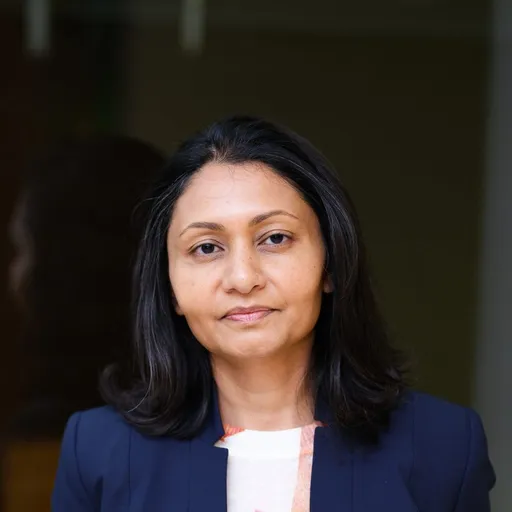
Professor
David Geffen School of Medicine
Metrics: Semantic Scholar · Updated 8 months ago
AI-generated biography
Lucina Uddin, Ph.D., is a Professor in the Department of Psychiatry & Biobehavioral Sciences at the David Geffen School of Medicine, University of California, Los Angeles. Her research program is dedicated to understanding human brain organization and dynamics through advanced computational and systems neuroscience approaches, with a particular focus on neuroimaging. Dr. Uddin's work extensively utilizes resting-state functional magnetic resonance imaging (fMRI) and electrophysiology to investigate developmental brain connectivity, including the dynamics of the default mode network and the function of the insula in executive control.
A significant portion of her research is dedicated to identifying neurobiological underpinnings and transdiagnostic biomarkers for psychiatric and neurodevelopmental conditions, notably autism spectrum disorder and psychopathology. Dr. Uddin has also made notable contributions to the development of robust neuroimaging data analysis platforms and tools, enhancing the rigor of research in the field. Her influential publications have garnered substantial citations, highlighting the impact of her investigations into brain networks, self-recognition circuits, and hemispheric specialization. She has also secured significant funding from the National Institutes of Health for her longitudinal studies on bilingualism, executive function, and brain organization in children with autism.
Source: Gemini AI · Updated 8 months ago
Lucina Uddin's research leverages advanced neuroimaging techniques, particularly resting-state fMRI and functional connectivity, to investigate human brain organization and dynamics. Her work extensively explores typical and atypical brain development, aiming to identify neurobiological underpinnings and transdiagnostic markers for psychiatric and neurodevelopmental conditions such as psychosis and autism spectrum disorder. She also contributes to developing robust neuroimaging analysis methods and tools to enhance research rigor.
Research topics extracted by AI (Google Gemini) from this member’s publications.
Papers by NIH iCite research category (3 of 215 papers classified) · trials from ClinicalTrials.gov · patents from USPTO.
215 publications · h-index 87 · PubMed, ORCID and the BRI profile
Showing 10 of 215
Menon V, Uddin LQ.
Di Martino A, Yan CG, Li Q, et al.
Uddin LQ.
Kelly AM, Uddin LQ, Biswal BB, et al.
Di Martino A, Scheres A, Margulies DS, et al.
Uddin LQ, Nomi JS, Hébert-Seropian B, et al.
Uddin LQ, Kelly AM, Biswal BB, et al.
Margulies DS, Vincent JL, Kelly C, et al.
Shehzad Z, Kelly AM, Reiss PT, et al.
Castellanos FX, Margulies DS, Kelly C, et al.
$1.7M total · 2 NIH grants · 1 active
R01HD116691Contact PI2025–2029
R01HD116691Contact PIFY2025–2026
R21HD111805Contact PIFY2023
Institute members who share papers or grants with this researcher









AI-generated
Generated automatically from this profile's public data to suggest possibilities. Treat them as starting points rather than recommendations.
R01 (Research Project Grant)
The researcher has a strong track record of securing and successfully executing R01s in their specific area of expertise. A new R01 would allow them to pursue a logical expansion of their current research, perhaps exploring new facets (e.g., different age groups, advanced neuroimaging techniques, genetic interactions, or early-stage translational work based on their longitudinal findings) within their established theme of bilingualism, executive function, and brain organization in autism.
P01 (Program Project Grant)
With two existing R01s focused on a highly similar research theme (bilingualism, executive function, brain organization in autism), the researcher demonstrates a strong, coherent programmatic area. A P01 would enable them to assemble a team and integrate multiple, distinct but synergistic research projects under a common scientific goal, addressing complex questions in a more comprehensive and collaborative manner than individual R01s allow. This could also involve leveraging their existing longitudinal cohorts for new, related investigations.
R34 (Clinical Trial Planning Grant)
Their longitudinal and exploratory investigations into bilingualism and executive function in autism likely yield insights into potential mechanisms and protective/risk factors. An R34 would allow them to translate these findings by developing a robust protocol and gathering feasibility data for a future clinical trial. This could involve an intervention focused on leveraging bilingualism or targeting executive function deficits in individuals with autism, moving their work towards direct clinical impact.
 Bridget CallaghanPsychologyFit 8/10
Their research areas complement each other significantly, with Callaghan's focus on the gut-brain axis and interoception in pregnancy and maternal adversity aligning well with Uddin's expertise in developmental brain connectivity, psychopathology biomarkers, and self-recognition circuits.
Project idea: They could investigate how maternal adversity and its impact on the gut-brain axis during pregnancy influence the development of neural circuits related to interoception and self-recognition in offspring, potentially identifying early biomarkers for neurodevelopmental disorders.
Researcher A's expertise in wireless neural stimulation systems could be used to modulate brain activity in specific circuits relevant to the neurodevelopmental and psychopathological conditions studied by Researcher B. This offers a powerful experimental approach to test hypotheses generated from Researcher B's neuroimaging work.
Project idea: They could collaborate on a study using Researcher A's wireless vagus nerve stimulation to investigate its effects on default mode network dynamics and executive control in individuals with autism spectrum disorder or 22q11.2 deletion syndrome, informed by Researcher B's neuroimaging expertise.
 Neil HarrisNeurosurgeryFit 7/10
There is strong complementary potential as Harris's focus on TBI pathogenesis and epilepsy biomarkers could be significantly enhanced by Uddin's expertise in developmental brain connectivity, autism spectrum disorder neuroimaging, and psychopathology transdiagnostic biomarkers.
Project idea: They could investigate how early life brain connectivity alterations (Uddin's area) influence the development of epilepsy and other psychopathologies following TBI (Harris's area), potentially identifying novel biomarkers and therapeutic targets.
 Jennifer SilversPsychologyFit 7/10
The researchers' expertise in adolescent neurodevelopment and emotion regulation (Silvers) nicely complements Uddin's focus on developmental brain connectivity and psychopathology biomarkers. Combining their knowledge could provide novel insights into the neural underpinnings of emotion dysregulation in developmental disorders.
Project idea: Investigating how altered developmental brain connectivity patterns (Uddin) are associated with specific difficulties in emotion regulation in youth with and without neurodevelopmental conditions (Silvers).
 Ausaf BariNeurosurgeryFit 7/10
Researcher A's broad neurosurgery and neuroscience expertise, especially in surgical interventions or basic neuroscience, could inform and provide a clinical or biological foundation for Researcher B's advanced neuroimaging studies on developmental brain connectivity and neurodevelopmental disorders. This pairing offers a strong translational potential.
Project idea: They could investigate the neural connectivity and potential biomarkers for surgical outcomes in patients with specific neurodevelopmental conditions like 22q11.2 deletion syndrome, combining neurosurgical insights with detailed functional connectivity analysis.
Their research areas complement each other well, with Cross focusing on motor control and movement disorders, and Uddin on developmental brain connectivity and psychopathology, creating opportunities for interdisciplinary studies.
Project idea: They could investigate the neural connectivity underpinnings of motor control deficits in individuals with autism spectrum disorder or 22q11.2 deletion syndrome, potentially informing novel therapeutic approaches for movement impairments in these populations.
 Arpana GuptaMedicineFit 7/10
Their research areas complement each other, with Gupta's focus on the gut-brain axis in IBS and Uddin's expertise in brain connectivity and neurodevelopmental disorders offering a unique intersection.
Project idea: They could investigate how gut microbiome alterations in individuals with IBS, influenced by the gut-brain axis, manifest in altered brain connectivity patterns relevant to psychopathology or neurodevelopmental conditions.
 Keith HolyoakPsychologyFit 7/10
Holyoak's work on analogical reasoning and cognitive processes could be deeply enriched by Uddin's expertise in neuroimaging and brain connectivity, particularly in understanding the neural underpinnings of complex cognitive functions. Combining their strengths could illuminate how brain networks support abstract thought and decision-making in conditions like ASD.
Project idea: Investigate the neural correlates of analogical reasoning deficits in individuals with autism spectrum disorder using fMRI during analogical reasoning tasks, integrating Holyoak's cognitive paradigms with Uddin's connectivity analyses.
 Martin MontiNeurosurgeryFit 7/10
Monti's work on consciousness disorders and neuromodulation could be significantly enhanced by Uddin's expertise in developmental brain connectivity and psychopathology biomarkers, particularly in understanding how disruptions in these networks relate to altered states of consciousness.
Project idea: They could investigate how focused ultrasound or other neuromodulation techniques might modulate resting-state functional connectivity and default mode network dynamics in individuals with disorders of consciousness, seeking to identify potential biomarkers for recovery.
 Avishek AdhikariPsychologyFit 7/10
Avishek's focus on the neural circuits of defensive behaviors and Lucina's expertise in brain connectivity and psychopathology offer strong complementary avenues for exploring the neurobiological underpinnings of anxiety disorders.
Project idea: They could investigate how disruptions in brain connectivity, particularly in networks involving the amygdala and periaqueductal gray, contribute to abnormal learned fear responses in individuals with conditions like autism spectrum disorder or 22q11.2 deletion syndrome.
Shared papers, topics or department