The molecular tweezer CLR01 inhibits aberrant superoxide dismutase 1 (SOD1) self-assembly in vitro and in the G93A-SOD1 mouse model of ALS. (opens in a new tab)
Malik R, Meng H, Wongkongkathep P, et al.
AI-generated biography
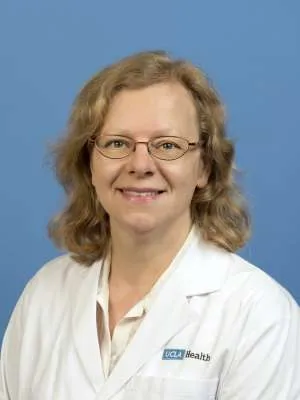
Martina Wiedau, M.D., is a Professor in the Department of Clinical Health Sciences and the Department of Neurology at the David Geffen School of Medicine, University of California, Los Angeles. Her research at the UCLA Brain Research Institute is dedicated to understanding the fundamental mechanisms of intellectual and developmental disabilities, with a particular focus on neural development, degeneration, and repair.
Dr. Wiedau's laboratory investigates the pathogenesis of neurodegenerative diseases, notably Amyotrophic Lateral Sclerosis (ALS). Her work utilizes the SOD1(G93A) mouse model to explore early motor neuron deficits, including alterations in GABAergic inhibition and calcium channel function, which are critical contributors to disease progression. A significant area of her research involves the development of novel therapeutic strategies, such as compounds designed to inhibit the pathological self-assembly of the SOD1 protein. Her contributions to the field are supported by multiple NIH grants, including significant funding for projects investigating GSK-3beta and beta-Catenin in frontotemporal dementia. Dr. Wiedau's impactful research has garnered substantial recognition, evidenced by her h-index of 28 and over 4,600 citations.

Source: Gemini AI · Updated 8 months ago
Martina Wiedau's research investigates the molecular and cellular mechanisms underlying Amyotrophic Lateral Sclerosis (ALS), primarily using the SOD1(G93A) mouse model. Their work explores early neurological deficits in motor neurons, such as altered GABA inhibition and calcium currents, which contribute to disease pathology. Additionally, the research focuses on developing therapeutic strategies, including compounds that inhibit the aberrant self-assembly of SOD1 protein, a key pathological feature in ALS.
Research topics extracted by AI (Google Gemini) from this member’s publications.
2 publications · h-index 30 · PubMed, ORCID and the BRI profile
Malik R, Meng H, Wongkongkathep P, et al.
Venugopal S, Ghulam-Jhelani Z, Ahn IS, et al.
$1.7M total · 2 NIH grants
Gsk-3beta & beta-Catenin in pathophysiology of FTDP-17 (NIH RePORTER, opens in a new tab)
K08NS002240Co-PI2004–2010
Gsk-3beta & beta-Catenin in pathophysiology of FTDP-17 (NIH RePORTER, opens in a new tab)
K08NS002240Co-PIFY2004–2008
Institute members who share papers or grants with this researcher
AI-generated
Generated automatically from this profile's public data to suggest possibilities. Treat them as starting points rather than recommendations.
R01 (Research Project Grant)
Given the researcher's successful K08 (career development) and leadership roles in P01s (complex, multi-project grants), an R01 would solidify their independent research program. It allows them to pursue specific, innovative research questions stemming from their expertise in neurodegenerative diseases (e.g., FTDP-17, GSK-3beta/beta-catenin pathways) or to branch into related areas, demonstrating their capability to lead a fully autonomous lab and providing a stable foundation for their research program.
P50 (Specialized Center) or P30 (Center Core Grants)
The researcher's significant involvement in multiple P01 grants strongly suggests expertise in managing and coordinating large, multi-project, multi-investigator research programs. P50 or P30 grants are designed to support multidisciplinary research centers focused on a specific disease or research area. This mechanism would allow them to leverage their collaborative experience and thematic expertise (e.g., neurodegenerative disease mechanisms) to lead a broader institutional center, fostering shared resources and synergistic research among multiple faculty.
UG3/UH3 (Phased Innovation Award for Mechanistic or Translational Studies) or R01 with Clinical Trials Component
The K08 topic on 'Gsk-3beta & beta-Catenin in pathophysiology of FTDP-17' explicitly links basic molecular mechanisms to a specific human disease. This translational focus suggests an interest in moving discoveries from the bench toward clinical application. Mechanisms like UG3/UH3 (which support a phased approach from milestone-driven exploratory research to clinical trials) or an R01 specifically designated for clinical trials would support rigorous studies aimed at therapeutic development, biomarker identification, or early-phase clinical intervention planning for neurodegenerative diseases, aligning with the 'pathophysiology' aspect of their K08 and potential physician-scientist background.
Shared papers, topics or department