
Differential impact of mammalian target of rapamycin inhibition on CD4+CD25+Foxp3+ regulatory T cells compared with conventional CD4+ T cells. (opens in a new tab)
Blood2007328 citationsRCR 6.0794th percentile

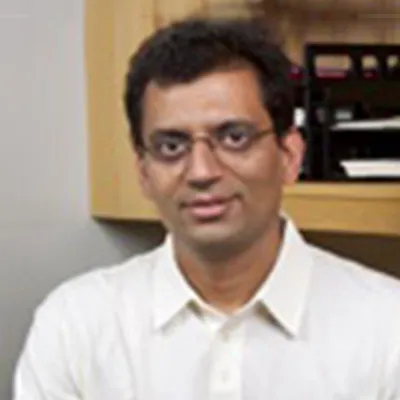
Professor
Metrics: Manual · Updated 2 months ago
AI-generated biography
Mayank Mehta, Ph.D., is a faculty member in the Department of Neurobiology at UCLA. He earned his doctoral degree from the University of California, Berkeley. Dr. Mehta's research is dedicated to understanding the fundamental principles of neural computation, with a particular focus on how the brain integrates information across different sensory modalities and how these processes are altered in neurodevelopmental disorders such as autism spectrum disorder (ASD).
His laboratory employs a multidisciplinary approach, combining advanced electrophysiological techniques with computational modeling and genetic analyses. Dr. Mehta has made significant contributions to our understanding of hippocampal function, particularly concerning place cell plasticity and its role in spatial navigation and memory. His work has been supported by substantial funding from prestigious agencies, including multiple grants from the National Institutes of Health (NIH) investigating cross-modal integration in ASD, and a CAREER award from the National Science Foundation (NSF) focused on hippocampal plasticity. Dr. Mehta's research continues to push the boundaries of our knowledge regarding brain function and dysfunction.
Source: Gemini AI · Updated 8 months ago
21 publications · PubMed, ORCID and the BRI profile
Showing 10 of 13
Chen Zhiping, Resnik Evgeny, McFarland James M, et al.
Cushman Jesse D, Aharoni Daniel B, Willers Bernard, et al.
Kumar Arvind, Mehta Mayank R.
Ghorbani Maryam, Mehta Mayank, Bruinsma Robijn, et al.
McFarland James M, Hahn Thomas T G, Mehta Mayank R.
$6.6M total · 3 NIH + NSF grants
U01MH115746Co-PI2017–2023
CRCNS:Presistent Activity in the Entorhinal Cortex in Vivo (NIH RePORTER, opens in a new tab)
R01MH092925Contact PI2010–2016
CAREER: Hippocampal place cell plasticity (NSF award, opens in a new tab)
0969034PI07/01/2009–11/30/2012
U01MH115746Co-PIFY2017–2021
CRCNS:Presistent Activity in the Entorhinal Cortex in Vivo (NIH RePORTER, opens in a new tab)
R01MH092925Contact PIFY2010–2014
CAREER: Hippocampal place cell plasticity (NSF award, opens in a new tab)
0969034PI07/01/2009–11/30/2012
Institute members who share papers or grants with this researcher
AI-generated
Generated automatically from this profile's public data to suggest possibilities. Treat them as starting points rather than recommendations.
R01 (Research Project Grant)
As a seasoned investigator with success in complex U01 cooperative agreements, an R01 would allow them to pursue specific, investigator-initiated hypotheses or develop a new, focused line of inquiry stemming from their extensive work on cross-modal integration, molecular, or physiological networks in ASD. It provides flexibility for independent research and is a foundational grant for established scientists.
P50 (Specialized Center Grant)
Their extensive involvement in large-scale 'Cross modal integration of molecular and physiological networks in ASD' via multiple U01s strongly suggests readiness to lead a comprehensive, multi-component research center. A P50 would enable them to establish and direct a Specialized Center of Excellence in Autism Research, integrating multiple research projects, state-of-the-art core facilities, and pilot projects around a unifying theme related to ASD mechanisms, diagnosis, or intervention. This leverages their collaborative experience and expertise in a major disease area.
R21 (Exploratory/Developmental Research Grant)
While established, an R21 offers an excellent avenue to explore high-risk, high-reward ideas, pilot novel technologies, or develop innovative methodologies related to cross-modal integration or molecular/physiological networks in ASD. This mechanism allows for testing feasibility and generating preliminary data for potentially transformative research that might be too early-stage for a full R01 or P50.
Shared papers, topics or department