Structure and function of an archaeal homolog of survival protein E (SurEalpha): an acid phosphatase with purine nucleotide specificity. (opens in a new tab)
Mura C, Katz JE, Clarke SG, et al.
Distinguished Professor
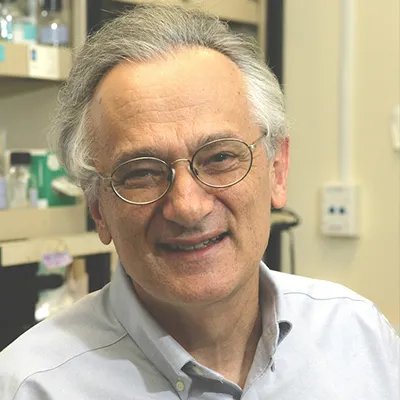
Steven Clarke has been on the faculty of the UCLA Department of Chemistry and Biochemistry since 1978. He is currently a Distinguished Professor of Biochemistry and Director of the UCLA Cellular and Molecular Biology Training Program. He was born in Los Angeles and attended public schools in Altadena and Pasadena, California. He did his undergraduate work at Pomona College in Claremont, majoring in Chemistry and Zoology. During this time, he did undergraduate research at the UCLA Brain Research Institute with Dr. James E. Skinner and Professor Donald Lindsley on neural mechanisms of attention. He was also an NIH fellow in the laboratory of Dr. Peter Mitchell at Glynn Research Laboratories in Bodmin, England studying mitochondrial amino acid transport. He obtained his PhD in Biochemistry and Molecular Biology at Harvard University working as an NSF Fellow with Professor Guido Guidotti on membrane protein-detergent interactions and the identification of the major rat liver mitochondrial polypeptides as enzymes of the urea cycle. He returned to California to do postdoctoral work as a Miller Fellow at the University of California, Berkeley, with Professor Dan Koshland, identifying membrane receptors for bacterial chemotaxis. His research at UCLA has focused on roles of novel protein methyltransferases in aging and biological regulation highlighted by discoveries of the protein L-isoaspartyl repair methyltransferase, the isoprenylcysteine protein methyltransferase, and the protein phosphatase 2A methyltransferase. He has been a visiting scholar at Princeton University (1986-87), the University of Washington (2004-2005), and Vanderbilt University (2015).

Source: BRI Website · Updated 8 months ago
This research primarily investigates the regulation of cellular processes through enzyme function and protein post-translational modifications. A significant focus involves elucidating the functional roles of protein lysine methylation, particularly on key proteins like elongation factors 1A and 2, in the context of protein synthesis and its translational machinery. Additionally, the work characterizes the structure and activity of diverse enzymes, including an archaeal acid phosphatase with specific roles in purine nucleotide metabolism.
Research topics extracted by AI (Google Gemini) from this member’s publications.
24 publications · h-index 84 · PubMed, ORCID and the BRI profile
Mura C, Katz JE, Clarke SG, et al.
Dzialo MC, Travaglini KJ, Shen S, et al.
$39.4M total · 11 NIH + NSF grants
Role of Protein Methylation in Translation (NSF award, opens in a new tab)
1714569PI07/15/2017–09/30/2023
Research Tranining in Cellular and Molecular Biology (NIH RePORTER, opens in a new tab)
T32GM007185Contact PI1975–2021
Control of Eucaryotic Function by Methylation (NIH RePORTER, opens in a new tab)
R01GM026020Contact PI1978–2016
Research Tranining in Cellular and Molecular Biology (NIH RePORTER, opens in a new tab)
T32GM007185Contact PIFY1975–2017
Control of Eucaryotic Function by Methylation (NIH RePORTER, opens in a new tab)
R01GM026020Contact PIFY1978–2013
Linked Protein Repair, Proteolysis, and Oxidation in Aging (NIH RePORTER, opens in a new tab)
R21AG032303Contact PIFY2008–2009
Control of Eucaryotic Function by Methylation (NIH RePORTER, opens in a new tab)
R37GM026020Contact PIFY1978–2009
Enyzmes Affecting the Accumulation of Altered Proteins (NIH RePORTER, opens in a new tab)
R01AG018000Contact PIFY2000–2003
Role of Protein Methylation in Cataract Formation (NIH RePORTER, opens in a new tab)
R01EY004942Contact PIFY1983–1985
Role of Protein Methylation in Translation (NSF award, opens in a new tab)
1714569PI07/15/2017–09/30/2023
0448533PI06/01/2005–05/31/2009
Spontaneous Reactions at Protein Aspartyl and Asparaginyl Residues (NSF award, opens in a new tab)
9305405PI08/15/1993–07/31/1997
Spontaneous Degradation of Protein Aspartyl and Asparaginyl Residues (NSF award, opens in a new tab)
8904170PI07/01/1989–06/30/1993
Spontaneous Degradation of Protein Aspartyl and Asparaginyl Residues (NSF award, opens in a new tab)
8602102PI07/01/1986–12/31/1989
AI-generated
Generated automatically from this profile's public data to suggest possibilities. Treat them as starting points rather than recommendations.
R01 Research Project Grant
This is the primary and most common NIH funding mechanism for investigator-initiated research projects. The researcher's work is fundamental, mechanistic, and aligns perfectly with the scope of an R01, focusing on discovery, characterization, and mechanisms of protein modification and its functional roles. They already hold a successful R01, indicating their proficiency and success with this mechanism, and can pursue new or expanded lines of inquiry based on their current research.
R21 Exploratory/Developmental Research Grant
The researcher's interests include 'Discovery and characterization of new protein lysine methyltransferases' and exploring novel 'Translational roles'. An R21 is ideal for supporting high-risk, high-reward, or exploratory pilot studies that could lead to new avenues of research. This mechanism would allow them to test innovative ideas, develop new methodologies, or gather preliminary data for a potentially transformative project before submitting a full R01 application.
P01 Research Program Project Grant
Given the breadth and interconnectedness of the researcher's interests (protein methylation, translation, specific enzyme families, archaeal homologs), and their involvement in multiple T32 training grants (suggesting strong programmatic and leadership capabilities), a P01 could be an excellent fit. This mechanism supports multiple closely related research projects that share a common theme and overall objective, allowing for a highly collaborative and synergistic research program that leverages their diverse expertise across several labs or within a large, integrated research effort.