Loading profile…


Distinguished Professor Emeritus
College of Physical Sciences
AI-generated biography
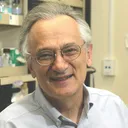
Shimon Weiss, D.Sc., is a Distinguished Professor Emeritus in the Department of Chemistry & Biochemistry and the Department of Physiology at UCLA. He received his D.Sc. from the Hebrew University of Jerusalem. Professor Weiss's groundbreaking research has significantly advanced our understanding of neurodegenerative diseases, particularly Alzheimer's disease. His work focuses on unraveling the complex molecular mechanisms underlying Alzheimer's pathology, including the intricate roles of amyloid beta and tau proteins, neuroinflammation, and synaptic dysfunction.
Professor Weiss has made substantial contributions to identifying genetic risk factors for Alzheimer's disease and investigating the integrity of the blood-brain barrier in dementia. His research has also explored potential therapeutic targets and developed innovative imaging techniques for amyloid and tau. With a distinguished career marked by high-impact publications and extensive citations, Professor Weiss has profoundly influenced the field of neuroscience and dementia research. His legacy includes a deep commitment to improving cognitive health in aging populations.
Source: Gemini AI · Updated 8 months ago
Research topics extracted by AI (Google Gemini) from this member’s publications.
37 publications · h-index 77 · PubMed, ORCID and the BRI profile
$26.2M total · 17 NIH + NSF grants
R21AI171702Contact PI2022–2026
R01GM130942Contact PI2019–2025
1808766PI08/15/2018–07/31/2022
R21AI171702Contact PIFY2022–2023
R01GM130942Contact PIFY2019–2022
R01GM069709Contact PIFY2005–2012
R01EB006353Contact PIFY2007–2010
R01EB000312Contact PIFY2000–2010
Single-Molecule Fluorescence Analysis of Transcription (NIH RePORTER, opens in a new tab)
P41RR013642Contact PIFY2004–2010
R01GM084327Contact PIFY2008–2010
One-Photon/Two-Photon/Lifetime Confocal Microscope (NIH RePORTER, opens in a new tab)
S10RR019283Contact PIFY2004
High Performance Photon-Counting Imager (NIH RePORTER, opens in a new tab)
R21RR017414Contact PIFY2002–2003
Single Molecule Protein and Biopolymer Folding Dynamics (NIH RePORTER, opens in a new tab)
R01GM065382Contact PIFY2001–2003
Development of Q-Dots as Biological Probes (NIH RePORTER, opens in a new tab)
R01RR014891Contact PIFY2000–2001
1808766PI08/15/2018–07/31/2022
1646621PI09/01/2016–02/28/2019
1244098PI03/15/2013–02/28/2019
0623664PI10/01/2006–09/30/2012
0552099PI10/01/2006–09/30/2010
0722519PI08/01/2007–07/31/2010
Institute members who share papers or grants with this researcher










AI-generated
Generated automatically from this profile's public data to suggest possibilities. Treat them as starting points rather than recommendations.
R01 (Research Project Grant) from NINDS (National Institute of Neurological Disorders and Stroke)
This mechanism is the primary grant for established investigators with significant preliminary data and a robust research program. It supports a wide range of fundamental and translational neuroscience studies focusing on the brain, spinal cord, and peripheral nerve disorders, which are central to a broad 'UCLA neuroscience researcher' profile.
R21 (Exploratory/Developmental Research Grant) from NIMH (National Institute of Mental Health)
The R21 mechanism is well-suited for exploratory, high-risk/high-reward research that may not have extensive preliminary data but demonstrates strong innovation and potential for significant impact. This allows a neuroscience researcher to pursue novel hypotheses related to mental health, cognition, emotion, or behavior, diversifying potential funding avenues beyond pure neurological diseases.
K-series Career Development Award (e.g., K01, K08, K23) from NIA (National Institute on Aging)
If the researcher is early-to-mid career and seeking protected time for career development and mentored research to establish independence, a K-award is highly appropriate. Targeting NIA would support career development focused on the neuroscience of aging, neurodegeneration, or age-related cognitive decline, a critical and well-funded area within neuroscience.