Neoadjuvant anti-PD-1 immunotherapy promotes a survival benefit with intratumoral and systemic immune responses in recurrent glioblastoma. (opens in a new tab)
Cloughesy TF, Mochizuki AY, Orpilla JR, et al.
Associate Professor
Metrics: Semantic Scholar · Updated 8 months ago
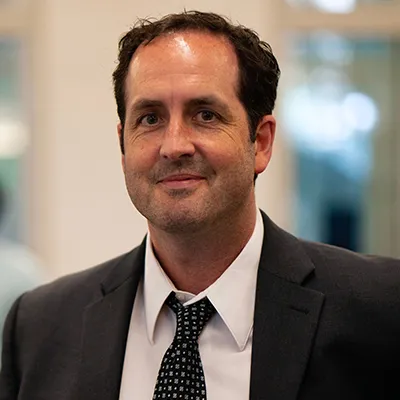
Robert M. Prins is a tumor immunologist with joint faculty appointments in the Departments of Neurosurgery and Molecular and Medical Pharmacology. Dr. Prins earned his B.S. in Kinesiology and his M.S. in Physiological Science from the University of California, Los Angeles. He earned his Ph.D. in Anatomy and Immunology from the Medical College of Virginia. He completed post-doctoral fellowships at the Cedars-Sinai Neurosurgical Institute and the UCLA Division of Neurosurgery before joining the faculty at UCLA in 2006. Dr. Prins is a member of the Jonsson Comprehensive Cancer Center, the Brain Research Institute, and the Parker Institute for Cancer Immunotherapy. Dr. Prins is currently the Director of the I3T Seminar Series, the Brain Tumor Immunology Research Lab and for many clinical trials of immunotherapy.

Source: BRI Website (AI extract) · Updated 8 months ago
Robert Prins's research primarily focuses on understanding and manipulating the tumor-immune microenvironment of central nervous system cancers, particularly glioblastoma. They develop advanced immunotherapeutic strategies, including engineered CAR-T and TCR-transduced T-cells targeting specific tumor antigens, to overcome immunosuppression and enhance anti-tumor responses. This work often integrates multi-omic analyses with human tumor-immune organoid models to characterize disease progression and evaluate novel treatment modalities.
Research topics extracted by AI (Google Gemini) from this member’s publications.
Papers by NIH iCite research category (11 of 105 papers classified) · trials from ClinicalTrials.gov · patents from USPTO.
105 publications · h-index 54 · PubMed, ORCID and the BRI profile
Showing 10 of 105
Cloughesy TF, Mochizuki AY, Orpilla JR, et al.
Liau LM, Prins RM, Kiertscher SM, et al.
Prins RM, Soto H, Konkankit V, et al.
Guo D, Reinitz F, Youssef M, et al.
Dang L, White DW, Gross S, et al.
Guo D, Prins RM, Dang J, et al.
Liau LM, Ashkan K, Brem S, et al.
Pope WB, Prins RM, Albert Thomas M, et al.
Lee AH, Sun L, Mochizuki AY, et al.
Fu X, Chin RM, Vergnes L, et al.
$10.0M total · 8 NIH grants · 3 active
Neoadjuvant checkpoint blockade for recurrent glioblastoma (NIH RePORTER, opens in a new tab)
R01CA267726Contact PI2022–2027
P50CA211015Contact PI2017–2027
Neuro-Oncology Translational Research Training Program (NOTR-TP) (NIH RePORTER, opens in a new tab)
T32CA288354Contact PI2025–2030
Neoadjuvant checkpoint blockade for recurrent glioblastoma (NIH RePORTER, opens in a new tab)
R01CA267726Contact PIFY2022–2026
P50CA211015Contact PIFY2017–2026
Neuro-Oncology Translational Research Training Program (NOTR-TP) (NIH RePORTER, opens in a new tab)
T32CA288354Contact PIFY2025–2026
R01CA222695Contact PIFY2019–2023
Immunotherapeutic targeting of the Glioblastoma Mutanome (NIH RePORTER, opens in a new tab)
R21CA186004Contact PIFY2015–2016
Optimizing Induction Conditions for Immunotherapeutic CTL (NIH RePORTER, opens in a new tab)
R01CA154256Contact PIFY2010–2014
R01CA123396Contact PIFY2007–2010
Immune targeting of melanoma-associated antigens in glioma (NIH RePORTER, opens in a new tab)
K01CA111402Contact PIFY2006–2010
1 trial on ClinicalTrials.gov
Zr-89 Crefmirlimab Berdoxam and Immuno-Positron Emission Tomography for the Imaging of Patients With Resectable Brain Tumors
Conditions: Glioma, Malignant Brain Neoplasm, Meningioma, Metastatic Malignant Neoplasm in the Brain
NCT06650163 on ClinicalTrials.gov (opens in a new tab)20 enrolledSponsor: Jonsson Comprehensive Cancer Center2024–2028
Institute members who share papers or grants with this researcher
AI-generated
Generated automatically from this profile's public data to suggest possibilities. Treat them as starting points rather than recommendations.
P01 Program Project Grant
This researcher has a strong track record with P50 Specialized Center grants, which are multi-project, integrated research programs. A P01 would be a natural progression, allowing them to lead a highly integrated, multidisciplinary program focused on a specific aspect of neuro-oncology and immunotherapy (e.g., novel strategies to overcome immunotherapy resistance in glioblastoma). This mechanism is ideal for fostering collaboration across multiple investigators and research cores, leveraging their proven ability to manage complex, multi-component research efforts.
U01 Research Project - Cooperative Agreement
Given their existing R01 on 'Neoadjuvant checkpoint blockade for recurrent glioblastoma' and a P50 project targeting immunotherapy resistance, the researcher is actively involved in translational and clinical research. A U01 is well-suited for projects that involve significant collaboration with NIH staff, often for large-scale clinical trials, multi-center studies, or the development of research networks. This mechanism would support the expansion of their clinical testing of novel immunotherapy combinations or therapeutic strategies in glioblastoma, potentially leading to larger, more definitive trials.
NIH R01 Research Project Grant (specifically those with a Clinical Trial Required/Optional component)
While they already hold an R01, securing additional R01s, particularly those specifically designed for clinical trials or highly translational projects (often designated by NCI or NINDS), would allow them to pursue new, independent lines of inquiry directly related to their core expertise. This could involve leading a new Phase I/II clinical trial for a novel immunotherapy combination, or a translational study focused on identifying predictive biomarkers for response to current treatments in glioblastoma, building upon their extensive experience in both basic neuroscience and neuro-oncology clinical research.
Shared papers, topics or department