Long-term, high-resolution imaging in the mouse neocortex through a chronic cranial window. (opens in a new tab)
Holtmaat A, Bonhoeffer T, Chow DK, et al.
2009772 citationsRCR 15.6399th percentile

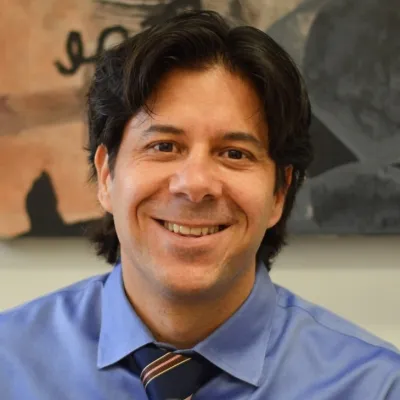
The Portera-Cailliau laboratory investigates how developmental defects in network connectivity at the level of the cerebral cortex directly lead to symptoms of autism, learning disability and intellectual dysfunction. In particular they are studying sensory hypersensitivity in a model of fragile X syndrome, by combining in vivo two-photon calcium imaging, patch-clamp electrophysiology, and head-fixed behavior. Dr. Portera-Cailliau was born and raised in Madrid, Spain. He obtained a B.A. in Biochemistry & Cell Biology from U.C. San Diego in 1990. He then attended the Johns Hopkins School of Medicine and obtained an MD-PhD degree in 1997. His mentors were Drs. Donald Price and Lee Martin. After finishing a residency in Neurology at The Massachusetts General Hospital and Brigham & Women’s Hospital in Boston in 2001, Dr. Portera-Cailliau moved to Columbia University for a post-doctoral fellowship in Dr. Rafael Yuste’s laboratory. His second post-doc was with Dr. Karel Svoboda in Cold Spring Harbor Laboratory. He joined the UCLA faculty in November 2004 and has joint appointments in the Departments of Neurology and Neurobiology. He is a member of UCLA’s Brain Research Institute, the Integrated Center for Learning & Memory, and the Neuroscience Theme. Since 2013 he has served as co-director of the UCLA-Caltech Medical Scientist Training Program.
Source: BRI Website (AI extract) · Updated 8 months ago
Carlos Portera-Cailliau's research primarily investigates the neural circuit dysfunction underlying neurodevelopmental disorders, with a strong focus on Fragile X Syndrome and Autism Spectrum Disorder. The lab specifically examines how altered cortical interneuron activity and network dynamics contribute to core symptoms like sensory hypersensitivity, impaired perceptual learning, and social touch deficits. This work aims to elucidate fundamental mechanisms and identify potential therapeutic targets to restore typical cortical function.
Research topics extracted by AI (Google Gemini) from this member’s publications.
57 publications · h-index 46 · PubMed, ORCID and the BRI profile
Showing 10 of 57
Holtmaat A, Bonhoeffer T, Chow DK, et al.
Portera-Cailliau C, Hedreen JC, Price DL, et al.
Contractor A, Klyachko VA, Portera-Cailliau C.
Golshani P, Gonçalves JT, Khoshkhoo S, et al.
Cruz-Martín A, Crespo M, Portera-Cailliau C.
Portera-Cailliau C, Weimer RM, De Paola V, et al.
Gonçalves JT, Anstey JE, Golshani P, et al.
He CX, Portera-Cailliau C.
Portera-Cailliau C, Pan DT, Yuste R.
Rousso DL, Pearson CA, Gaber ZB, et al.
$27.7M total · 8 NIH grants · 2 active
Cortical Interneuron Dysfunction in Fragile X Syndrome (NIH RePORTER, opens in a new tab)
R01HD108370Contact PI2022–2027
R01HD054453Contact PI2007–2029
Cortical Interneuron Dysfunction in Fragile X Syndrome (NIH RePORTER, opens in a new tab)
R01HD108370Contact PIFY2022–2026
R01HD054453Contact PIFY2007–2026
R01NS117597Contact PIFY2020–2024
UCLA-Caltech Medical Scientist Training Program (NIH RePORTER, opens in a new tab)
T32GM008042Contact PIFY1983–2021
R01NS076942Contact PIFY2013–2017
R21MH100614Contact PIFY2013–2014
R01MH083785Contact PIFY2011
A STEM Microscope for High-speed 2-photon Calcium Imaging (NIH RePORTER, opens in a new tab)
RC1NS068093Contact PIFY2009–2010
Institute members who share papers or grants with this researcher




AI-generated
Generated automatically from this profile's public data to suggest possibilities. Treat them as starting points rather than recommendations.
P01 - Program Project Grant
The researcher has multiple R01s investigating distinct but related aspects of Fragile X Syndrome (FXS), including interneuron dysfunction, circuit defects, social touch, and sensory processing. A P01 would allow them to integrate these separate but synergistic lines of inquiry into a cohesive, multi-project program with shared resources and an overarching theme, addressing a broader scientific question in FXS than a single R01 and fostering greater synergy and impact by leveraging their established expertise.
UG3/UH3 - Phased Innovation Award
With a strong foundation in understanding the basic mechanisms of dysfunction and circuit defects in FXS, a natural progression is towards translational research. The UG3/UH3 mechanism supports milestone-driven, high-risk/high-reward translational research projects. This would allow the researcher to transition their basic science findings towards therapeutic development, such as preclinical testing of novel interventions identified through their circuit-level work, or the development and validation of biomarkers for Fragile X Syndrome.
P50 - Center Core Grant
Given their extensive and successful research program focused solely on Fragile X Syndrome, the researcher is well-positioned to lead a larger institutional effort. A P50 supports an existing center of excellence or the establishment of a new one, providing stable support for shared resources, pilot projects, and administrative infrastructure. This would enable them to foster broader collaborative, interdisciplinary research and training specifically focused on Fragile X Syndrome at UCLA, building upon their individual R01 successes.
Their research areas are highly complementary, with both focusing on neural circuits in developmental disorders, but from different yet converging angles (neurobiology/genetics vs. circuit development/plasticity), offering a strong opportunity for synergistic investigation.
Project idea: They could investigate how genetic variations (copy number variations) identified by Hoftman impact the developmental trajectories and synaptic plasticity of cortical circuits in autism and schizophrenia spectrum disorders, as studied by Portera-Cailliau.
 Felix SchweizerNeurobiologyFit 8/10
Their research areas are highly complementary, with Researcher A focusing on circuit-level dysfunction in neurodevelopmental disorders and Researcher B investigating the molecular mechanisms of synaptic transmission and neurotoxicity. This alignment offers a powerful bridge from cellular processes to circuit outcomes.
Project idea: They could investigate how environmental toxicants (Schweizer) disrupt presynaptic neurotransmitter release mechanisms, leading to altered excitation-inhibition balance and sensory processing deficits (Portera-Cailliau) in models of autism spectrum disorder or fragile X syndrome.
Their research areas are highly complementary, with Portera-Cailliau focusing on circuit mechanisms of neurodevelopmental disorders and Yang on their genetic and cellular underpinnings, offering a strong foundation for collaborative investigation.
Project idea: They could jointly investigate how specific genetic mutations or polygenic risk scores identified by Yang influence neuronal circuit development, plasticity, and excitation-inhibition balance in models of autism spectrum disorder, as studied by Portera-Cailliau.
Their research areas are highly complementary, with Portera-Cailliau focusing on circuit function and plasticity in development and disease, and Zipursky specializing in the molecular mechanisms of neuronal wiring and circuit assembly. This creates a strong opportunity to investigate how molecular mechanisms of wiring (Zipursky) impact circuit function, development, and plasticity (Portera-Cailliau), especially in the context of neurodevelopmental disorders.
Project idea: They could collaborate to investigate the molecular underpinnings of altered excitation-inhibition balance and synaptic plasticity in autism spectrum disorder by examining how specific cell adhesion molecules (Zipursky's expertise) contribute to the development and function of cortical circuits (Portera-Cailliau's expertise).
Gina Poe's expertise in sleep-dependent memory consolidation and neural circuits of arousal, combined with Carlos Portera-Cailliau's work on cortical circuit development, plasticity, and autism circuit mechanisms, offers a strong complementarity. Their combined knowledge could elucidate how sleep dynamics influence the development of neural circuits critical for social processing and how disruptions in these circuits, potentially exacerbated by sleep issues, contribute to conditions like ASD.
Project idea: They could investigate the impact of specific sleep states (e.g., REM vs. NREM) on the development and plasticity of cortical circuits involved in sensory processing and social behavior, with a particular focus on how these processes might be altered in models of autism spectrum disorder.
Their research areas are highly complementary: De La Torre-Ubieta's expertise in evolutionary gene regulatory logic of neuronal diversity and gene co-expression networks could provide a foundational understanding of the genetic underpinnings of neural circuits, which Portera-Cailliau investigates in the context of development, plasticity, and disorders like ASD and Fragile X.
Project idea: They could investigate how evolutionary conserved gene regulatory mechanisms influence the development of excitation-inhibition balance and synaptic plasticity in specific neuronal subtypes relevant to autism spectrum disorder.
 Alicia IzquierdoPsychologyFit 8/10
Alicia's expertise in learning, decision-making, and cognitive control, particularly her focus on the amygdala and orbitofrontal cortex, strongly complements Carlos's work on cortical circuit development, plasticity, and sensory processing, especially in the context of disorders like autism. Combining their knowledge could illuminate how circuit-level deficits impact higher-order cognitive functions in these conditions.
Project idea: They could investigate how alterations in cortical excitation-inhibition balance and synaptic plasticity during development, as studied by Carlos, contribute to flexible learning deficits and altered decision-making under uncertainty in models of autism spectrum disorder, building on Alicia's computational and neurobiological approaches.
 Thomas O’DellPhysiologyFit 8/10
Their research areas are highly complementary, with O'Dell focusing on hippocampal plasticity mechanisms and Portera-Cailliau on cortical development and sensory processing, particularly in the context of neurodevelopmental disorders.
Project idea: They could investigate how dysregulation of NMDA receptor signaling in the hippocampus (O'Dell's expertise) contributes to aberrant cortical circuit development and sensory hypersensitivity in models of autism spectrum disorder or fragile X syndrome (Portera-Cailliau's expertise).
Their research areas complement each other, with Portera-Cailliau's focus on cortical circuits and neurodevelopmental disorders aligning with Waschek's expertise in neuropeptide regulation of CNS processes relevant to these disorders.
Project idea: Investigating the role of PACAP/VIP in modulating cortical circuit development and plasticity in models of autism spectrum disorder and fragile X syndrome.
 Kate WassumPsychologyFit 7/10
Carlos's expertise in sensory processing, autism, and circuit development in the cortex complements Kate's focus on reward, decision-making, and addiction circuits, particularly in the prefrontal cortex and striatum. Their combined knowledge could illuminate how altered sensory experiences and circuit dysfunction in neurodevelopmental disorders impact reward processing and behavior.
Project idea: They could investigate how disruptions in cortical development and excitation-inhibition balance, as studied by Carlos, influence reward sensitivity, decision-making, and the development of maladaptive behaviors like addiction in models of autism spectrum disorder.
 Laura DeNardoPhysiologyFit 7/10
Carlos's detailed work on cortical circuit development, plasticity, and specific neurological disorders strongly complements Laura's broader neuroscience research focus, offering a direct pathway to investigate the physiological underpinnings of complex neural phenomena.
Project idea: They could collaborate to investigate the physiological mechanisms of altered cortical circuit development and plasticity in models of autism spectrum disorder or fragile X syndrome, using Laura's expertise in physiological measurements within Carlos's established research framework.
Dr. Portera-Cailliau's expertise in cortical circuit development, plasticity, and specific neurological disorders (like autism and Fragile X) strongly complements Dr. Colwell's broader neuroscience research, especially if it touches upon neural circuit function and dysfunction in psychiatric conditions.
Project idea: They could collaborate on a project investigating the neurobiological underpinnings of sensory hypersensitivity or altered social behavior in autism spectrum disorder, using Dr. Portera-Cailliau's circuit-level expertise to investigate mechanisms potentially relevant to psychiatric conditions explored by Dr. Colwell.
 Mario DipoppaNeurobiologyFit 7/10
Their research areas are highly complementary, with A focusing on adaptation in visual cortex and B on broader cortical development, plasticity, and circuit mechanisms related to sensory processing and disorders, offering a strong foundation for integrated research.
Project idea: Investigating how neural adaptation mechanisms in the visual cortex (A) are impacted by altered cortical circuit development and excitation-inhibition balance (B), particularly in the context of sensory processing deficits seen in autism or Fragile X syndrome.
 David GlanzmanNeurobiologyFit 7/10
Their research on synaptic plasticity, memory mechanisms, and circuit development in sensory systems, particularly when considering autism and neurodevelopmental disorders, shows strong potential for complementary investigation.
Project idea: They could investigate how molecular mechanisms of synaptic plasticity identified by Glanzman, such as protein synthesis and DNA methylation, contribute to altered sensory processing and network states observed in autism spectrum disorder models studied by Portera-Cailliau.
 Avishek AdhikariPsychologyFit 7/10
Their research areas complement each other significantly, with Adhikari's expertise in fear and defensive behaviors aligning well with Portera-Cailliau's work on sensory processing, cortical circuits, and autism, particularly concerning excitation-inhibition balance and social behavior.
Project idea: They could investigate how disruptions in cortical excitation-inhibition balance, as studied by Portera-Cailliau, impact innate and conditioned defensive behaviors controlled by hypothalamic and amygdala circuits, as explored by Adhikari, potentially in the context of autism spectrum disorder.
 Samantha ButlerNeurobiologyFit 7/10
Butler's focus on neural progenitor cell differentiation and developmental patterning directly complements Portera-Cailliau's work on cortical circuit development and plasticity, offering a developmental foundation for his circuit-level investigations.
Project idea: They could investigate how specific neural progenitor cell differentiation pathways influenced by Butler's work contribute to the development of sensory circuits and their plasticity in the somatosensory cortex, as studied by Portera-Cailliau, potentially informing insights into disorders like autism spectrum disorder.
 Jeffrey DonleaNeurobiologyFit 7/10
Researcher A's work on sleep and memory in flies could inform the understanding of circuit development and plasticity in mammals, particularly in the context of sensory processing and behavioral deficits relevant to ASD and Fragile X.
Project idea: Investigating the role of specific sleep states or homeostatic sleep regulation in the development of sensory hypersensitivity and excitation-inhibition imbalances in animal models of autism spectrum disorder or Fragile X syndrome.
While both researchers touch on social behavior and ASD, their core expertise lies in vastly different biological systems (mammalian cortical circuits vs. avian vocal learning) with no clear avenues for complementary investigation.
Project idea: There is no obvious project idea that leverages both researchers' expertise.
Shared papers, topics or department