Single-neuron responses in humans during execution and observation of actions. (opens in a new tab)
Mukamel R, Ekstrom AD, Kaplan J, et al.
Professor
AI-generated biography
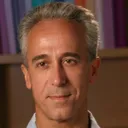
Itzhak Fried, M.D., Ph.D., is a distinguished member of the UCLA Brain Research Institute and a Professor in the Department of Neurosurgery. His groundbreaking research delves into the intricate neural mechanisms underlying human cognition and neurological disorders. Dr. Fried's work primarily employs intracranial EEG and single-neuron recordings to explore how specific neural populations, particularly within the hippocampus and entorhinal cortex, encode memory, spatial navigation, and the temporal structure of experience.
A significant portion of his research is dedicated to clinical applications, focusing on the development of advanced computational methods to predict seizure outcomes, characterize pathological neural activity, and optimize therapeutic interventions for epilepsy patients. His contributions to neuromodulation are notable, with a strong focus on sleep-dependent memory consolidation and the neural basis of memory encoding. Dr. Fried has authored highly cited publications in leading scientific journals, including seminal works on human spatial navigation and the coupling between neuronal firing and fMRI signals. He has also been awarded substantial funding from the National Institutes of Health to support his investigations into decoding and selectively modulating human memory during awake and sleep cycles, as well as exploring memory enhancement through deep brain stimulation.

Source: Gemini AI · Updated 8 months ago
Itzhak Fried's research primarily utilizes intracranial EEG and single-neuron recordings to investigate human brain function, focusing on how specific neural populations, particularly in the hippocampus and entorhinal cortex, encode memory, spatial navigation, and temporal experience. A significant parallel effort is dedicated to clinical applications, developing advanced computational methods to predict seizure outcomes, characterize pathological neural activity, and optimize therapeutic interventions for epilepsy patients.
Research topics extracted by AI (Google Gemini) from this member’s publications.
Papers by NIH iCite research category (5 of 218 papers classified) · trials from ClinicalTrials.gov · patents from USPTO.
218 publications · h-index 91 · PubMed, ORCID and the BRI profile
Showing 10 of 218
Mukamel R, Ekstrom AD, Kaplan J, et al.
Engel J Jr, McDermott MP, Wiebe S, et al.
Ekstrom AD, Kahana MJ, Caplan JB, et al.
Bragin A, Engel J Jr, Wilson CL, et al.
Mukamel R, Gelbard H, Arieli A, et al.
Manning JR, Jacobs J, Fried I, et al.
Staba RJ, Wilson CL, Bragin A, et al.
Nir Y, Staba RJ, Andrillon T, et al.
Fried I, Mukamel R, Kreiman G.
$17.5M total · 5 NIH grants
U01NS123128Contact PI2021–2026
R01NS084017Contact PI2013–2025
U01NS108930Contact PI2018–2022
U01NS123128Contact PIFY2021–2025
R01NS084017Contact PIFY2013–2022
U01NS108930Contact PIFY2018–2019
Neuronal Correlates of Memory in the Human Temporal Lobe (NIH RePORTER, opens in a new tab)
R56NS033221Contact PIFY1996–2012
Neuronal Correlates of Memory in the Human Temporal Lobe (NIH RePORTER, opens in a new tab)
R01NS033221Contact PIFY1996–2011
Institute members who share papers or grants with this researcher
AI-generated
Generated automatically from this profile's public data to suggest possibilities. Treat them as starting points rather than recommendations.
P01 (Program Project Grant)
Given the researcher's multiple U01 grants focused on 'Decoding and Selective Modulation of Human Memory During Awake/Sleep Cycles' and an R01 on 'Mechanisms of Memory Enhancement by Deep Brain Stimulation in Humans,' there is a clear synergy across their research. A P01 would allow them to integrate several highly related, interdependent projects under a single grant, fostering a comprehensive and collaborative approach to understanding and manipulating human memory. This mechanism is ideal for established investigators with a strong, overarching research theme that can be broken down into synergistic sub-projects, providing a sustained program of research.
UH2/UH3 (Exploratory/Developmental Phased Innovation Award) or UG3/UH3 (Innovation Grants to Nurture Initial Translational Efforts - IGNITE)
The researcher's work on 'Selective Modulation of Human Memory' and 'Deep Brain Stimulation' has significant translational potential. These phased mechanisms (UH2/UH3 or UG3/UH3) are specifically designed to support early-stage translational research, moving basic scientific discoveries towards clinical application. The initial phase (UH2 or UG3) would allow for rigorous feasibility testing and proof-of-concept studies for novel memory enhancement strategies or decoding technologies, with a clear path to a larger development and validation phase (UH3) if successful. This is a strong fit for developing novel neuromodulation therapies for memory disorders.
R21 (Exploratory/Developmental Research Grant)
While the researcher has extensive funding with U01s and R01s, an R21 offers a valuable mechanism for exploring truly novel, high-risk, or early-stage ideas that may not yet have the extensive preliminary data required for a full R01 or P01. This could be used to pilot entirely new decoding methodologies, investigate unexplored brain targets for neuromodulation, or test groundbreaking hypotheses about sleep-dependent memory processes that could lead to paradigm shifts and open entirely new avenues for future larger-scale grants. It provides flexibility for innovation without the full scope of a traditional research project grant.
Shared papers, topics or department