Inducing sleep by remote control facilitates memory consolidation in Drosophila. (opens in a new tab)
Donlea JM, Thimgan MS, Suzuki Y, et al.
2011281 citationsRCR 6.7995th percentile

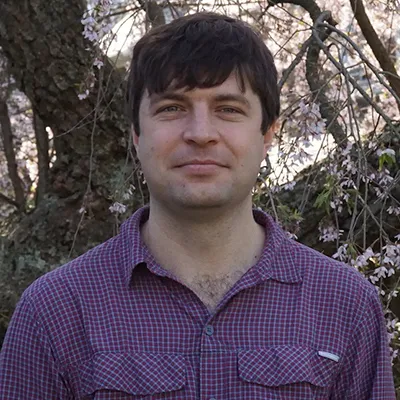
Assistant Professor
AI-generated biography
Jeffrey Donlea, Ph.D., is a researcher in the Department of Neurobiology at UCLA. His laboratory focuses on understanding the neuronal and molecular mechanisms of sleep homeostasis and its impact on learning, memory, and synaptic plasticity, primarily using Drosophila melanogaster as a model system. Dr. Donlea's significant contributions include elucidating how sleep deprivation affects synaptic scaling and presynaptic abundance, and identifying the role of specific neural circuits, such as the Ellipsoid Body neurons, in regulating sleep. His research has also explored sleep's influence on metabolic adaptation and stress resilience. Notably, Dr. Donlea has authored highly cited publications, including "Inducing sleep by remote control facilitates memory consolidation in Drosophila," and has been awarded multiple NIH grants to investigate the role of sleep in synaptic reorganization following neural injury. His work has garnered over 2,100 citations, reflecting the broad impact of his investigations into the fundamental biology of sleep.
Source: Gemini AI · Updated 8 months ago
Jeffrey Donlea's research primarily investigates the fundamental neuronal and molecular mechanisms governing sleep, extensively utilizing Drosophila melanogaster as a model organism. His work explores how sleep contributes to crucial brain functions such as memory consolidation and synaptic plasticity, and reveals its significant roles in processes like metabolic adaptation and stress resilience. This research also identifies specific neuronal circuits and molecular pathways that regulate sleep need and homeostasis.
Research topics extracted by AI (Google Gemini) from this member’s publications.
28 publications · h-index 23 · PubMed, ORCID and the BRI profile
Showing 10 of 28
Donlea JM, Thimgan MS, Suzuki Y, et al.
Ganguly-Fitzgerald I, Donlea J, Shaw PJ.
Donlea JM, Pimentel D, Talbot CB, et al.
Pimentel D, Donlea JM, Talbot CB, et al.
Donlea JM, Ramanan N, Shaw PJ.
Dissel S, Angadi V, Kirszenblat L, et al.
Seugnet L, Suzuki Y, Thimgan M, et al.
Seugnet L, Suzuki Y, Donlea JM, et al.
Donlea J, Leahy A, Thimgan MS, et al.
Donlea JM, Alam MN, Szymusiak R.
$4.0M total · 3 NIH grants · 2 active
R01NS119905Contact PI2021–2026
R21NS152782Contact PI2026–2028
R01NS119905Contact PIFY2021–2026
R21NS152782Contact PIFY2026
R01NS105967Contact PIFY2018–2022
Institute members who share papers or grants with this researcher





AI-generated
Generated automatically from this profile's public data to suggest possibilities. Treat them as starting points rather than recommendations.
P01 (Program Project Grant)
Given their extensive success with five R01s focused on sleep, synaptic reorganization, and neural injury, this researcher is ideally positioned to lead a P01. This mechanism supports integrated, multi-project research programs involving multiple investigators. It would allow them to orchestrate a more comprehensive and synergistic attack on various facets of their research question, leveraging their established expertise and potentially bringing in complementary collaborators or approaches under a unified program.
P50 (Specialized Center of Research Grant)
For a highly successful and focused researcher like this, a P50 could be a logical next step to establish a formal 'Center for Sleep and Neural Injury Research' at UCLA. This mechanism supports major programs of research that often involve multiple projects, significant shared resources, and a strategic plan to advance a particular field. It would solidify their institutional leadership in this critical area, providing a robust infrastructure for ongoing and future high-impact research.
DP1 (NIH Director's Pioneer Award)
While highly competitive, the DP1 award targets 'investigators of exceptional creativity who propose pioneering approaches to major challenges in biomedical and behavioral research.' Given their deep expertise and established track record in a specific, important area (neural injury recovery), this researcher might have a truly groundbreaking, high-risk, high-reward idea that could significantly advance the field, moving beyond incremental R01-style projects. This mechanism provides substantial, flexible funding for bold, paradigm-shifting research.
 Peyman GolshaniNeurologyFit 7/10
Researcher A's focus on sleep-dependent memory consolidation in Drosophila could be significantly enriched by Researcher B's expertise in hippocampal memory encoding, working memory representations, and neural circuit dynamics. Combining their knowledge could bridge the gap between simple invertebrate sleep models and complex mammalian memory systems.
Project idea: Investigating conserved neural mechanisms of sleep-dependent memory consolidation by comparing Drosophila and rodent models, leveraging Golshani's neural imaging techniques and Donlea's genetic manipulation capabilities.
Researcher A's focus on sleep and memory consolidation in Drosophila can be complemented by Researcher B's expertise in neuronal wiring, circuit assembly, and synaptic specificity, potentially illuminating the molecular and circuit-level mechanisms underlying sleep's role in memory.
Project idea: Investigate how specific neuronal circuits involved in memory consolidation are regulated by sleep-dependent molecular mechanisms identified through Researcher B's work, using Drosophila as a model organism.
 Thomas O’DellPhysiologyFit 7/10
Researcher A studies sleep and memory consolidation in flies, while Researcher B investigates synaptic plasticity and memory mechanisms in the hippocampus. Their research areas are highly complementary, bridging fundamental mechanisms of learning and memory across different model systems and levels of analysis.
Project idea: They could investigate if conserved molecular mechanisms underpin sleep's role in memory consolidation in insects and mammals, using fly models to identify genes/pathways that are then tested for functional relevance in rodent hippocampal circuits.
 Carlos Portera-CailliauNeurologyFit 7/10
Researcher A's work on sleep and memory in flies could inform the understanding of circuit development and plasticity in mammals, particularly in the context of sensory processing and behavioral deficits relevant to ASD and Fragile X.
Project idea: Investigating the role of specific sleep states or homeostatic sleep regulation in the development of sensory hypersensitivity and excitation-inhibition imbalances in animal models of autism spectrum disorder or Fragile X syndrome.
 Kate WassumPsychologyFit 7/10
Their research areas complement each other by bridging the neurobiological mechanisms of sleep/memory with the psychological and neurochemical underpinnings of reward and addiction.
Project idea: They could investigate how sleep disruption, a common feature of addiction, impacts reward-seeking behavior and decision-making, potentially by examining dopamine signaling in relation to sleep deprivation in fruit flies or rodent models.
 Laura DeNardoPhysiologyFit 7/10
Laura's broad neuroscience research in Physiology could provide a foundational understanding of neural mechanisms that complement Jeffrey's focused work on sleep homeostasis and memory consolidation in Drosophila, enabling a more comprehensive investigation of sleep's role in broader neurological functions.
Project idea: They could investigate how general physiological states, studied by Laura, influence sleep homeostasis and memory consolidation processes at a cellular and molecular level in Jeffrey's Drosophila models.
 Paul MathewsNeurologyFit 5/10
While their core research areas (Drosophila sleep and cerebellar circuits) are distinct, the intersection of memory consolidation and motor memory formation offers a potential, albeit indirect, avenue for collaboration.
Project idea: They could investigate how sleep, a process known to be crucial for memory consolidation in general (Donlea), might influence the formation and consolidation of motor memories within the cerebellum (Mathews).
There is very little direct overlap or complementarity between their stated research areas; one focuses on insect sleep and memory, while the other covers a broad range of topics from avian vocalization to dental materials and human health.
Project idea: Given the vast differences, a direct collaborative project addressing a shared scientific question is highly unlikely.
 Avishek AdhikariPsychologyFit 2/10
While both researchers study neural mechanisms of behavior, Researcher A focuses on fear and defensive behaviors, and Researcher B on sleep and memory. There is no clear intersection or complementarity between their current research areas.
Project idea: Given the lack of direct overlap, a collaborative project is difficult to envision without a significant shift in one or both researchers' current trajectories.
 Ahmet AracNeurologyFit 2/10
Their research areas (human motor control rehabilitation vs. insect sleep biology) are too disparate, lacking direct overlap or complementarity to address a shared research question.
Project idea: A collaboration is unlikely to be productive given the lack of common research ground.
Shared papers, topics or department