Loading profile…

Professor
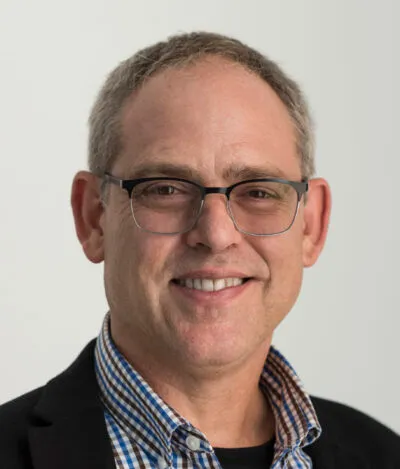
Christopher S. Colwell is a Neuroscientist who has served on the UCLA School of Medicine faculty since he joined the Department of Psychiatry and Biobehavioral Sciences in 1997. He became a Professor in 2008. Dr. Colwell earned his B.S. in Neuroscience from Vanderbilt University in 1985. During this time, he started his research in circadian rhythms under the mentorship of Dr. T. Page. Dr. Colwell earned his Ph.D. in Biology at the University of Virginia in 1991. His thesis work explored the neural mechanisms by which light regulates circadian rhythms. Dr. Colwell continued this line of research during a postdoctoral fellowship at the University of Virginia with Dr. G. Block. A second postdoctoral fellowship was carried out on the topics of motor control and excitotoxicity in the laboratory of Dr. M. Levine at UCLA. Dr. Colwell learned how to utilize imaging techniques to measure calcium levels inside neurons while a visiting scientist in the laboratory of Dr. Konnerth at the University of Saarland, Germany. Since Dr. Colwell’s faculty appointment at UCLA, his laboratory’s research has focused on understanding the mechanisms underlying circadian rhythms in mammals. Dysfunction in the timing these daily cycles is a key symptom in a number of neurological and psychiatric disorders. Better understanding the basic biology of this timing system should result in new therapies to improve the quality of life of these patients and the people who care for them.
Source: BRI Website · Updated 8 months ago
$3.5M total · 6 NIH grants
R21NS115041Contact PI2019–2022
A role for circadian clock genes in hippocampal function? (NIH RePORTER, opens in a new tab)
R21HL084240Contact PI2007–2010
Neuropeptides and the Mammalian Circadian System (NIH RePORTER, opens in a new tab)
R01NS043169Contact PI2003–2008
R21NS115041Contact PIFY2019–2021
A role for circadian clock genes in hippocampal function? (NIH RePORTER, opens in a new tab)
R21HL084240Contact PIFY2007–2008
Neuropeptides and the Mammalian Circadian System (NIH RePORTER, opens in a new tab)
R01NS043169Contact PIFY2003–2007
Regulation of the Mammalian Circadian System (NIH RePORTER, opens in a new tab)
R01HL064582Contact PIFY1999–2002
Circadian Regulation of Hippocampal Physiology (NIH RePORTER, opens in a new tab)
R03MH059186Contact PIFY1998–2000
Metabotropic Glutamate Receptors in Neostriatal Neurons (NIH RePORTER, opens in a new tab)
F32MH010735Contact PIFY1994–1995
Institute members who share papers or grants with this researcher








AI-generated
Generated automatically from this profile's public data to suggest possibilities. Treat them as starting points rather than recommendations.
R01 (Research Project Grant)
The researcher already holds an R01, indicating their capacity to lead substantial, multi-year projects. R01s are the cornerstone of NIH funding for independent investigators and are ideal for continuing to develop and expand their core research programs in circadian biology, neurodegeneration (Huntington's), and hippocampal function. They can use preliminary data from their R21s to build strong, well-developed proposals for new or renewed R01 funding.
P01 (Program Project Grant)
Given the researcher's multiple R21s and an R01, their work demonstrates a strong, thematic coherence across circadian rhythms, neurodegenerative disease models, and cognitive function. A P01 would allow them to lead or participate in a multi-component, interdisciplinary research program, integrating several related projects under a common, broader scientific goal. This mechanism supports extensive collaboration and a cohesive scientific approach to a complex problem, which aligns well with the multifaceted nature of studying circadian effects on neurological disorders.
Targeted R21 or R01 via specific Program Announcement (e.g., from NINDS or NIA)
While the researcher has general R21s and an R01, they could strategically pursue new R21s or R01s that are specifically aligned with targeted Program Announcements (PAs) or Program Announcements with Special Receipt Dates (PARs). For instance, given their work on Huntington's disease, they should look for specific PARs from the National Institute of Neurological Disorders and Stroke (NINDS). Their focus on hippocampal function and 'rescues circadian and motor dysfunction' suggests relevance to aging and neurodegenerative diseases, making specific PARs from the National Institute on Aging (NIA) also highly pertinent. These targeted mechanisms support research priorities of specific institutes, allowing the researcher to address an NIH-identified need with their unique expertise.
 Carlos Portera-CailliauNeurologyFit 7/10
Dr. Portera-Cailliau's expertise in cortical circuit development, plasticity, and specific neurological disorders (like autism and Fragile X) strongly complements Dr. Colwell's broader neuroscience research, especially if it touches upon neural circuit function and dysfunction in psychiatric conditions.
Project idea: They could collaborate on a project investigating the neurobiological underpinnings of sensory hypersensitivity or altered social behavior in autism spectrum disorder, using Dr. Portera-Cailliau's circuit-level expertise to investigate mechanisms potentially relevant to psychiatric conditions explored by Dr. Colwell.
 Laura DeNardoPhysiologyFit 7/10
Both researchers focus on neuroscience, and their distinct departmental affiliations (Psychiatry & Biobehavioral Sciences and Physiology) suggest complementary approaches. Combining Colwell's expertise in behavioral aspects of neuroscience with DeNar's likely focus on the underlying physiological mechanisms could lead to a more comprehensive understanding of neural circuits.
Project idea: They could investigate the physiological underpinnings of behavioral phenomena in neurological disorders, potentially exploring how specific physiological changes in neuronal function contribute to observable behavioral deficits.
 Mario DipoppaNeurobiologyFit 7/10
Researcher A's broad neuroscience interest, coupled with Researcher B's specific expertise in neural adaptation in the visual cortex, suggests complementary skills. Combining these could lead to a deeper understanding of how visual information processing, and its adaptation, relates to broader behavioral and psychiatric conditions.
Project idea: Investigate how neural adaptation mechanisms in the visual cortex, as studied by Dipoppa, contribute to or are affected by psychiatric conditions relevant to Colwell's work, such as altered visual perception in depression or anxiety.
 Arpana GuptaMedicineFit 7/10
Colwell's broad neuroscience expertise could provide a foundational understanding of brain mechanisms, which could be applied to Gupta's specific focus on the gut-brain axis, potentially revealing novel neural pathways involved in IBS.
Project idea: They could investigate how specific gut microbiome alterations, as studied by Gupta, influence neural activity in brain regions associated with mood and pain processing, as relevant to Colwell's neuroscience research.
 Alicia IzquierdoPsychologyFit 7/10
Researcher Izquier's detailed work on specific brain regions (amygdala, OFC, ACC) and cognitive processes (learning, decision making, uncertainty) strongly complements Researcher Colwell's broader neuroscience research focus. Their combined expertise could illuminate the neural underpinnings of complex psychiatric conditions.
Project idea: Investigate how amygdala and orbitofrontal cortex dysfunction, as studied by Izquier, contributes to altered learning and decision-making in models of psychiatric disorders, a topic within Colwell's general neuroscience purview.
 Paul MicevychNeurobiologyFit 7/10
Dr. Colwell's broad neuroscience research could benefit from Dr. Micevych's specialized expertise in neuroendocrine regulation, particularly concerning the neural mechanisms underlying hormonal influences on behavior, which could be relevant to psychiatric and behavioral studies.
Project idea: Investigating the role of specific neuroendocrine pathways in modulating mood or stress responses, integrating Dr. Micevych's hormonal expertise with Dr. Colwell's broader neuroscience approach.
 Ranmal SamarasingheNeurologyFit 7/10
Their research areas are highly complementary, with Colwell's broad neuroscience expertise potentially enhancing Samarasignhe's specific focus on epilepsy models and organoid development, allowing for a deeper understanding of network dysfunction.
Project idea: They could collaborate on developing and characterizing more complex human brain assembloid models of epilepsy, incorporating functional neuroscience techniques to study neural oscillations and network dysfunction in relation to specific genetic or molecular pathways.
 Felix SchweizerNeurobiologyFit 7/10
Researcher B's detailed expertise in neurotransmitter release and synaptic function directly complements Researcher A's broader neuroscience research, offering a potential for deep mechanistic investigation.
Project idea: They could investigate how environmental toxicants (Schweizer) impact neurotransmitter release mechanisms and neuronal circuit imbalances (Colwell, Schweizer) relevant to psychiatric disorders.
 Paul MathewsNeurologyFit 6/10
While Researcher A's broad "neuroscience research" is vague, Researcher B's specific focus on cerebellar circuits, motor memory, and cognitive dysfunction, particularly in the context of neuronal dynamics, offers potential for collaboration if Researcher A has a more defined area within neuroscience that touches upon these systems.
Project idea: They could investigate the role of cerebellar circuit mechanisms in cognitive dysfunction in HIV, potentially linking this to broader neuroscience principles of neural circuit plasticity.
While their fields are distinct, the broad nature of neuroscience research in Psychiatry & Biobehavioral Sciences could offer a theoretical or methodological framework to understand the mechanisms underlying glioblastoma immunotherapy, potentially providing complementary perspectives.
Project idea: They could collaborate on a project investigating the neural pathways or behavioral correlates that influence the efficacy or side effects of glioblastoma immunotherapies.
 Carrie BeardenPsychologyFit 6/10
Carrie Bearden's focus on specific populations and risk factors for psychosis, combined with Christopher Colwell's broad neuroscience expertise, creates potential for complementary research on the neural mechanisms underlying these conditions.
Project idea: They could collaborate on a study investigating neurobiological markers associated with cannabis exposure and psychosis risk in Latinx youth, leveraging Bearden's clinical population expertise and Colwell's neuroscience methodologies.
 Avishek AdhikariPsychologyFit 6/10
Avishek's work on defensive behaviors and fear extinction, particularly involving the hypothalamus and amygdala, directly aligns with the broader neuroscience research of Christopher, offering opportunities to integrate molecular or genetic mechanisms with behavioral outcomes.
Project idea: They could investigate the neural circuits and genetic underpinnings of fear learning and extinction in the context of circadian rhythms or stress, given Christopher's likely expertise in those areas.
 Ahmet AracNeurologyFit 6/10
Ahmet's focus on motor control and machine learning for rehabilitation directly benefits from Christopher's broader neuroscience expertise, potentially enabling a deeper understanding of the neural underpinnings of motor recovery.
Project idea: They could investigate how specific neural mechanisms identified by Christopher's lab influence motor learning and rehabilitation outcomes in stroke patients, using Ahmet's machine learning tools for objective assessment.
 William GrishamPsychologyFit 4/10
While both researchers are in neuroscience, Researcher A's broad neuroscience focus and Researcher B's specific expertise in sex chromosome, steroid hormone, and neuroendocrine effects on brain development offer potential complementarity. However, the lack of specific research topics and publications for Researcher A makes it difficult to identify concrete areas for synergy.
Project idea: If Researcher A's neuroscience research involves developmental aspects or hormonal influences on neural circuits, they could collaborate with Researcher B to investigate how sex chromosomes and steroid hormones impact these processes.
While both researchers work within the broader field of neuroscience, their specific research areas and published work show minimal overlap or complementary potential. Researcher A's general neuroscience focus is too broad to connect with Researcher B's highly specialized areas in vocal learning, speech production, and various dental and biomedical applications.
Project idea: A direct collaborative project is unlikely given the disparate nature of their current research foci.
Shared papers, topics or department